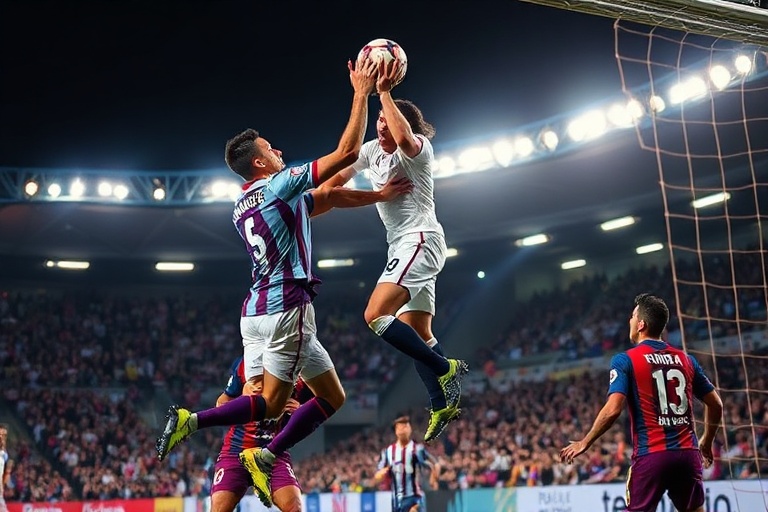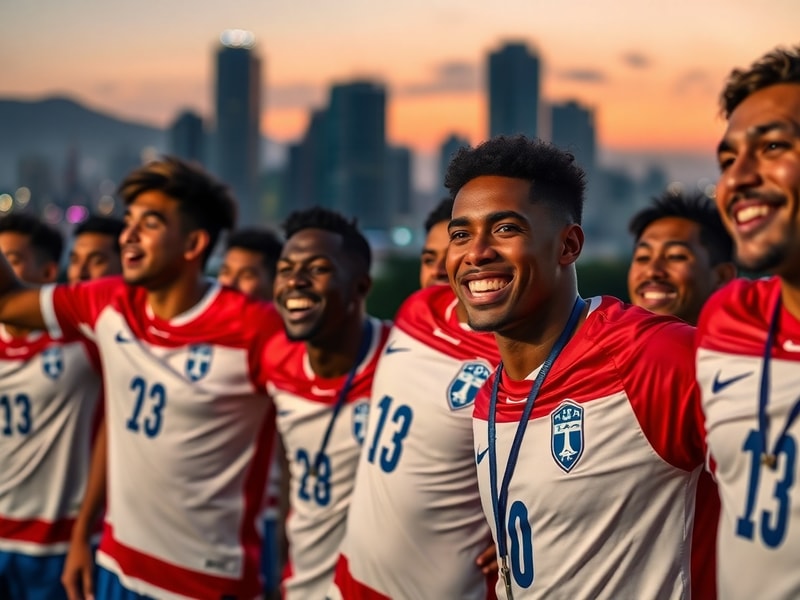
Panama’s football journey over the past decade has been a tale of resilience, tactical evolution, and moments that have defined a generation of players. The nation’s FIFA ranking has fluctuated between promise and inconsistency, reflecting broader shifts in the country’s football infrastructure, investment, and global competitiveness. While Panama has never been a traditional football powerhouse, its recent performances—including a historic 2018 FIFA World Cup qualification—have cemented its place as Central America’s second strongest team after Costa Rica.
This analysis explores Panama’s FIFA ranking trajectory, the factors influencing its standing, and what the future might hold for Los Canaleros on the global stage. It also examines how Panama’s football culture, economic constraints, and diaspora talent have shaped its current position in world football.
The Rise: Panama’s Historic World Cup Qualification
Panama’s most defining football achievement came in October 2017, when the national team secured its first-ever FIFA World Cup berth. A 2-1 victory over Costa Rica in San José, thanks to a controversial penalty and a late goal by Román Torres, sent shockwaves through CONCACAF. The moment was not just a sporting triumph but a cultural milestone for a country with fewer than 5 million inhabitants and a GDP per capita below the regional average.
The road to qualification was built on a foundation of tactical discipline under coach Hernán Darío Gómez, who prioritized defensive solidity and counterattacking football. Key players like Blas Pérez, Luis Tejada, and Gabriel Gómez became household names, embodying the grit and determination of a team unafraid to challenge the traditional giants of CONCACAF like Mexico and the United States.
Despite their historic achievement, Panama’s World Cup campaign in Russia was short-lived. They lost all three group-stage matches to Belgium, England, and Tunisia, scoring just two goals. Yet the participation itself elevated Panama’s FIFA ranking to a peak of 55th in July 2018, a record high that reflected both the progress and the limitations of the team at the time.
The Aftermath: Rankings, Expectations, and Reality
Following the World Cup, Panama’s FIFA ranking gradually declined. By early 2020, they had slipped to 75th, a drop attributed to inconsistent results in CONCACAF Nations League and Gold Cup competitions. The retirement of key players, coaching changes, and the global disruption caused by the COVID-19 pandemic further strained development cycles.
The team’s struggles were evident in its failure to qualify for the 2022 FIFA World Cup, where Panama finished fourth in CONCACAF’s final round, just two points behind the United States. The loss of form was particularly stark in games against Mexico and Canada, exposing vulnerabilities in both defense and midfield creativity.
By June 2024, Panama’s FIFA ranking stood at 57th—a modest rebound from its lowest point of 86th in 2022, but still well below its 2018 peak. This oscillation between 50th and 80th over the past six years mirrors the instability in leadership and investment that has long characterized Panamanian football.
Factors Influencing Panama’s FIFA Ranking
Panama’s ranking is not merely a number; it reflects deeper structural realities within the country’s football ecosystem. Several interconnected factors contribute to its fluctuating position:
- Domestic League Infrastructure: Panama’s professional league, Liga Panameña de Fútbol, is semi-professional at best. Clubs struggle with financial instability, poor stadium conditions, and limited youth development. Most top players leave early for clubs in Mexico, the United States, or Europe, weakening the domestic league’s competitiveness.
- Diaspora Talent: A significant portion of Panama’s national team is composed of players born or raised abroad—particularly in the United States. These dual-nationality players, such as Aníbal Godoy, Michael Murillo, and José Luis Rodríguez, bring higher technical levels and experience from MLS and European academies. Their inclusion has been crucial in maintaining Panama’s competitiveness.
- Coaching and Tactical Stability: Panama has cycled through multiple coaches since 2018, including Thomas Christiansen, Américo Gallego, and now Darién Borrero. Frequent changes disrupt tactical continuity and player development. The national federation (FEPAFUT) has often prioritized short-term results over long-term planning.
- Competition in CONCACAF: CONCACAF remains one of the most unpredictable confederations. While Mexico and the U.S. dominate, nations like Jamaica, Costa Rica, and now Canada have closed the gap. Panama, despite its progress, often finds itself in a crowded middle tier, where a single poor campaign can erase years of advancement.
- Economic and Political Context: Panama’s economy is heavily service-based, with football receiving limited government or corporate sponsorship compared to countries like Costa Rica or Trinidad and Tobago. Football must compete with baseball, basketball, and boxing for attention and funding.
Panama in the Global Football Landscape
From a global perspective, Panama occupies a unique position. It is neither a football minnow nor a rising giant. Its ranking places it alongside nations like Vietnam, Jamaica, and Honduras—teams that punch above their weight but lack the resources to sustain consistent excellence.
Yet Panama’s football identity is rich and distinct. The national team plays with a physical, combative style that reflects the country’s cultural emphasis on toughness and resilience. This is partly shaped by its historical rivalry with Costa Rica, a more technically gifted but equally determined opponent.
Panama’s football culture is also deeply tied to its diaspora. Many Panamanian players of Afro-Antillean descent, particularly those of Jamaican heritage, have played pivotal roles in the national team. This cultural diversity enriches the squad’s identity and reflects Panama’s history as a crossroads of the Americas.
In the broader CONCACAF context, Panama serves as a bridge between Central America and North America. Its proximity to the U.S. and Mexico has facilitated player migration and coaching exchanges, creating a hybrid style of play that blends Latin American flair with North American pragmatism.
Recent Performances and Future Outlook
Under current coach Darién Borrero, Panama has shown signs of resurgence. A strong performance in the 2023 CONCACAF Gold Cup—where they reached the semifinals—demonstrated renewed tactical cohesion and defensive solidity. The emergence of young talents like Fidel Escobar, Adalberto Carrasquilla, and José Fajardo has injected new energy into the squad.
The team’s focus now is on qualifying for the 2026 FIFA World Cup, co-hosted by the United States, Canada, and Mexico. With an expanded tournament format (48 teams), Panama has a realistic chance of returning to the global stage. However, consistency will be key. The team must avoid the pitfalls of past cycles—early exits, coaching changes, and complacency after a strong run.
For Panama, football is more than a sport; it is a source of national pride and identity. Each ranking update is met with scrutiny in local media, where pundits debate the future of Los Canaleros. While the path forward is uncertain, one thing is clear: Panama’s football journey is still unfolding, and its ranking is not just a statistic—it’s a reflection of a nation’s unyielding passion for the beautiful game.
Conclusion: Beyond the Numbers
Panama’s FIFA ranking tells only part of the story. Behind the numbers lies a football culture shaped by migration, economic realities, and a deep love for the game. While Panama may never dominate world football, its ability to compete—especially against richer nations—demonstrates the transformative power of sport.
As the 2026 World Cup approaches, Panama has an opportunity to build on its progress. Success will depend not only on individual talent but on the development of a sustainable football ecosystem—one that nurtures local talent, invests in youth academies, and provides stability at the national team level.
For now, Panama remains a testament to what can be achieved with limited resources and immense heart. Its FIFA ranking may rise and fall, but its place in football history is already assured: a nation that defied expectations, one match at a time.
For more sports analysis and updates, visit our Sports section.
Interested in football culture around the world? Explore our Analysis archives.