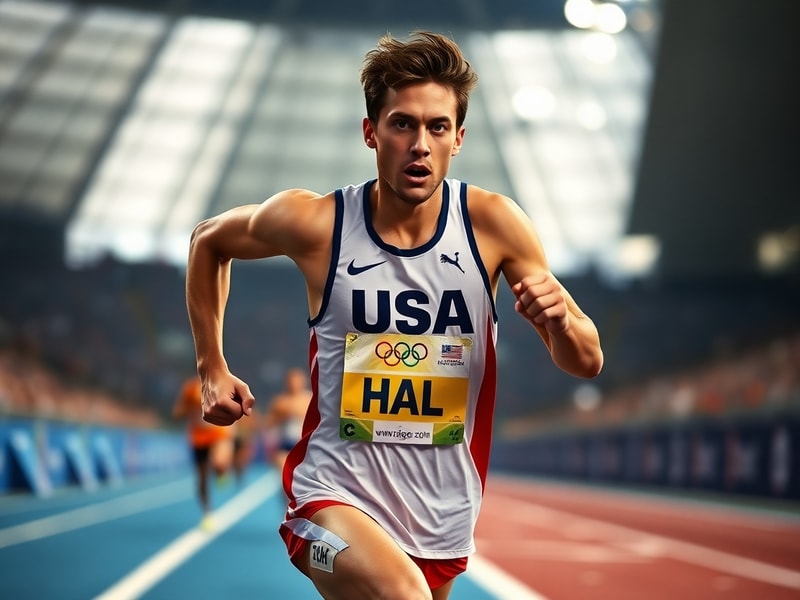
From Boston to Global Stages: Ryan Hall’s Running Legacy
Ryan Hall’s name resonates deeply in the world of long-distance running. A four-time U.S. Olympian, Hall set records that redefined American marathon performance. His journey from the hills of Big Bear, California, to the global stage reflects both personal dedication and the evolution of endurance sports in the 21st century. More than just a runner, Hall became a cultural figure—one whose influence extended beyond race times and into how communities engage with fitness, faith, and public health.
Born in 1982, Hall grew up in a family where running was a way of life. His father, a high school track coach, introduced him to the sport early. By his teenage years, Hall was already breaking records. His rise mirrored a broader shift in American distance running, where athletes began to challenge European and African dominance. While countries like Kenya and Ethiopia continued to produce elite marathoners, Hall proved that the U.S. could compete at the highest level—especially over the half-marathon distance.
The Half-Marathon: Redefining American Distance Running
In 2008, Hall set the American record in the half-marathon at the Houston Half Marathon, clocking 59:43. This performance wasn’t just a personal best; it was a statement. At the time, it was the fastest half-marathon ever run by a non-African athlete. The achievement came during a period when American distance running was undergoing a quiet revolution. Runners like Deena Kastor and Meb Keflezighi were also pushing boundaries, but Hall’s breakthrough captured national attention.
His success helped shift perceptions of what American runners could achieve. While many assumed African athletes held an inherent advantage in endurance events, Hall’s record demonstrated that strategy, training, and mental resilience could close the gap. His racing style—fast from the gun, relentless in pace—became a model for aspiring runners. It also sparked a wave of interest in the half-marathon as a legitimate elite distance, leading to more American-focused races and training programs.
A Faithful Voice in a Competitive World
Beyond his athletic achievements, Hall’s public persona was shaped by his Christian faith. He spoke openly about how spirituality guided his training and competitions. In interviews and books, he described running as a form of worship—each step a prayer, each race a test of both body and spirit. This perspective resonated with many, especially in a sport often seen as purely physical.
His memoir, Running for God’s Glory, published in 2014, offered a rare glimpse into the mind of an elite athlete who viewed competition as an act of devotion. While some critics argued that mixing sports and religion could alienate secular audiences, Hall’s authenticity drew praise. He showed that elite athletes could be both competitive and principled, challenging the stereotype of the ruthless competitor.
The Olympic Stage: Triumph and Heartbreak
Hall competed in three Olympic marathons (2008, 2012, 2016), each appearance carrying immense pressure and expectation. In Beijing 2008, he finished 10th with a time of 2:14:59—at the time, the fastest debut marathon by an American man in 24 years. Though not a medal, his performance signaled America’s return to relevance on the world stage.
Four years later, in London, he was the American favorite. But the race did not go as planned. Suffering from a hip injury, he dropped out at mile 20. The moment was a stark contrast to the triumphant narratives often associated with Olympic athletes. Yet, Hall’s response—graceful, honest, and resilient—further endeared him to fans. He acknowledged the pain, praised his competitors, and committed to returning stronger.
By 2016 in Rio, Hall was racing with a different purpose. Now a father of four, he ran not just for glory, but for legacy. Though he finished 39th, his presence on the track carried symbolic weight. He represented a generation of American runners who had pushed the limits of what was possible—and who had done so with integrity.
Impact Beyond the Track: Building a Running Culture
Hall’s influence extended far beyond his racing career. After retiring from elite competition, he co-founded Sports Performance Lab in Flagstaff, Arizona, a training center designed to nurture the next generation of American endurance athletes. The facility became a hub for runners from around the world, blending cutting-edge science with Hall’s philosophy of discipline and purpose.
He also became a vocal advocate for mental health in sports. In a culture that often glorifies pain tolerance and relentless competition, Hall spoke openly about anxiety, burnout, and the pressure young athletes face. His candor helped normalize conversations about mental wellness, influencing coaches and organizations to prioritize athlete well-being.
Hall’s cultural footprint is also evident in how running became more accessible. His visibility helped popularize casual running as a form of personal growth. From church groups to corporate wellness programs, his story inspired people who had never considered themselves athletes to tie on their shoes and hit the road.
Global Influence: Connecting Cultures Through Running
Though American-born, Hall’s impact reached international audiences. His races in Europe and Asia drew attention not only for his performances but for his demeanor. He raced with humility, often greeting competitors with handshakes and smiles—an approach that stood out in a sport sometimes criticized for its intensity.
His partnership with World Vision, a global humanitarian organization, further expanded his reach. Through the organization, Hall traveled to Kenya and other running powerhouses, not as a tourist, but as a learner. He sought to understand the training environments that produced champions. These experiences deepened his appreciation for the global running community and reinforced his belief in sport as a tool for connection and healing.
Legacy and Lessons: What Ryan Hall Teaches Us
Ryan Hall’s career offers several enduring lessons. First, excellence is not confined by geography. His records proved that American runners could compete with the best in the world—when given the right support, training, and mindset.
Second, integrity matters. In an era where doping scandals and unethical behavior have marred sports, Hall’s transparency and values stood out. He showed that winning and character could coexist.
Finally, Hall demonstrated that sport is more than physical achievement. It is a platform for values, community, and personal growth. Whether through faith, family, or service, he used his platform to uplift others—a blueprint for athlete activism before the term became mainstream.
Today, while Hall no longer races professionally, his influence persists. New generations of American runners cite him as an inspiration. Coaches study his training methods. Communities still gather for group runs inspired by his legacy. He remains a symbol of what it means to pursue greatness with purpose.
In a sport often defined by numbers and records, Ryan Hall’s story reminds us that the most enduring legacies are built not just on speed, but on character. And that, perhaps, is the ultimate victory.