The Ancient Survivors: How Crocodiles Have Dominated for Millions of Years
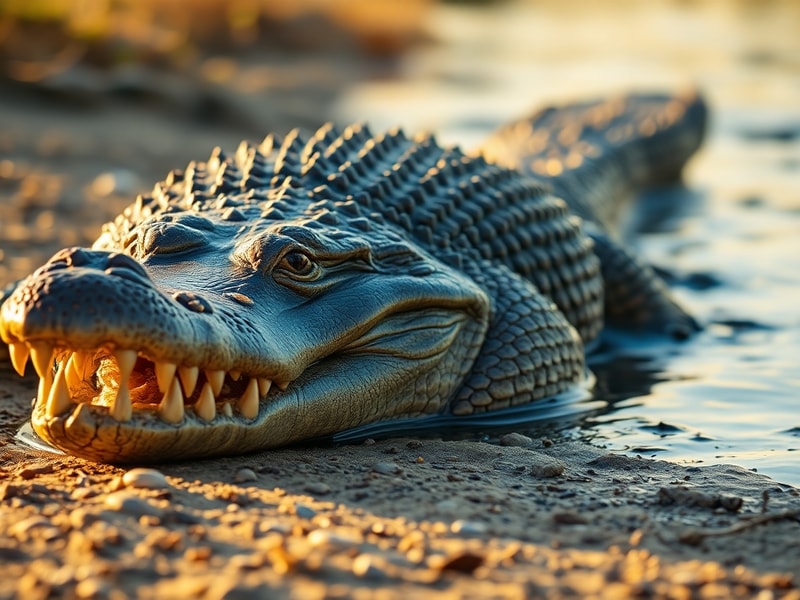
Crocodiles are among the most resilient creatures on Earth, thriving for over 200 million years with little evolutionary change. These prehistoric predators have outlasted dinosaurs, ice ages, and countless other species that once shared their world. Their ability to adapt to shifting environments—from dense jungles to arid deserts—has cemented their status as one of nature’s most successful apex predators. Unlike many animals that have gone extinct, crocodiles remain apex hunters in rivers, lakes, and coastal regions across Africa, Australia, and the Americas.
What makes crocodiles so enduring? Their biology is a masterclass in efficiency. A crocodile’s body is built for stealth and power, with a streamlined shape that allows it to move swiftly in water while remaining nearly invisible to prey. Their eyes sit atop their skulls, enabling them to lurk just below the surface with only their nostrils and eyes exposed. This ambush hunting style requires minimal energy—an evolutionary advantage that allows them to survive for months without food. Even their digestive system is optimized for efficiency, capable of breaking down bones, horns, and even turtle shells with ease.
Beyond their physical adaptations, crocodiles possess a social intelligence rarely seen in reptiles. Studies show that they exhibit complex behaviors, including maternal care, problem-solving, and even play. Some species, like the Nile crocodile, have been observed using tools—such as balancing sticks on their heads to lure nesting birds—demonstrating a level of cunning that rivals mammals. Their ability to learn and adapt suggests that crocodiles are far more than mindless predators; they are strategic hunters with a sophisticated understanding of their environment.
The Role of Crocodiles in Ecosystems: A Delicate Balance
Crocodiles play a crucial role in maintaining the health of their ecosystems. As apex predators, they regulate the populations of fish, birds, and mammals, preventing any single species from overpopulating and disrupting the food chain. In places like Australia’s Kakadu National Park, saltwater crocodiles keep feral pig numbers in check, reducing damage to fragile wetland habitats. Similarly, in the Florida Everglades, American alligators dig “gator holes” that become vital water sources for other wildlife during dry seasons.
However, their presence also creates a paradox. While crocodiles support biodiversity, their aggressive hunting can lead to conflicts with humans, particularly in regions where human settlements expand into crocodile habitats. In countries like India and Indonesia, saltwater crocodile attacks are a growing concern as urbanization encroaches on natural wetlands. Conservationists argue that protecting crocodile populations requires balancing human safety with ecological needs—often a contentious issue.
One of the most fascinating aspects of crocodile ecology is their role as ecosystem engineers. By digging burrows and creating water holes, they physically alter their environment in ways that benefit countless other species. In Africa, Nile crocodiles inadvertently help fish-eating birds by forcing prey into open areas where they become easier targets. These indirect effects ripple through the ecosystem, highlighting how even the most feared predators contribute to ecological stability.
Yet, crocodiles are not invincible. Habitat destruction, pollution, and climate change threaten their survival. Rising temperatures, for instance, skew sex ratios in hatchlings—warmer nests produce more males, while cooler ones produce females. Over time, this could lead to population collapse if left unchecked. Conservation efforts, such as protected reserves and community-based monitoring programs, are essential to ensuring these ancient reptiles continue to play their role in nature.
The Cultural and Symbolic Significance of Crocodiles Across Civilizations
Long before crocodiles were studied by scientists, they held deep symbolic meaning in human cultures. In ancient Egypt, the god Sobek—a crocodile deity—represented fertility, protection, and the power of the Nile. Egyptians revered crocodiles, even mummifying them as offerings to Sobek. Meanwhile, in Aboriginal Australian lore, the Rainbow Serpent—a creator being linked to water—often takes the form of a crocodile, symbolizing life, danger, and the cyclical nature of existence.
In some cultures, crocodiles embody duality: both feared and revered. In West Africa, the crocodile is a totem animal, representing strength and adaptability. Yet, in parts of India, villagers view them as omens of misfortune, blaming them for livestock losses and human tragedies. This ambivalence reflects humanity’s complicated relationship with predators—simultaneously acknowledging their ecological importance while fearing their power.
Modern media has further shaped perceptions of crocodiles. Films like Primeval (2004) and Crocodile Dundee (1986) have cemented their image as unstoppable killing machines, while documentaries like the BBC’s Crocodile Hunter series humanized them as intelligent, charismatic creatures. This shift in portrayal has helped shift public opinion, fostering greater appreciation for their ecological role rather than outright fear.
Crocodiles also appear in art and folklore as symbols of resilience. In Latin America, the Caimán is a mythical creature said to guard rivers and punish those who disrespect nature. These stories serve as early environmental warnings, illustrating how cultures have long recognized the balance between humans and predators. Today, they remind us that crocodiles are not just survivors—they are guardians of the wild.
Conservation Challenges and the Future of Crocodile Populations
The future of crocodiles hinges on human action—or inaction. While some species, like the saltwater crocodile, are thriving due to legal protections, others face extinction. The Philippine crocodile, for example, is critically endangered, with fewer than 100 individuals left in the wild. Habitat destruction, hunting for skin and meat, and pollution have pushed this species to the brink. Conservation programs, such as breeding initiatives and community education, offer hope but require sustained funding and political will.
Climate change poses another existential threat. As temperatures rise, crocodile nesting sites become less viable. In Australia, researchers have observed shifts in nesting behaviors, with some crocodiles laying eggs in cooler, shaded areas to counteract warming. However, these adaptations may not be enough if climate change accelerates. Rising sea levels also threaten coastal habitats, particularly for saltwater crocodiles that rely on mangrove ecosystems.
Another challenge is the illegal wildlife trade. Despite international bans, crocodile skin remains a lucrative commodity, fueling poaching in regions with weak law enforcement. In Southeast Asia, undercover operations have exposed networks trafficking critically endangered species like the Siamese crocodile. Strengthening anti-poaching laws and increasing penalties for offenders could help curb this trade.
Yet, there are success stories. In the U.S., the American alligator was once hunted to near extinction but has since rebounded thanks to the Endangered Species Act. Similar recovery efforts in South Africa and Zimbabwe have stabilized Nile crocodile populations. These examples prove that with the right policies and public support, crocodiles can recover—even from the brink of disappearance.
A key strategy for their survival involves community involvement. In regions like the Okavango Delta in Botswana, local guides and researchers work together to monitor crocodile populations while educating villagers on coexistence. These programs not only protect crocodiles but also provide economic benefits through ecotourism. By valuing crocodiles as living treasures rather than threats, communities can become their strongest advocates.
The battle to save crocodiles is not just about preserving a species—it’s about maintaining the health of entire ecosystems. As climate change and human expansion reshape the planet, crocodiles serve as a barometer for environmental health. Their decline would signal broader ecological collapse, affecting countless other species and human communities dependent on balanced ecosystems. The question is no longer whether we can save crocodiles, but whether we choose to.