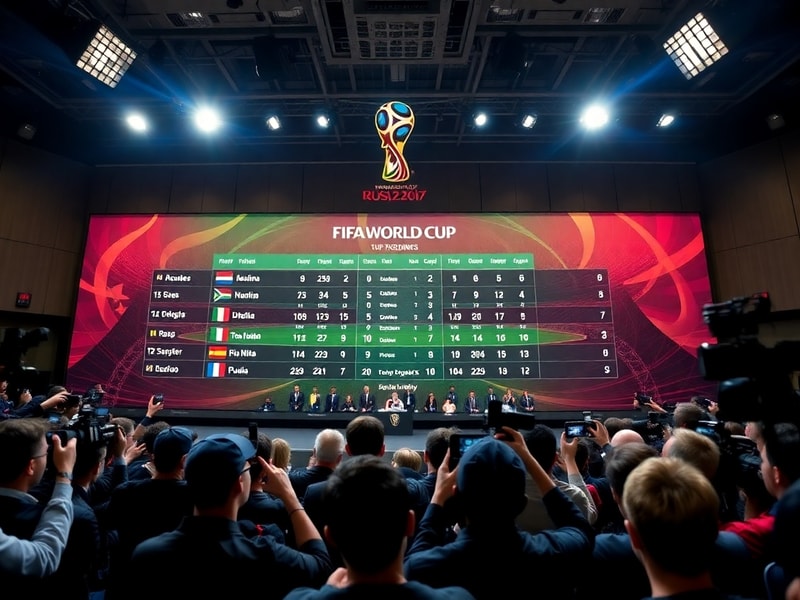
How FIFA World Cup Standings Shape Global Football Narratives
The FIFA World Cup isn’t just a tournament; it’s a four-year cycle of dreams, upsets, and national pride that resets the global football calendar. Every match alters the standings, and those shifts ripple through economies, cultures, and even geopolitical narratives. The standings tell stories beyond points—they reflect underdog triumphs, powerhouse dominance, and the unpredictable nature of sport.
This year’s standings reveal more than just who advances. They expose tactical evolution, player development, and the shifting balance of power in international football. From South America’s relentless pressing to Africa’s emerging talents, the World Cup standings become a snapshot of football’s ever-changing landscape. The numbers don’t lie, but the context behind them often does.
Understanding the Points System and Tiebreakers
The FIFA World Cup standings operate on a straightforward points system: three for a win, one for a draw, and none for a loss. But the tiebreakers add layers of drama and strategy. Goals scored, head-to-head results, and fair play records can separate teams level on points. These nuances turn seemingly simple standings into complex puzzles.
In the group stage, standings determine immediate fate. A single point can mean survival or elimination. In knockout rounds, standings shape bracket predictions, as higher-ranked teams face theoretically easier paths. The standings influence not just who plays whom, but how teams approach matches—whether to attack relentlessly or play conservatively for a draw.
- Group Stage: Teams advance based on points, then tiebreakers.
- Knockout Rounds: Higher-ranked teams avoid tougher opponents early.
- Finals: Standings determine seeding and narrative momentum.
The Cultural Weight of World Cup Standings
In Brazil, World Cup standings aren’t just statistics—they’re emotional barometers. The 2014 World Cup collapse, when Brazil finished fourth, left a national scar. The standings became a mirror of collective disappointment, sparking debates about infrastructure, talent development, and national identity. Football in Brazil isn’t just a sport; it’s a cultural language.
In Europe, standings often reflect club versus country tensions. Players like Cristiano Ronaldo and Lionel Messi carried their nations deep into tournaments, but club commitments sometimes limited their impact. The standings expose these conflicts, as national teams balance squad selection against club obligations. In Africa, World Cup standings symbolize progress. Morocco’s 2022 quarterfinal run wasn’t just a result—it was proof that African football had arrived on the global stage.
In Asia, the standings tell stories of investment and ambition. Japan’s technical style and South Korea’s physicality have redefined how Asian teams approach the tournament. The standings reflect not just results, but the growing influence of Asian football academies and tactical innovation. Each continent interprets the standings differently, embedding them with unique cultural significance.
Economic and Political Echoes in Standings
The World Cup standings ripple beyond the pitch. Host nations often see economic boosts or busts based on performance. South Africa’s 2010 World Cup, where they reached the quarterfinals, became a symbol of post-apartheid resilience and sparked tourism and investment. Conversely, Russia’s 2018 World Cup exit in the quarterfinals, despite hosting, raised questions about the long-term benefits of tournament infrastructure.
Geopolitical tensions also play out through standings. When Iran and the U.S. faced off in 2022, the match transcended sport. The standings became a platform for dialogue and defiance, as players and fans used the moment to express solidarity and resistance. Football’s global reach turns standings into diplomatic soft power tools.
Sponsorships and broadcasting deals hinge on strong performances. A nation’s World Cup standings can determine whether its league gains global visibility. For example, Saudi Arabia’s investment in football, including the 2023 Asian Cup win, aims to elevate its domestic league’s profile. The standings become marketing tools, shaping how the world views a nation’s footballing future.
Analyzing Standings Trends Over Decades
Looking at World Cup standings over time reveals patterns of dominance and disruption. Brazil’s five titles and Germany’s consistent top-four finishes reflect tactical discipline and youth development. But the rise of Belgium, Croatia, and Morocco shows that football’s hierarchy is fluid. The standings don’t just record history—they predict its next chapter.
In recent decades, European and South American teams have dominated the top four. But Africa and Asia are inching closer. The 2022 World Cup saw Morocco become the first African team to reach the semifinals, while Japan and South Korea advanced from the group stage. These performances suggest that the World Cup standings may soon reflect a more balanced global football landscape.
The rise of data analytics has changed how standings are interpreted. Teams now use expected goals (xG), possession metrics, and pressing triggers to evaluate performance beyond wins and losses. The standings are no longer just about points—they’re about style, sustainability, and tactical evolution. Football’s analytical revolution is rewriting the narrative of what standings truly represent.
The Human Stories Behind the Standings
Behind every World Cup standing is a human story. For Ghana in 2010, the standings became a symbol of near-mythical redemption. For Iceland in 2016, a tiny nation’s quarterfinal run inspired a generation. For the U.S. Women’s National Team, the standings reflect decades of fighting for equal pay and recognition. The numbers on the board tell only part of the story.
Standings also expose vulnerabilities. When Argentina lost to Saudi Arabia in 2022, the standings shifted from inevitability to uncertainty. Lionel Messi’s tears mirrored a nation’s collective anxiety. The standings remind us that football is unpredictable, that glory is fragile, and that every team—regardless of history—can rise or fall in a single match.
For emerging nations, the standings are more than results—they’re proof of progress. Qatar’s 2022 World Cup, despite early exits, marked a cultural milestone. The standings became a platform for Qatar to showcase its investment in football infrastructure and global engagement. Even in defeat, the standings told a story of ambition and growth.
What the Next World Cup Standings Might Look Like
The next World Cup standings will reflect more than just talent—they’ll reflect preparation. With expanded tournaments and new formats, the competition will intensify. Nations investing in academies, data science, and psychological conditioning will see their standings reflect that investment. The days of relying solely on raw talent are fading; the future belongs to those who combine skill with strategy.
For Europe, the challenge will be maintaining dominance amid rising African and Asian teams. For South America, the task is to rediscover its flair while adapting to modern pressing systems. For underdogs, the goal is to disrupt the hierarchy and force the world to take notice. The next set of standings could redefine football’s global balance.
One thing is certain: the World Cup standings will continue to shape narratives. They will inspire hope, spark debates, and create legends. Whether you’re a fan, a player, or a casual observer, the standings offer a window into football’s soul—a reflection of skill, strategy, and the unpredictable beauty of the game.
For deeper analysis on how standings influence player transfers and club strategies, explore our Sports category. To understand the cultural impact of World Cup performances on host nations, visit our Culture section.