Venezuela Fury: Protests, Power and the Fight for Survival
Venezuela’s streets have become a powder keg of unrest. The recent surge in protests—fueled by economic collapse, political repression, and a desperate population—has once again thrust the South American nation into the global spotlight. But this isn’t just another fleeting moment of outrage. It’s the latest chapter in a decades-long crisis that shows no signs of abating. What began as a struggle over sovereignty has evolved into a broader reckoning with authoritarianism, resource mismanagement, and the human cost of governance failure.
Roots of the Fury: A Nation on the Brink
The current wave of protests didn’t emerge in a vacuum. Venezuela’s descent into chaos traces back to the late 20th century, when oil wealth masked deep structural flaws. The country’s economy, heavily dependent on crude exports, thrived during global price booms. But when prices crashed in the 1990s, Venezuela’s fragile institutions buckled under the strain. Social inequality festered, corruption spread, and public trust eroded. By the time Hugo Chávez took power in 1999, Venezuela was primed for radical change—though not the kind he promised.
Chávez’s Bolivarian Revolution promised to uplift the poor through wealth redistribution and social programs. For a time, it worked. Poverty rates dropped, education access expanded, and healthcare improved in underserved communities. But the model relied on high oil prices and centralized control. When oil revenues plummeted after 2014, the system collapsed. Shortages of food, medicine, and basic goods became commonplace. Hyperinflation spiraled out of control, reaching over 1,000,000% by 2018. The government responded with repression, silencing dissent through censorship, arbitrary arrests, and violent crackdowns on protests.
Nicolás Maduro, Chávez’s handpicked successor, doubled down on authoritarian tactics. He dissolved opposition-led legislatures, banned opposition candidates from running, and manipulated elections. International observers condemned these moves as fraudulent. Yet Maduro clung to power, propped up by loyal military factions and foreign allies like Russia, China, and Iran. The result? A nation fractured between those clinging to survival and those clinging to power.
Protests Erupt: What’s Driving the Current Unrest
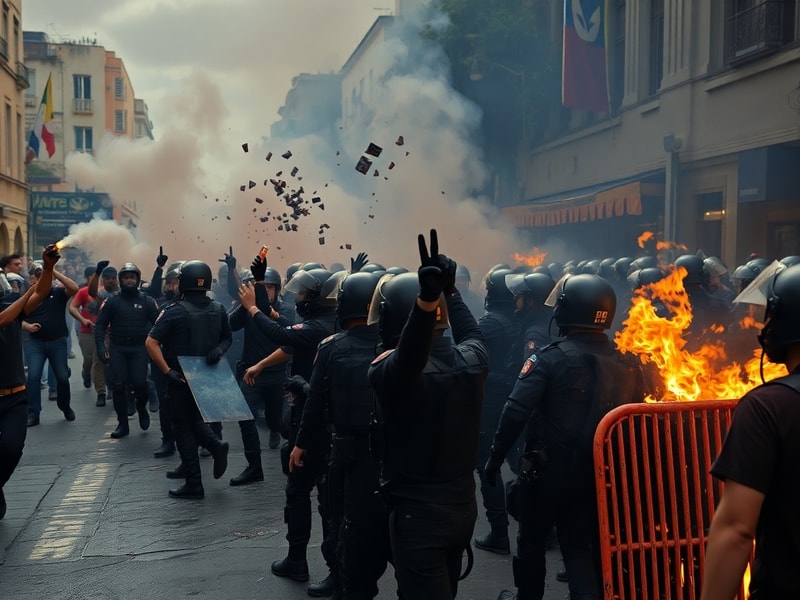
The latest protests erupted in response to a combination of immediate and long-term grievances. In April 2024, Maduro’s government announced controversial reforms to the electoral system, effectively barring opposition parties from participating in future elections. This move was seen as a final nail in the coffin of Venezuela’s already moribund democracy. Within days, demonstrations erupted across Caracas and major cities. Security forces responded with brutal force—tear gas, live ammunition, and mass arrests. At least 20 protesters were killed in the first week alone.
The protests are not just about elections. They’re about survival. Venezuela’s poverty rate hovers around 90%, with nearly 7 million people displaced internally or abroad. The healthcare system, once a point of pride under Chávez, is now a shadow of its former self. Hospitals lack electricity, running water, and basic supplies. Diseases like malaria and dengue, once controlled, have resurged. Meanwhile, Maduro’s inner circle flaunts luxury while the majority scavenge for food in garbage dumps.
International pressure has done little to curb the crisis. The United States and European Union have imposed sanctions targeting Maduro’s regime, but these measures often hurt ordinary citizens more than the leadership. The Venezuelan opposition, led by figures like María Corina Machado and Edmundo González, has called for a unified front against Maduro. But internal divisions and fear of repression have weakened their efforts. The opposition’s message—free elections, humanitarian aid, and an end to corruption—resonates with many, but the regime’s grip on power remains unshaken.
Key Drivers of the Current Crisis
- Economic Collapse: Hyperinflation, currency devaluation, and collapsing public services have pushed millions into poverty.
- Electoral Fraud: Systematic exclusion of opposition parties and manipulation of election rules have delegitimized the government.
- Humanitarian Emergency: Food and medicine shortages, coupled with collapsing infrastructure, have created a public health catastrophe.
- Authoritarian Crackdowns: Security forces and paramilitary groups (colectivos) suppress dissent with extreme violence.
- International Isolation: While Maduro faces sanctions and diplomatic isolation, he maintains support from authoritarian allies like Russia and Iran.
The Broader Implications: Regional and Global Ramifications
The fallout from Venezuela’s crisis extends far beyond its borders. The exodus of over 7.7 million Venezuelans has strained neighboring countries like Colombia, Peru, and Brazil. These nations, already grappling with their own economic and political challenges, have struggled to absorb the influx of refugees. In Colombia, for example, Venezuelan migrants now make up nearly 5% of the population in some border regions. Social services are overwhelmed, and anti-immigrant sentiment is rising. The crisis has also fueled organized crime, with Venezuelan gangs expanding their reach into cocaine trafficking and human smuggling.
Globally, Venezuela’s collapse serves as a cautionary tale about the dangers of resource dependence and authoritarian overreach. Countries like Bolivia and Nicaragua, which have adopted similar populist models, watch nervously as Venezuela’s economy implodes. Meanwhile, the United States and China vie for influence in Latin America, each positioning itself as a counterbalance to the other’s growing presence. Russia, too, has deepened its ties with Maduro, using Venezuela as a foothold in America’s backyard. This geopolitical chess game complicates efforts to resolve the crisis diplomatically.
For the international community, the question is no longer whether Venezuela will change, but how. The Biden administration has signaled a willingness to ease sanctions in exchange for democratic reforms, but Maduro has shown little interest in concessions. The European Union has called for free and fair elections, but its leverage is limited. Meanwhile, grassroots movements within Venezuela continue to organize despite extreme risks. Underground networks provide humanitarian aid, document human rights abuses, and smuggle out evidence of regime atrocities. Their courage underscores a harsh reality: change, if it comes, will be driven from below.
What’s Next? Scenarios and Uncertainty
The path forward for Venezuela remains murky. Several scenarios could unfold in the coming months:
- Status Quo: Maduro survives, using repression and foreign support to maintain power. The humanitarian crisis worsens, but the regime clings to control through force. This scenario would likely trigger further mass emigration and deepen regional instability.
- Negotiated Transition: Under intense pressure, Maduro agrees to limited reforms—perhaps allowing opposition participation in future elections or releasing political prisoners. This would require significant concessions from both sides and a willingness to compromise, neither of which is guaranteed.
- Sudden Collapse: A military coup, internal rebellion, or mass uprising could topple Maduro’s government. However, such a scenario risks a power vacuum, with rival factions or criminal organizations seizing control.
- International Intervention: While unlikely, a coordinated regional or global intervention could force regime change. But the legacy of Iraq and Libya makes such an approach politically toxic, and Maduro’s allies would fiercely resist any outside interference.
Regardless of the outcome, Venezuela’s crisis is far from over. The scars of decades of mismanagement, corruption, and repression will take generations to heal. Yet the protests of 2024 have shown that the spirit of resistance is not entirely extinguished. For those on the ground, the fight is about more than politics—it’s about survival. For the world, it’s a reminder of the fragility of democracy and the high cost of ignoring human suffering.
The fury in Venezuela’s streets is not just anger. It’s a demand for dignity, a plea for a future that many have been denied for too long. Whether that future arrives remains to be seen, but one thing is clear: the world can no longer look away.