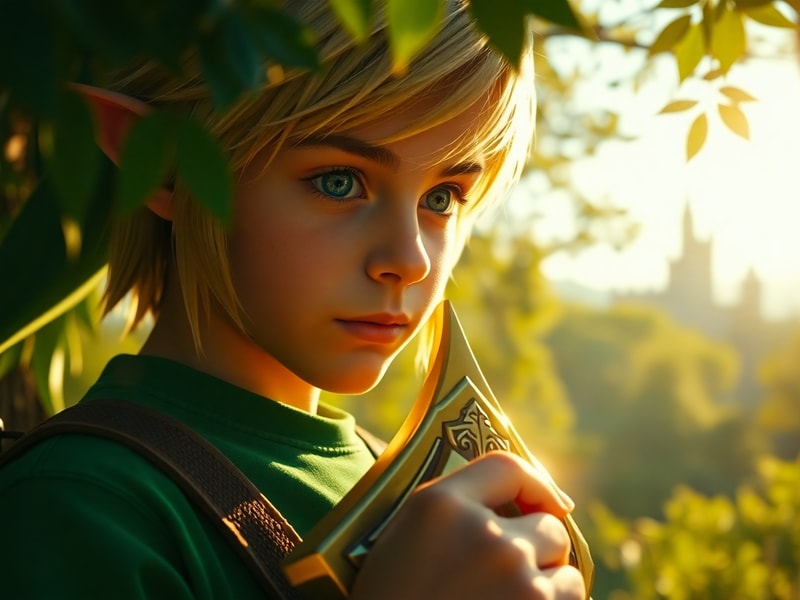
The Legend of Zelda: Ocarina of Time has long stood as a landmark in gaming history. First released in 1998 for the Nintendo 64, it redefined adventure games with its time-travel mechanics, expansive world, and emotional storytelling. Nearly 25 years later, Nintendo’s remake for the Nintendo Switch reimagines Hyrule in stunning visuals while preserving the soul of the original. This isn’t just a technical upgrade—it’s a cultural reset for how remakes are perceived in the modern gaming landscape.
A Visual and Narrative Revival
The Switch remake, developed by Nintendo EPD and Grezzo, delivers a fidelity that was once unthinkable for a 25-year-old game. The world of Hyrule now breathes with dynamic lighting, detailed textures, and lifelike character animations. The Kokiri Forest no longer feels like a static diorama but a living, breathing village. Even familiar dungeons like the Water Temple feel refreshed with clearer layouts and intuitive design cues.
The story remains intact, but the presentation elevates it. Link’s journey from a child in Kokiri Forest to the Hero of Time is framed with greater emotional weight. The ocarina itself becomes more than a tool—it’s a conduit for Link’s growth, its melodies now rendered with richer audio fidelity. The voice acting, though limited, grounds the experience in a way the original’s text couldn’t. This remake doesn’t just update graphics; it rebuilds immersion.
Preserving Legacy While Evolving
One of the most delicate tasks in remaking a classic is balancing innovation with reverence. Ocarina of Time Remake succeeds by respecting the original while making smart, modern enhancements. The Z-targeting system, revolutionary in 1998, now benefits from refined precision and responsive controls. The game’s physics engine, often criticized in the original for its janky animations, now flows more naturally—Link’s shield no longer clings to walls like glue.
The remake also introduces quality-of-life improvements that feel long overdue. Expanded inventory menus, clearer objective markers, and adjustable text speed make the experience more accessible without diluting its challenge. Yet, the game preserves the original’s difficulty curve, ensuring that veterans and newcomers alike face meaningful trials. This approach respects the legacy of the original while making it approachable for today’s audiences.
The audio design deserves special mention. Koji Kondo’s iconic score has been remastered with spatial audio support, allowing players to hear the ocarina’s melodies wash over them in 3D. The Lost Woods now feel alive with rustling leaves and distant howls, making the journey through Hyrule’s forests an auditory experience as much as a visual one.
A Global Phenomenon Revisited
Ocarina of Time wasn’t just a game—it was a cultural bridge. Released during the late 1990s, it introduced millions to the concept of open-world adventure gaming. Its influence can be seen in titles like Shadow of the Colossus, Dark Souls, and even open-world RPGs like The Witcher 3. The remake doesn’t just reintroduce the game to a new generation; it reintroduces its legacy to a world that has evolved around it.
The original game’s release coincided with the rise of the internet as a global medium. Fan communities, speedrunning culture, and deep lore analysis flourished online, turning Ocarina of Time into a shared cultural artifact. The remake taps into this legacy by including a “Master Quest” mode, a bonus dungeon originally found in the GameCube version. This mode offers a more challenging experience, rewarding players who seek deeper engagement.
In Japan, where the Zelda series holds deep cultural significance, the remake has been celebrated as a return to form. Nintendo’s decision to include Japanese voice acting alongside English options reflects a global mindset, acknowledging the game’s international fanbase. The remake’s success in Japan—where it topped sales charts—proves that nostalgia, when handled with care, can transcend borders.
What Comes Next for Zelda Remakes?
The Ocarina of Time Remake raises important questions about the future of remakes in gaming. With titles like Link’s Awakening and Majora’s Mask already receiving similar treatments, where does Nintendo draw the line? The answer may lie in how these remakes are received. If Ocarina of Time Remake proves that remastering a classic can feel like a genuine evolution, then we may see more ambitious projects in the future.
For now, the remake stands as a testament to Nintendo’s ability to honor its past while embracing the future. It’s a reminder that great stories never truly fade—they just find new ways to be told. Whether you’re a longtime fan returning to Hyrule or a newcomer discovering the magic of Zelda for the first time, this remake offers an experience that feels both timeless and fresh.
The game’s release also highlights the enduring power of Nintendo’s IP. In an era where many remakes feel like cash grabs, Ocarina of Time Remake proves that passion and attention to detail still matter. It’s not just a game—it’s a love letter to a generation of players who grew up with Link’s adventures.