Senate War Powers Vote: What It Means for U.S. Military Actions
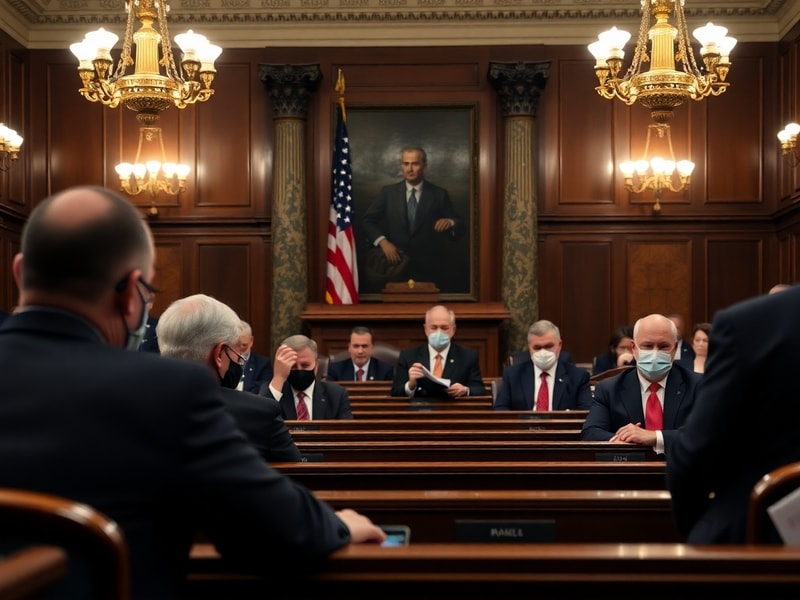
The U.S. Senate’s recent vote on war powers marks a pivotal moment in how American military engagements may be authorized moving forward. Lawmakers narrowly approved a resolution that seeks to limit the executive branch’s ability to deploy forces without explicit congressional approval. The vote, which passed 51-45, reflects deep divisions over how to balance presidential authority with legislative oversight in matters of war and peace.
The resolution targets the 2002 Authorization for Use of Military Force (AUMF) against Iraq, which has been repeatedly invoked to justify military actions far beyond its original intent. Critics argue that this decades-old legislation has been stretched to justify interventions in Syria, Libya, and even drone strikes in countries like Yemen and Somalia. The Senate’s move signals an attempt to claw back constitutional authority that many lawmakers feel has eroded over time.
The debate surrounding war powers is not unique to the United States. Globally, democracies grapple with similar tensions between executive agility and legislative accountability. In the United Kingdom, for example, Parliament has increasingly asserted its role in approving military interventions, such as the 2013 vote against strikes in Syria. France, too, has seen heated discussions about the use of Article 16 of its constitution, which grants emergency powers to the president, though with checks and balances. These international parallels highlight a broader trend: the growing discomfort with unchecked executive authority in matters of war.
Why the Senate’s vote matters
The resolution passed by the Senate is symbolic but carries significant weight. It sends a message to the White House that Congress is no longer willing to rubber-stamp military actions initiated by the executive branch. The vote also underscores the frustration among lawmakers who feel sidelined in decisions that could lead to prolonged conflicts. For decades, presidents from both parties have relied on the 2001 and 2002 AUMFs to justify military operations, often without new congressional approval.
One of the most contentious aspects of the vote is the potential legal implications. If the resolution is signed into law, it could force future presidents to seek explicit congressional authorization before deploying troops. This would represent a major shift from the post-9/11 era, where the executive branch has operated with broad discretion. Supporters of the resolution argue that it restores a critical balance of power, while opponents warn it could tie the hands of the military in rapidly evolving crises.
The vote also reflects broader public sentiment. Polls consistently show that Americans are skeptical of endless wars and favor greater oversight. A 2023 Pew Research study found that 65% of Americans believe Congress should have more say in decisions to use military force. This public pressure has undoubtedly influenced lawmakers, particularly younger members of Congress who have not lived through the post-9/11 consensus on military engagement.
The global ripple effect
The Senate’s decision doesn’t exist in a vacuum. It reverberates across the world, where U.S. military actions have far-reaching consequences. In the Middle East, for instance, the vote could signal a shift in America’s approach to conflicts in Yemen and Syria, where drone strikes and special forces operations have become routine. Allies in Europe and Asia watch closely, as U.S. military posture often sets the tone for global security dynamics.
Consider the case of drone warfare. The U.S. has conducted thousands of drone strikes in countries like Pakistan, Somalia, and Libya, often under the auspices of the 2001 AUMF. If Congress tightens the rules, it could force a reevaluation of these operations. This, in turn, might pressure other nations to follow suit. For example, Israel, which has also used targeted strikes in Gaza and Syria, could face increased scrutiny over its military policies if the U.S. adopts stricter oversight.
Even in regions where the U.S. has a reduced military presence, the vote carries symbolic weight. In Africa, where U.S. Special Operations forces conduct counterterrorism missions, local governments may question the long-term commitment of their partner. The Senate’s move could embolden critics of American military involvement, leading to calls for greater transparency or even the withdrawal of U.S. troops.
Moreover, the vote intersects with broader geopolitical shifts. As China and Russia expand their military influence, the U.S. faces pressure to maintain a nimble and decisive defense posture. A more constrained approach to military engagements could be perceived as a sign of weakness by adversaries or, conversely, as a step toward a more rules-based international order. The outcome of this debate will shape how the U.S. is viewed on the global stage for years to come.
What’s next for war powers reform?
The Senate’s vote is just the beginning of what promises to be a protracted battle over war powers. The resolution now moves to the House of Representatives, where it faces an uphill climb. House leadership has historically been reluctant to challenge the executive on military matters, and the narrow margin of the Senate vote suggests that bipartisan support is fragile at best.
Even if the resolution passes the House, it is not guaranteed to become law. President Biden, like his predecessors, has signaled skepticism about ceding authority to Congress. The White House has argued that the current system allows for rapid, decisive action in emergencies, something they claim would be hampered by new restrictions. This sets the stage for a potential veto or legal challenges if the resolution gains traction.
For advocates of reform, the path forward may involve incremental steps. One approach could be to pass a new, specific AUMF tailored to current threats, such as those posed by ISIS or Iran-backed militias. This would replace the outdated 2001 and 2002 authorizations and provide clearer guidelines for military action. Another strategy is to push for the repeal of the 2002 AUMF altogether, as the House did in 2023, though the Senate has yet to take up that measure.
Grassroots organizations and legal scholars are also playing a role in shaping the debate. Groups like the American Civil Liberties Union and the Brennan Center for Justice have long argued for greater congressional oversight. Their efforts have gained traction in recent years, fueled by public disillusionment with America’s post-9/11 wars. Meanwhile, think tanks such as the Quincy Institute for Responsible Statecraft have published reports outlining alternative frameworks for military engagement, emphasizing diplomacy and restraint.
The outcome of this struggle will hinge on several factors. Public opinion, geopolitical crises, and the political calculations of lawmakers will all play a role. If a major conflict erupts in the coming years, the urgency of reform may fade as Congress rallies behind the executive branch. Conversely, if the U.S. avoids large-scale military engagements, the momentum for change could grow.
For now, the Senate’s vote is a small but significant step toward reasserting congressional authority. It remains to be seen whether this will lead to lasting reform or merely another chapter in the ongoing tug-of-war between the branches of government. One thing is clear: the debate over war powers is far from over, and its resolution will have profound implications for American democracy and its role in the world.