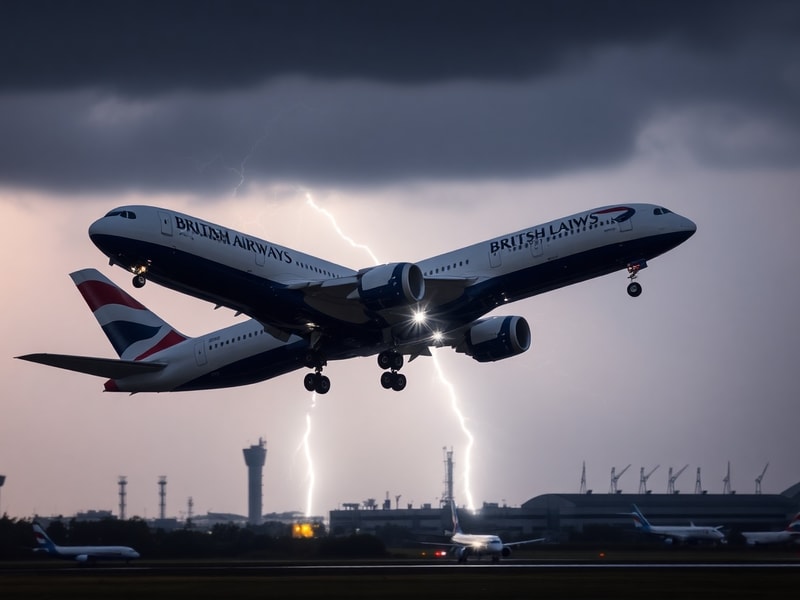
The summer of 2024 brought more than just sunshine to London. A violent thunderstorm over the capital on July 22 grounded flights at both Heathrow and Gatwick, stranding thousands of passengers and disrupting global travel networks. The storm, which dumped heavy rain and hail on the airports, led to the cancellation of over 100 flights at Heathrow and nearly 80 at Gatwick, according to airport authorities. While such delays are not uncommon during peak summer months, the scale and timing of this disruption highlighted the fragility of international travel systems when faced with extreme weather.
How the storm disrupted Europe’s busiest hubs
Heathrow, Europe’s busiest airport, saw a cascade of cancellations beginning in the early afternoon. The storm rolled in with little warning, catching many passengers mid-journey. Radar images showed a dense cluster of thunderclouds hovering directly over the airport’s two runways, forcing air traffic controllers to implement a ground stop. Gatwick, located just 28 miles south of Heathrow, faced similar challenges. Both airports suspended departures and arrivals for nearly two hours as ground crews worked to clear debris and assess runway conditions.
Passengers described chaotic scenes inside terminals. Families with young children, business travelers with tight schedules, and holidaymakers heading to Mediterranean resorts all found themselves trapped in limbo. Social media posts from the day showed long queues at customer service desks, frustrated faces, and exhausted travelers slumped in departure lounges. The disruption extended far beyond London. Flights bound for New York, Dubai, and Mumbai were either delayed or canceled, creating ripple effects across multiple continents.
Why weather forecasting still struggles with sudden storms
Meteorologists had warned of potential thunderstorms that afternoon, but the intensity and timing caught many by surprise. Modern forecasting technology, including high-resolution radar and satellite imagery, has improved dramatically over the past decade. Yet, predicting the exact location and severity of convective storms—those that develop rapidly due to heat and humidity—remains a challenge. The UK’s Met Office issued a yellow weather warning for thunderstorms across southern England, but the alert did not anticipate the airport-specific impact.
Climate scientists point to rising global temperatures as a factor in increasing storm volatility. Warmer air holds more moisture, which can lead to sudden, intense downpours. The UK has seen a 20% increase in heavy rainfall events over the past two decades, according to the Environmental Agency. While Heathrow and Gatwick invest in advanced weather monitoring systems, the sheer unpredictability of these storms exposes a critical weakness in aviation infrastructure. Airlines and airports are increasingly turning to AI-driven forecasting tools, but even these systems cannot always outpace nature’s unpredictability.
The human cost: Stories from the ground
For Sarah Mitchell, a marketing executive from Manchester, the storm turned a routine business trip into a 24-hour ordeal. Her flight to Berlin was canceled just as she reached the departure gate. “I had a meeting at 9 AM the next day,” she said. “I tried rerouting through Amsterdam, but that flight was also delayed. By the time I got to my hotel, it was past midnight.” Sarah’s story was repeated thousands of times across the two airports. Hotels near Heathrow and Gatwick reported occupancy rates near 100% as stranded passengers sought shelter.
Families traveling with children faced particular challenges. One father, James Carter, was attempting to fly to Orlando with his two sons when their flight was canceled. “The airline put us up in a nearby hotel, but the kids were exhausted and cranky,” he recalled. “We didn’t get any food vouchers until six hours after the delay was announced.” The airline later apologized, but the incident underscored the gaps in customer care protocols during large-scale disruptions.
Airline staff also felt the strain. Ground crews worked overtime to rebook passengers and manage overflow in terminals. Cabin crew members, already fatigued from long shifts, found themselves dealing with irate travelers. The British Airline Pilots Association issued a statement calling for better contingency planning, particularly during peak travel seasons.
Lessons for the future: Can airports ever be storm-proof?
The July 22 storm was not an isolated incident. In 2019, a similar thunderstorm over London caused delays that affected over 1,000 flights. Each time, questions arise about whether airports can adapt. Some experts advocate for expanded covered walkways and more indoor waiting areas to shield passengers from weather delays. Others suggest investing in advanced lightning detection systems that could provide real-time alerts to pilots and ground crews.
Aviation regulators are also pushing for improved coordination between airlines and airports during extreme weather. A recent report from the International Air Transport Association recommends that airlines adopt flexible rebooking policies during such events to reduce passenger frustration. Meanwhile, Gatwick has invested in a new radar system that can detect hail and heavy rainfall up to 30 minutes before it reaches the runway, giving controllers more time to react.
Yet, no amount of technology can eliminate the human element. Airports remain vulnerable to the unpredictability of nature. The challenge lies not only in technological adaptation but also in creating systems that prioritize passenger welfare during crises. Airlines and airports must balance operational efficiency with empathy—a lesson reinforced by the events of July 22.
The thunderstorm over Heathrow and Gatwick served as a reminder of the delicate balance between human ambition and natural forces. While aviation has revolutionized global connectivity, it remains at the mercy of the skies. As climate change intensifies weather patterns, the industry must prepare for more disruptions—not just in London, but across the world. For now, passengers can only hope that the next storm brings better forecasts, faster responses, and a little more patience from the skies.