London’s Extreme Heat Warning: How the City Nearly Broke
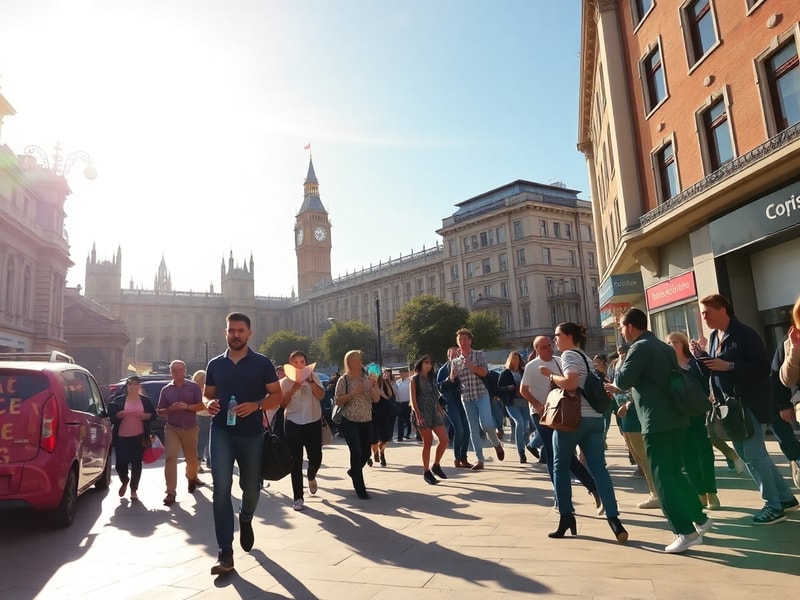
Londoners faced an unprecedented weather event this summer when the Met Office issued its first-ever extreme heat weather warning for the capital. As temperatures soared past 30°C for consecutive days in July, the city’s infrastructure strained under the pressure, revealing vulnerabilities in transport, healthcare, and urban planning. The warning, which remained in effect for four days, demanded immediate adjustments to daily routines for millions of residents.
What the extreme heat warning meant for Londoners
The Met Office’s amber warning, the second-highest level in its heat risk scale, signaled a significant threat to health and wellbeing. Unlike typical summer warnings, this alert specifically targeted vulnerable populations including elderly residents, young children, and those with pre-existing medical conditions. Public health officials urged Londoners to limit outdoor activities during peak heat hours between 11am and 3pm.
The warning came with specific advice that differed from standard summer heat recommendations. Residents were advised to check on neighbors at least twice daily, avoid physical exertion during peak temperatures, and keep homes cool by closing windows and curtains during sunlight hours. Hospitals and care facilities activated emergency protocols, while pharmacies reported increased demand for heat-related medications like rehydration salts and cooling gels.
Transport authorities implemented temporary speed restrictions on rail networks to prevent track buckling, causing widespread delays on commuter routes. The London Underground, notorious for becoming unbearably hot during summer, saw some stations close temporarily due to equipment failures in the extreme heat. These disruptions affected over 1.2 million daily commuters, demonstrating how ill-prepared London’s infrastructure remains for sustained high temperatures.
The science behind London’s extreme heat
Meteorologists traced the unusual heat wave to a stationary high-pressure system that parked itself over southern England for nearly a week. This “blocking anticyclone” prevented cooler Atlantic air from reaching London, allowing temperatures to build day after day. The urban heat island effect amplified the situation, with concrete and asphalt absorbing and re-emitting heat throughout the night, preventing temperatures from dropping significantly even after sunset.
London’s average summer temperature has increased by 1.5°C since 1960, according to the Met Office’s climate records. However, this particular heat wave exceeded even these elevated baselines. On July 19th, the temperature reached 40.2°C at Heathrow Airport, smashing the previous London record of 38.7°C set in 2019. Scientists noted that such extreme temperatures would have been “virtually impossible” without human-caused climate change, according to World Weather Attribution studies.
The heat wave also brought unusual atmospheric conditions. Unlike typical summer heat waves that bring clear skies, this event featured hazy conditions caused by Saharan dust blown north by southerly winds. This combination created a “heat dome” effect, trapping pollutants near ground level and reducing air quality to unhealthy levels across much of Greater London. The poor air quality particularly affected those with respiratory conditions, leading to a 20% increase in asthma-related hospital admissions during the warning period.
London’s infrastructure struggles under the heat
The extreme heat exposed critical weaknesses in London’s aging infrastructure. The city’s Victorian-era sewer system, designed for a different climate, struggled to cope with increased water usage as residents ran taps continuously to stay cool. Thames Water reported a 30% spike in demand during the heat wave, with some areas experiencing low water pressure as the system reached capacity.
The transport network fared no better. Network Rail reported 27 separate incidents of track buckling across the London commuter network, forcing speed restrictions on all major routes. The Jubilee line, which runs largely underground, became particularly problematic as temperatures in tunnels reached 47°C. Transport for London temporarily closed Bank station after smoke alarms triggered by overheating electrical equipment, causing major disruption to the financial district.
Even London’s famous black cabs struggled to operate efficiently. The city’s taxi drivers, who typically work 12-hour shifts, reported heat exhaustion symptoms at unprecedented rates. Many traditional cabs lack air conditioning, forcing drivers to either work in unbearable conditions or take extended breaks. This created a ripple effect through the gig economy, as food delivery services faced delays and increased costs.
The heat wave also highlighted disparities in how London’s neighborhoods cope with extreme weather. Wealthier areas with more green spaces and better-insulated homes experienced fewer impacts, while densely populated council estates with limited outdoor space and older housing stock suffered disproportionately. A recent study found that areas like Newham and Tower Hamlets experienced heat-related illness rates three times higher than Kensington and Chelsea.
How Londoners adapted to survive the heat
Londoners demonstrated remarkable resilience in adapting to the extreme conditions. Community centers became unofficial cooling stations, with libraries and museums extending their opening hours to provide air-conditioned spaces for those without access to cool environments at home. Local businesses stepped up with creative solutions, from offering free cold drinks to installing misting fans outside shops.
Many residents turned to traditional Mediterranean coping strategies. Shops reported a 400% increase in sales of electric fans, while supermarkets struggled to keep up with demand for ice cream and frozen treats. Pubs with outdoor seating saw record afternoon business as Londoners embraced the continental café culture that’s normally rare in the UK.
However, not all adaptations were positive. Some residents turned to dangerous measures like opening windows at night while leaving doors unlocked, creating security risks. Others used portable air conditioning units that overwhelmed local electricity grids, leading to scattered power outages in some areas. The fire service reported a 50% increase in calls related to heat exhaustion and dehydration.
Local authorities responded with targeted interventions. The Mayor of London’s office launched a “Cool Spaces” initiative, identifying 150 public locations that would remain open late during the heat wave. These included art galleries, sports centers, and community halls. The initiative proved so popular that many locations had to extend their hours beyond the initial four-day warning period as demand continued.
Lessons for London’s future
The extreme heat warning serves as a wake-up call for London’s planners and policymakers. The city faces a stark choice: either adapt its infrastructure for a warmer climate or face increasingly severe disruptions to daily life. Experts warn that heat waves of this magnitude could become the norm rather than the exception by 2050, with some models predicting temperatures exceeding 45°C in London during summer months.
Key areas for immediate investment include:
- Expanding London’s tree canopy coverage, which currently stands at just 13% compared to 40% in other European capitals
- Retrofitting older buildings with better insulation and cooling systems
- Creating more “blue spaces” like fountains and misting stations in public areas
- Improving early warning systems for vulnerable populations
The heat wave also exposed gaps in London’s emergency response planning. The current system relies heavily on the Met Office’s weather warnings, but these may not adequately capture the compounding risks of heat combined with poor air quality and infrastructure failures. A recent analysis suggests that London needs a dedicated heat health action plan similar to those already implemented in cities like Paris and Madrid.
Climate adaptation experts emphasize that London’s response must be holistic rather than piecemeal. The city’s drainage systems, transport networks, housing stock, and public health infrastructure all need to be considered together rather than in isolation. This represents a significant challenge for a city already struggling with housing shortages and budget constraints.
The extreme heat warning may have passed, but the questions it raised about London’s preparedness remain urgent. As climate change intensifies, the city must confront the reality that what was once considered exceptional weather is becoming increasingly common. The choices made in the coming years will determine whether London becomes a model for climate adaptation or another cautionary tale of a city unprepared for its changing environment.