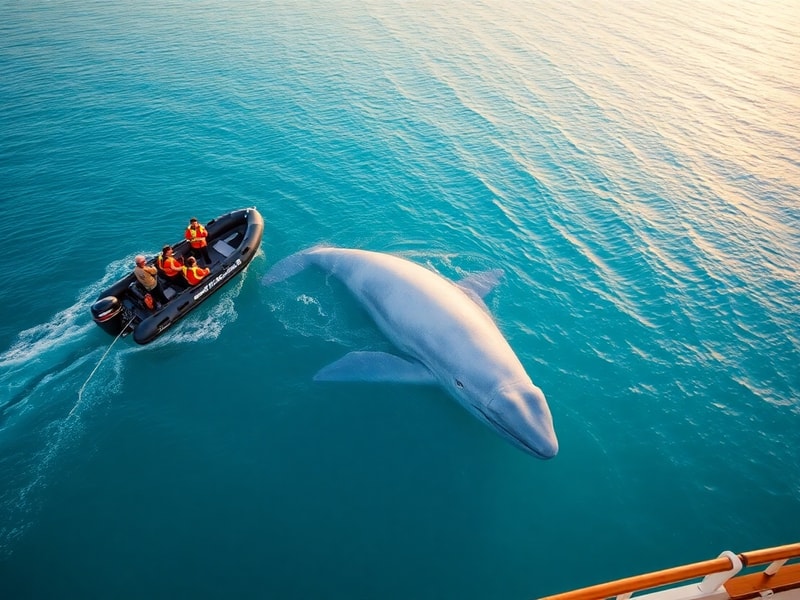
Royal Caribbean has faced scrutiny in recent years over the mortality rates of whales in waters where its ships frequently operate. The cruise line, known for its massive vessels and global routes, has come under renewed attention after a series of incidents involving critically endangered North Atlantic right whales along the U.S. East Coast. While the company has implemented measures to reduce its environmental footprint, questions persist about the effectiveness of these efforts and the broader impact of maritime traffic on marine ecosystems.
Recent Incidents and Regulatory Scrutiny
In 2022, a federal report confirmed that a North Atlantic right whale calf was struck and killed by a vessel in the vicinity of Royal Caribbean’s cruise routes near New England. The incident occurred despite speed restrictions implemented in critical habitats under the Endangered Species Act. While Royal Caribbean was not directly implicated in that specific case, the proximity of its ships to known whale migration paths has raised concerns among conservation groups. The National Oceanic and Atmospheric Administration (NOAA) has since expanded its vessel strike reduction program, which includes mandatory speed limits in certain zones.
The cruise industry operates under a patchwork of international and regional regulations, often making it difficult to enforce consistent protections for marine life. Royal Caribbean’s ships, which can weigh over 200,000 gross tons and reach speeds of 24 knots, pose a significant risk to slow-moving whales. According to a 2023 study published in the journal Marine Policy, large commercial vessels account for nearly 30% of all documented whale fatalities in the North Atlantic. The study also noted that cruise ships, due to their size and frequency, contribute disproportionately to these incidents compared to smaller vessels.
Royal Caribbean’s Environmental Initiatives
In response to growing criticism, Royal Caribbean has invested in several sustainability programs aimed at reducing its impact on marine life. The company has pledged to cut its carbon emissions by 30% by 2030 and has introduced shore power capabilities at select ports to reduce fuel consumption while docked. Additionally, Royal Caribbean became the first major cruise line to join the World Wildlife Fund’s (WWF) Ocean Witness program, which focuses on protecting critical habitats.
However, these efforts have not fully addressed concerns about whale mortality. Critics argue that voluntary measures are insufficient given the scale of the problem. In 2021, the International Fund for Animal Welfare (IFAW) ranked Royal Caribbean’s whale protection policies as “moderate,” citing a lack of transparency and third-party verification. The organization also pointed out that the company’s speed restrictions, while a step in the right direction, are not always enforced in real time. Unlike cargo ships, which are often required to use Automatic Identification System (AIS) data for tracking, cruise ships have more flexibility in reporting their routes.
Another challenge is the seasonal nature of whale migrations. North Atlantic right whales, for example, travel through the Gulf of Maine and along the U.S. East Coast between November and April. During this period, Royal Caribbean’s itineraries often overlap with these routes. While the company has rerouted some voyages to avoid high-risk areas, these adjustments are not always permanent and can be influenced by passenger demand and logistical constraints.
Industry-Wide Challenges and Accountability
The cruise industry as a whole has struggled to implement consistent whale protection measures. A 2022 report by Oceana found that only 16% of major cruise lines had publicly disclosed policies to reduce whale strikes. Royal Caribbean’s competitors, such as Carnival Corporation and Norwegian Cruise Line, have also faced scrutiny, though Royal Caribbean has taken a more public stance on sustainability. In 2023, the company launched its “Sea the Future” campaign, which highlights its investments in cleaner fuels and waste reduction technologies.
Yet, the effectiveness of these initiatives remains debated. Environmental advocates argue that technological solutions, such as underwater noise reduction systems and real-time whale detection software, are not yet widely adopted in the cruise industry. A 2023 report from the Marine Conservation Institute ranked Royal Caribbean’s whale protection efforts as “below average” compared to other sectors like shipping and fishing. The report cited the lack of mandatory whale avoidance training for crew members and the absence of independent audits of the company’s environmental claims.
Some experts suggest that the cruise industry’s reliance on economic growth may conflict with conservation goals. Royal Caribbean’s financial reports indicate that the company transported over 6 million passengers in 2023, with profits exceeding $1.5 billion. This scale of operation makes it difficult to balance profitability with environmental responsibility. However, proponents of stricter regulations argue that the industry’s long-term survival depends on healthier oceans. A 2022 study by the University of British Columbia found that marine tourism could decline by up to 30% in regions with high whale mortality rates due to diminished biodiversity.
What’s Next for Whale Protection?
The path forward for Royal Caribbean and the cruise industry will likely involve a combination of regulatory pressure and voluntary commitments. In 2023, the U.S. Coast Guard proposed new guidelines that would require all vessels over 300 gross tons to report their speeds and routes in real time when traveling through whale habitats. While these rules would apply to cruise ships, enforcement remains a challenge. NOAA has also called for the expansion of acoustic monitoring systems, which can detect whale presence and alert ships to slow down or alter course.
For Royal Caribbean, the stakes are high. The company has already faced backlash from travelers who prioritize eco-friendly travel. A 2023 survey by Condé Nast Traveler found that 62% of cruise passengers would consider switching to a competitor if a line had a poor environmental record. To rebuild trust, Royal Caribbean could take several steps, including:
- Implementing mandatory whale avoidance training for all crew members.
- Publishing annual reports on whale strikes and near-misses, verified by third-party organizations.
- Investing in emerging technologies, such as AI-powered whale detection systems, to complement existing speed restrictions.
- Partnering with conservation groups to develop and fund long-term habitat protection projects.
The company’s leadership has acknowledged the need for progress. In a 2023 interview with Travel Weekly, Royal Caribbean’s vice president of environmental stewardship stated, “We recognize that our actions today will shape the oceans of tomorrow. While we’ve made strides, we understand that more must be done to ensure our operations do not harm the species that call these waters home.” This statement reflects a growing recognition within the industry that sustainability is not just a corporate responsibility but a necessity for survival.
Ultimately, the fate of whales in Royal Caribbean’s operating waters will depend on a combination of corporate accountability, technological innovation, and regulatory enforcement. While the company has taken steps to address its environmental impact, the gap between its promises and tangible outcomes remains a point of contention. For marine conservationists, the question is no longer whether Royal Caribbean can afford to do better—but whether it can afford not to.