DoorDash Outage Exposes Gig Economy Vulnerabilities
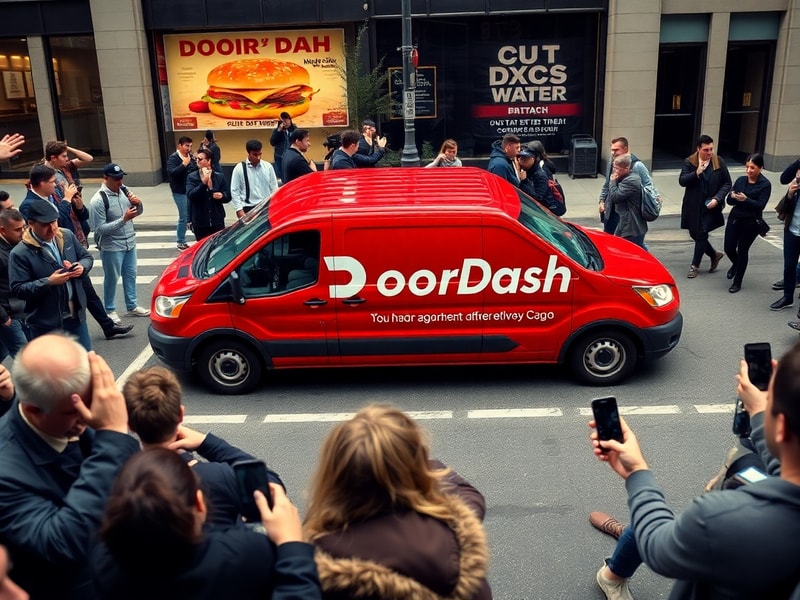
The sudden DoorDash outage on Tuesday disrupted deliveries for thousands of customers in major U.S. cities, leaving restaurants scrambling and drivers stranded. The incident, which began around 3:30 p.m. EST, affected order tracking, payment processing, and driver dispatch systems across the platform. While DoorDash restored partial functionality within two hours, the disruption exposed vulnerabilities in the gig economy’s reliance on real-time digital infrastructure.
What happened during the outage
DoorDash’s outage originated from a cascading failure in its cloud-based order management system. According to early reports, the issue stemmed from an overloaded server cluster handling payment verification. Users attempting to place orders received error messages reading “Unable to process your request,” while drivers logged into the app saw blank screens or frozen maps. Restaurants relying on DoorDash for bulk deliveries found themselves unable to confirm or update order statuses.
By 5:15 p.m. EST, DoorDash confirmed the disruption on Twitter, stating, “We’re aware of an issue affecting some orders and are working to restore service.” The company later attributed the outage to “unexpected traffic spikes” combined with a routine software update that triggered a database overload. This explanation aligns with similar incidents reported by Uber Eats and Grubhub in recent months, suggesting a pattern of fragility in third-party delivery platforms during peak demand.
Impact on customers, drivers, and restaurants
The outage had immediate ripple effects across the food delivery ecosystem:
- Customers lost access to order tracking and real-time updates, leaving many uncertain about delivery times or refund statuses.
- Drivers reported being unable to accept new orders or complete existing ones, resulting in lost income during a typically high-volume evening shift.
- Restaurants dependent on DoorDash for a significant portion of their revenue faced delayed payouts and frustrated customers calling to inquire about missing orders.
Social media lit up with complaints, particularly from urban centers like New York, Los Angeles, and Chicago, where DoorDash holds a dominant market share. One Brooklyn restaurant owner told Dave’s Locker, “We lost $1,200 in orders that DoorDash never processed. Their customer service lines were jammed, so we’re stuck waiting for answers.”
While DoorDash issued refunds and credits to affected customers, the process highlighted the lack of transparency in dispute resolution. Users who checked the app during the outage were met with a generic “We’re sorry” banner, offering no timeline for resolution. This opacity contrasts with the immediate compensation policies adopted by competitors like Uber Eats, which automatically refunded orders during similar disruptions in 2023.
Broader implications for gig economy delivery platforms
The DoorDash outage underscores deeper issues in the gig economy’s infrastructure. Delivery platforms operate on razor-thin margins, often prioritizing speed and scalability over redundancy and fail-safes. A single point of failure—a misconfigured server, a botched update, or a surge in demand—can paralyze entire networks. Unlike traditional businesses, gig platforms lack physical infrastructure to fall back on, making them uniquely vulnerable to digital disruptions.
Moreover, the incident raises questions about worker protections. DoorDash drivers, classified as independent contractors, receive no guaranteed pay during outages. While the company offered “bonuses” to drivers who waited out the disruption, these amounted to a fraction of lost earnings. This disparity highlights the precarious nature of gig work, where platform reliability directly impacts livelihoods.
For consumers, the outage serves as a reminder of the hidden costs of convenience. DoorDash’s promise of “get it delivered in minutes” depends on flawless digital execution—a standard that remains unmet. The company’s market dominance, now exceeding 60% in many urban markets, means disruptions have outsized consequences, affecting not just individual users but entire local economies.
Lessons and what’s next
DoorDash has pledged to “enhance system monitoring” and “improve redundancy” following the incident. Yet, without regulatory oversight or industry-wide standards, similar outages remain likely. The Federal Trade Commission has previously scrutinized gig platforms for deceptive practices, and this outage could reignite calls for stricter transparency rules.
For users, the key takeaway is diversification. Relying solely on one delivery app—whether DoorDash, Uber Eats, or Grubhub—leaves customers vulnerable to systemic failures. Restaurants and drivers might also consider adopting hybrid strategies, such as maintaining direct ordering systems or partnering with multiple platforms to mitigate risk.
The DoorDash outage wasn’t an isolated event; it was a symptom of a larger problem in an industry built on speed at the expense of stability. Until platforms invest in robust infrastructure and prioritize worker and customer protections, disruptions like this will continue to disrupt lives.