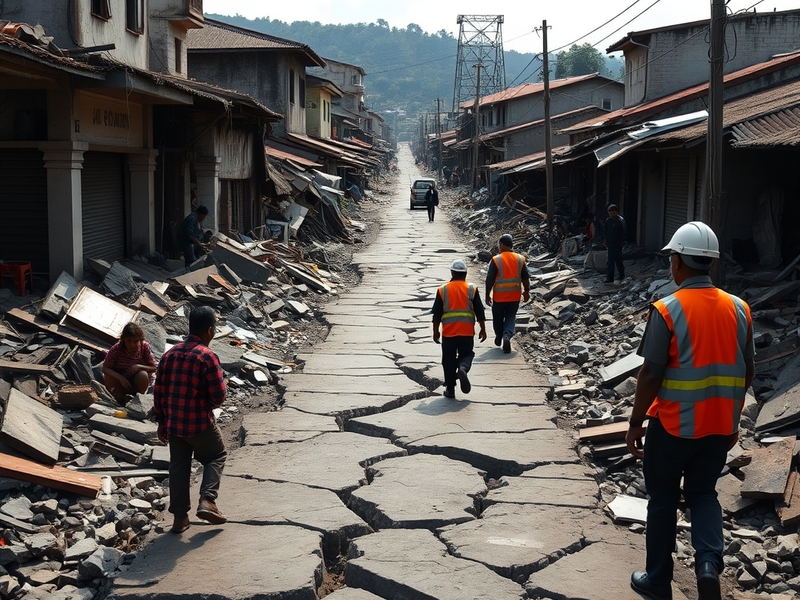
Indonesia’s location along the Pacific Ring of Fire makes it one of the most seismically active regions on Earth. Earthquakes frequently rattle the archipelago, reshaping communities and testing the resilience of millions. The country’s complex tectonic setting—where the Indo-Australian, Sunda, and Philippine Sea plates collide—creates constant geological tension. Recent tremors have once again drawn global attention, not only for their destructive power but also for the cultural and humanitarian stories they reveal.
The science behind Indonesia’s earthquakes
Indonesia sits atop the convergence of three major tectonic plates, creating a volatile seismic environment. The Indo-Australian Plate moves northward at about 6 centimeters per year, colliding with the Sunda Plate, which forms the foundation of much of Southeast Asia. This collision generates deep and shallow earthquakes, often accompanied by tsunamis due to the vertical displacement of the ocean floor.
In 2018, a 7.5-magnitude quake struck Sulawesi, triggering a deadly tsunami that devastated Palu and surrounding areas. The disaster highlighted how even moderate quakes can produce catastrophic waves when they occur near coastlines. Similarly, the 2004 Indian Ocean earthquake—originating near Sumatra—was one of the deadliest natural events in modern history, killing over 170,000 people in Indonesia alone and reshaping global disaster preparedness.
Scientists use advanced seismometers and GPS networks to monitor these shifts, but prediction remains impossible. Early warning systems, like those developed by the Indonesian Agency for Meteorology, Climatology, and Geophysics (BMKG), provide critical seconds of alert. These systems have saved lives, yet many rural communities still lack access to timely information, leaving them vulnerable.
Human stories amid geological upheaval
For many Indonesians, earthquakes are not just geological events—they are deeply personal. In West Java, the 2022 Cianjur earthquake killed hundreds and left thousands homeless. Survivors often describe the terror of waking to violent shaking in the middle of the night, scrambling to evacuate before buildings collapse. These experiences shape local folklore and spiritual beliefs, with some communities attributing tremors to ancestral warnings or divine punishment.
In Bali, a region known more for tourism than seismic activity, a 2021 temblor damaged historic temples and disrupted daily life. The quake exposed how even culturally rich areas can be unprepared. Local artisans, who rely on temple ceremonies for their livelihood, faced economic hardship as tourism stalled. Such stories reflect a broader pattern: earthquakes do not discriminate between urban centers and rural villages, nor between sacred sites and modern infrastructure.
- In Aceh, survivors of the 2004 tsunami still hold communal prayers on December 26th, marking the anniversary of the disaster.
- In Lombok, earthquake drills are now part of school curricula, a shift in mindset from fatalism to preparedness.
- In Yogyakarta, traditional Javanese architecture is being reimagined with earthquake-resistant designs, blending heritage with safety.
These narratives reveal a society learning to coexist with nature’s unpredictability. While science seeks to understand the Earth’s movements, culture and tradition offer ways to process loss and rebuild.
Global implications and lessons from Indonesia
Indonesia’s earthquakes serve as a global reminder of shared vulnerability. The 2004 tsunami prompted international aid and cooperation, leading to the establishment of the Indian Ocean Tsunami Warning System. Yet, gaps persist. Wealthier nations with advanced infrastructure fare better, but poorer regions often face disproportionate suffering. The 2018 Palu disaster, for instance, revealed weaknesses in Indonesia’s early warning systems, prompting calls for better coordination with global partners like Japan and the United States.
Climate change adds another layer of complexity. Rising sea levels and coastal erosion can amplify tsunami risks, while urbanization in high-risk zones—such as Jakarta’s northern suburbs—creates new vulnerabilities. Indonesia’s capital is sinking at an alarming rate, partly due to groundwater extraction, making future earthquakes even more dangerous. Policymakers are now exploring solutions like artificial recharge systems and stricter building codes, but implementation lags behind need.
Internationally, Indonesia’s experiences have influenced disaster response strategies. Countries like the Philippines and Chile, also on the Ring of Fire, have adopted similar early warning systems and community training programs. Even non-seismic nations, such as the Netherlands, study Indonesia’s flood and earthquake resilience to inform their own climate adaptation plans.
Preparing for the next tremor
Despite the inevitability of future quakes, Indonesia is making progress. The government has expanded its disaster education programs, targeting both urban and rural populations. Apps like “Magma Indonesia” provide real-time alerts, while NGOs work with local leaders to conduct evacuation drills in remote villages. Social media has also become a tool for rapid information sharing, though misinformation remains a challenge.
Community-led initiatives are proving effective. In West Sumatra, the “Siaga Bencana” (Disaster Preparedness) movement trains volunteers to assist during emergencies. These grassroots efforts complement national strategies, ensuring no one is left behind. Still, funding and resources remain uneven, particularly in eastern provinces like Papua and Maluku, where infrastructure is sparse.
For travelers visiting Indonesia, awareness is key. The Travel industry now includes earthquake safety briefings in tour packages, especially in high-risk areas like Sumatra and Sulawesi. Hotels and resorts in Bali and Jakarta are retrofitting buildings with base isolators and flexible materials. These steps may seem small, but they reflect a growing recognition that resilience is everyone’s responsibility.
Indonesia’s relationship with earthquakes is one of coexistence. The ground may shake without warning, but the spirit of its people endures. From the temples of Yogyakarta to the fishing villages of Aceh, communities are rediscovering traditional knowledge while embracing modern science. The challenge now is to ensure that resilience outpaces destruction—and that every Indonesian, no matter where they live, has the tools to face the next tremor.