Training Camp Under the Microscope: What Travis Kelce’s Presence Means for the Chiefs in 2024
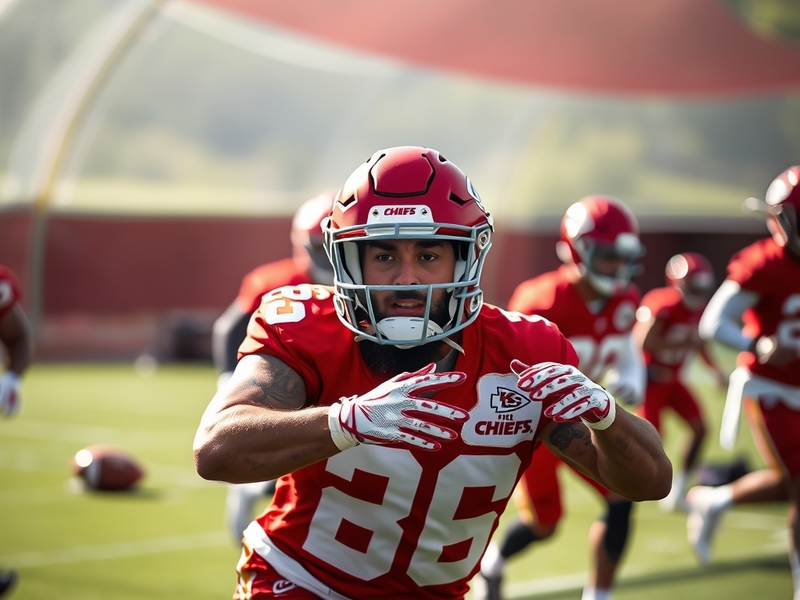
Travis Kelce’s arrival at Kansas City Chiefs training camp this summer carried more than the usual anticipation that surrounds a veteran tight end. At 34 years old and coming off another Pro Bowl season, Kelce is not just a star—he’s the kind of player who redefines what a tight end can do in today’s NFL. His presence on the practice field signals something larger than one player’s preparation for a new season. It’s a statement about the Chiefs’ ongoing championship ambitions, Mahomes’ supporting cast, and the evolving role of the tight end in Andy Reid’s offense.
Kelce’s reps in camp are closely watched not only for his physical readiness but for how he integrates with the team’s younger talent. The Chiefs have built a roster that blends experience with rising stars, and Kelce’s leadership—both on and off the field—has become a cornerstone of that culture. As offensive coordinator Matt Nagy fine-tunes the passing game, Kelce’s chemistry with Patrick Mahomes remains the most scrutinized dynamic of the entire system. Every timing route, every subtle adjustment in protection, and every red-zone package begins with that duo.
Why Kelce’s Camp Routine Matters More Than Ever
Training camp is where legends either reaffirm their status or face the first signs of decline. For Kelce, this year’s camp is a referendum on longevity, adaptability, and trust in the process. He’s entering his 12th season, a tenure that spans multiple eras of Chiefs football. Yet, instead of showing signs of slowing down, Kelce has leaned into a more refined role. He’s not just blocking on run downs or running deep routes—he’s operating as a chess piece, a safety valve, and a red-zone weapon all at once.
One of the most telling aspects of Kelce’s camp routine is his emphasis on route precision. Under Reid and Nagy, the Chiefs’ passing game has become increasingly complex, with layered route concepts that rely on timing and anticipation. Kelce’s ability to run subtle adjustments—like late-breaking outs or option routes—has made him even more valuable in a system that values versatility over sheer athleticism. His camp reps have included work on “pick” routes and play-action fakes, both of which are designed to exploit defenses that are keying on Mahomes’ improvisational genius.
Kelce’s physical condition has also been a focal point. After undergoing minor offseason procedures, he arrived at camp lighter but more explosive. His weight was listed at 250 pounds, down from 252, but his movement in drills suggests improved agility. That slight shift could be the difference between a tight end who wins 50-50 battles and one who dominates them. The Chiefs are banking on that edge as they prepare for a schedule that includes early matchups against aggressive pass rushes in Baltimore and Cincinnati.
What’s Next for the Chiefs’ Tight End Hierarchy
The Chiefs’ tight end room is no longer a two-man show. While Kelce remains the clear No. 1, the emergence of rookie Xavier Worthy and the continued development of Noah Gray have added new dimensions to the position. Worthy, a speedster with 4.29-second 40-yard dash speed, has drawn comparisons to Tyreek Hill for his ability to stretch the field vertically. His presence forces defenses to account for deep threats, which in turn could open up the middle of the field for Kelce. Gray, meanwhile, has carved out a role as a reliable blocker and underneath receiver, giving Reid another option in critical third-down situations.
This depth could be the difference in a playoff run. The Chiefs’ offense thrives on unpredictability. When defenses commit extra resources to stopping Kelce, they risk leaving Worthy or JuJu Smith-Schuster exposed. Conversely, when they focus on stopping the speed game, Kelce becomes the beneficiary of single coverage. The tight end room’s versatility is a luxury few teams in the NFL enjoy, and it’s a direct result of Reid’s ability to maximize personnel.
Kelce’s camp work has also included reps with the second-team offense, where he’s paired with backup quarterback Blaine Gabbert. Those snaps are invaluable for testing new concepts and ensuring continuity when Mahomes isn’t under center. Gabbert’s familiarity with the offense—and Kelce’s comfort with him—could pay dividends if Kansas City finds itself in a situation where the star quarterback is sidelined. It’s a level of preparation that underscores the Chiefs’ commitment to resilience.
The Broader Implications for the Chiefs and the NFL
Kelce’s presence at training camp isn’t just about the Chiefs’ Super Bowl aspirations. It’s a statement about the future of the tight end position in the NFL. For years, the league has trended toward prioritizing speed and versatility at the tight end spot. Kelce represents the counterpoint: a player who blends elite route-running, physicality, and football IQ to remain dominant well into his 30s. His ability to defy the typical aging curve of NFL players forces teams to reconsider how they evaluate and develop tight ends.
For the Chiefs, Kelce’s longevity is a competitive advantage. In an era where injuries and roster turnover can derail even the best teams, having a player of his caliber who can be counted on week after week is invaluable. It also allows Reid to build around a core that includes Mahomes, Chris Jones, and now Kelce—three players who have been part of the Chiefs’ recent dynasty. That continuity is rare in the NFL, where turnover is the norm.
The NFL’s shift toward tight end-heavy offenses has also been accelerated by Kelce’s success. Teams like the 49ers, Dolphins, and Ravens have built their systems around dominant tight ends, and Kelce’s continued excellence validates that strategy. His camp reps serve as a reminder that, in the right system, a tight end can be as impactful as a franchise quarterback.
Key Takeaways from Kelce’s Training Camp
As camp progresses, several themes are emerging that could shape the Chiefs’ season:
- Route refinement: Kelce’s focus on precision and timing is evident in his camp reps, signaling a more surgical approach to his route-running.
- Leadership and culture: His presence in the locker room and on the field reinforces the Chiefs’ winning culture, especially as younger players like Worthy and Skyy Moore step into larger roles.
- Versatility in the offense: Kelce’s ability to play multiple roles—blocker, receiver, decoy—makes the Chiefs’ offense more unpredictable and harder to defend.
- Physical readiness: After minor offseason procedures, Kelce’s lighter frame and improved agility could give him an edge in contested situations.
- Depth at tight end: The emergence of Worthy and Gray ensures that Kelce isn’t overworked, reducing the risk of injury and keeping the offense fresh.
Looking Ahead to the Regular Season
Kelce’s training camp performance is a microcosm of the Chiefs’ broader approach: preparation meets adaptability. Every snap he takes, every route he runs, and every block he lays down is a step toward solidifying Kansas City’s place as a Super Bowl contender. The Chiefs’ offense is built on the foundation of Mahomes and Kelce, but it’s the layers around them—Worthy’s speed, Gray’s reliability, and the depth of the receiving corps—that make this unit so dangerous.
As the regular season approaches, the focus will shift from individual reps to team execution. The Chiefs’ first game against the Ravens will be a true test of how well this offense has come together. If Kelce can stay healthy and maintain his high-level play, the Chiefs will have a significant advantage in the AFC. But if injuries or schematic mismatches arise, the depth of this roster—especially at tight end—will be put to the test.
For now, Kelce’s training camp is a reminder that greatness isn’t just about talent. It’s about preparation, adaptability, and the willingness to evolve. In a league where players often peak early and decline quickly, Kelce is defying the odds. And for the Chiefs, that’s the kind of edge that could define another championship run.