The Science Behind Lunar Eclipses: How They Work and Why They Matter
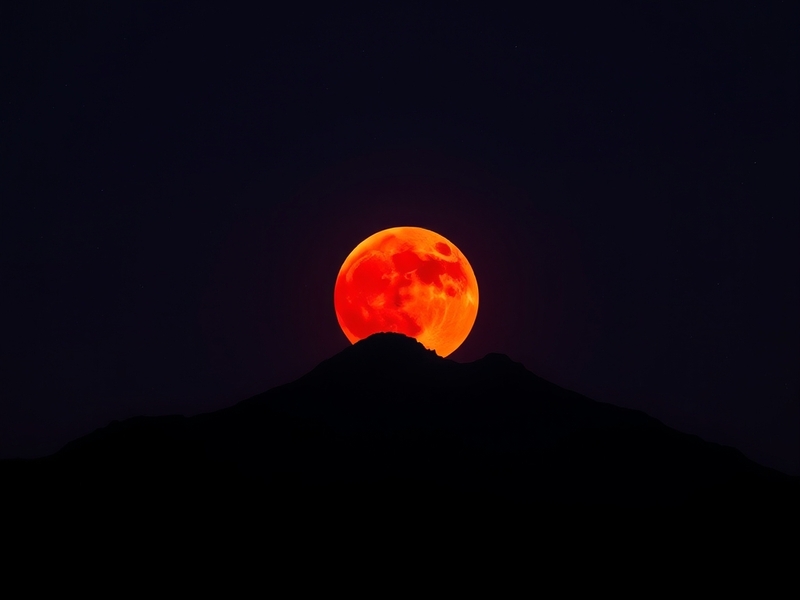
Lunar eclipses have fascinated humanity for millennia, blending scientific precision with a sense of cosmic wonder. Unlike solar eclipses, which cast narrow shadows on Earth, lunar eclipses occur when the Earth positions itself directly between the sun and the moon, blocking sunlight from reaching the lunar surface. This alignment creates a dramatic visual effect, turning the moon a deep red or copper hue—a phenomenon often called a “blood moon.” The color results from Earth’s atmosphere scattering shorter blue wavelengths of light while allowing longer red wavelengths to pass through, casting a filtered glow on the moon.
The mechanics behind lunar eclipses are governed by celestial geometry. For an eclipse to occur, the sun, Earth, and moon must align almost perfectly in a straight line, a configuration known as syzygy. This happens only during a full moon, but not every full moon leads to an eclipse. The moon’s orbit is tilted about 5 degrees relative to Earth’s orbit around the sun, which means eclipses only occur when the full moon is near one of the two points where the orbital planes intersect, called nodes. These intersection points create the conditions for the alignment necessary for an eclipse.
There are three primary types of lunar eclipses: total, partial, and penumbral. A total lunar eclipse occurs when the entire moon passes through Earth’s umbra, the darkest part of its shadow. During this event, the moon often takes on a reddish appearance. A partial lunar eclipse happens when only a portion of the moon enters the umbra, leaving the rest bathed in Earth’s penumbra, the lighter outer shadow. Penumbral eclipses are the most subtle; the moon merely grazes the penumbral shadow, resulting in a barely perceptible dimming that can go unnoticed without careful observation.
Lunar eclipses are not rare, but their visibility varies depending on geographic location. On average, there are two to four lunar eclipses each year, though total eclipses occur less frequently—roughly once every two and a half years. This frequency makes them more accessible to observe than solar eclipses, which are typically visible only along narrow paths on Earth’s surface. Because lunar eclipses can be seen from anywhere on the night side of the planet, they offer a shared experience for skywatchers across continents.
A Historical Perspective: Lunar Eclipses in Myth and Science
Ancient civilizations often interpreted lunar eclipses through the lens of mythology and superstition. The ancient Babylonians recorded lunar eclipses as early as 700 BCE, using them to predict future events and celestial cycles. They believed eclipses were omens, sometimes interpreting them as signs of impending doom or divine displeasure. In Chinese folklore, lunar eclipses were thought to be caused by a celestial dragon devouring the moon, a belief that persisted for centuries. People would bang drums and make loud noises to scare the dragon away, a tradition that reflects humanity’s early attempts to reconcile natural phenomena with cultural narratives.
The Greeks, particularly Aristotle, made significant strides in understanding lunar eclipses through rational observation. Around 350 BCE, Aristotle noted that the shadow cast by Earth during a lunar eclipse was always round, a clue that Earth itself must be spherical. This observation provided early evidence for the Earth’s shape, long before space travel or modern astronomy. Centuries later, during the Renaissance, lunar eclipses became tools for refining astronomical models. Nicolaus Copernicus used observations of lunar eclipses to support his heliocentric theory, demonstrating that the moon’s motion could be explained without relying on an Earth-centered universe.
In more recent history, lunar eclipses have played a role in scientific discovery. During the total lunar eclipse of 1888, astronomers observed how Earth’s atmosphere refracted sunlight, leading to advancements in understanding atmospheric composition. Similarly, the Apollo missions used lunar eclipses to calibrate instruments and study the moon’s thermal properties. These events highlight how lunar eclipses bridge the gap between ancient wonder and modern science, serving as both a spectacle and a scientific resource.
Viewing and Photographing Lunar Eclipses: Tips for Skywatchers
Observing a lunar eclipse requires minimal equipment compared to solar eclipses, making it accessible to amateur astronomers and casual viewers alike. The naked eye is sufficient for enjoying the event, though binoculars or a small telescope can enhance the experience, revealing lunar surface details as the shadow progresses. Unlike solar eclipses, which demand protective eyewear, lunar eclipses pose no risk to vision, allowing for prolonged viewing sessions without special precautions.
Timing is crucial for catching the best moments of an eclipse. Total lunar eclipses unfold over several hours, with the key phases including the penumbral eclipse, partial eclipse, totality, and the reverse sequence as the moon emerges from Earth’s shadow. Totality, when the moon is fully within the umbra, can last up to 107 minutes, depending on the alignment. For photographers, this phase offers the most dramatic imagery, with the moon glowing in its signature red or orange tones against the dark sky. A tripod and a camera with manual settings are ideal for capturing these moments, especially in areas with minimal light pollution.
To maximize your viewing experience, consider these practical tips:
- Check the timing: Use reliable astronomical resources or apps to determine the exact start and end times of the eclipse in your location. Websites like timeanddate.com or NASA’s eclipse predictions provide detailed schedules.
- Find a dark spot: Urban light pollution can diminish the visibility of the eclipse’s subtler phases. Seek out rural areas or parks with unobstructed views of the sky.
- Dress appropriately: Even summer eclipses can feel chilly during late-night viewing sessions. Bring layers and a blanket to stay comfortable.
- Use a red flashlight: Preserve your night vision by using a red-light flashlight instead of white light. This helps you see your equipment and surroundings without disrupting your eyes’ adaptation to darkness.
For those interested in documenting the event, a DSLR camera with a telephoto lens (200mm or longer) can produce stunning images of the eclipsed moon. Experiment with different exposure settings to balance the brightness of the moon against the dark sky. Wide-angle shots that include foreground elements, such as trees or buildings, can add depth and context to your photographs. Sharing your images on social media or with local astronomy clubs can also enhance the communal experience of witnessing such a celestial event.
Cultural Significance and Modern Observations
Beyond their scientific value, lunar eclipses continue to hold cultural and symbolic meaning in contemporary society. Many indigenous cultures view eclipses as significant spiritual events. For example, the Navajo people traditionally observe lunar eclipses with quiet reflection, considering them a time to refrain from activity and respect the natural order. Similarly, Hindu traditions associate lunar eclipses with the demon Rahu, whose head is said to swallow the moon temporarily before releasing it. Rituals such as fasting and prayer are often observed during these events.
In modern times, lunar eclipses have also become opportunities for public engagement with astronomy. Planetariums, observatories, and science museums frequently host viewing parties, offering telescopes and expert commentary to educate the public. These events foster a sense of community among astronomy enthusiasts and inspire curiosity in younger generations. Social media platforms amplify the reach of lunar eclipses, with live streams and hashtags allowing global audiences to share the experience in real time.
Scientifically, lunar eclipses remain valuable for ongoing research. NASA and other space agencies use these events to study the moon’s thermal properties, surface temperature changes, and even potential volcanic activity on distant worlds. The Hubble Space Telescope has also utilized lunar eclipses to observe how Earth’s atmosphere filters light, providing data that could inform the search for habitable exoplanets. These applications demonstrate how even centuries-old phenomena continue to yield new insights.
Looking ahead, lunar eclipses will remain a bridge between the past and future of astronomy. Upcoming eclipses, such as the total lunar eclipse on March 14, 2025, visible across North and South America, offer another chance for collective observation and discovery. Whether viewed through the lens of science, culture, or personal wonder, lunar eclipses remind us of the intricate dance of celestial bodies—and our place within it.