Who Was Lyra McKee?
Lyra McKee was a journalist whose life was tragically cut short on April 18, 2019, during a riot in Derry’s Creggan estate. At just 29 years old, she had already established herself as a sharp observer of Northern Ireland’s social and political landscape. Her reporting on the region’s troubled past and its lingering tensions resonated with readers both locally and internationally.
McKee was born in Belfast in 1990 and grew up in the working-class neighborhood of Ardoyne. Her upbringing in a community marked by decades of conflict shaped her perspective early on. She began writing as a teenager, initially blogging about her experiences growing up in Northern Ireland. Her raw, unfiltered voice caught the attention of editors, and by her mid-20s, she was contributing to major publications like The Guardian, The Washington Post, and BuzzFeed News.
Her work often focused on the human cost of Northern Ireland’s Troubles, the unresolved legacy of violence, and the generational trauma that persisted long after the Good Friday Agreement. McKee’s writing was personal yet universal, blending investigative journalism with deeply personal narratives. She had a rare ability to make complex political issues feel intimate and immediate.
A Career Defined by Courage and Compassion
McKee’s journalism career was marked by a fearless commitment to truth, even when it meant confronting uncomfortable realities. In 2016, she published a groundbreaking investigation into the unsolved killings of LGBTQ+ individuals during the Troubles, a topic often ignored in mainstream historical accounts. Her reporting shed light on a dark chapter of Northern Ireland’s past and challenged the narrative of progress many assumed had been achieved.
Her 2017 TEDx talk, titled How Journalism Can Help Us Love Each Other Again, further cemented her reputation as a voice for reconciliation. In it, she argued that journalism could be a force for healing, not just a tool for exposing conflict. She advocated for stories that humanized rather than dehumanized, a philosophy that guided her work.
McKee’s most notable achievement, however, was her book Angels with Blue Faces, a collection of essays examining the Troubles’ aftermath. The title referenced a mural in Belfast depicting masked paramilitaries, a stark reminder of how deeply the past was still embedded in the present. Through her writing, she dissected the myths and realities of Northern Ireland’s divided society, offering a nuanced perspective that avoided simplistic narratives.
Her work earned her widespread acclaim. In 2016, she was named Sky News Young Journalist of the Year, and in 2018, she was shortlisted for the Orwell Prize for Political Writing. Colleagues and mentors praised her integrity, her empathy, and her refusal to shy away from difficult subjects. She was not just a reporter; she was a storyteller who believed journalism could change hearts and minds.
The Night That Changed Everything
The events of April 18, 2019, remain etched in the collective memory of Northern Ireland. McKee was in Derry to cover a night of unrest in the Creggan estate, where tensions between police and dissident republican groups had been escalating. She was standing near police lines when a gunman opened fire, fatally wounding her. The shot was fired by members of the New IRA, a dissident group opposed to the peace process.
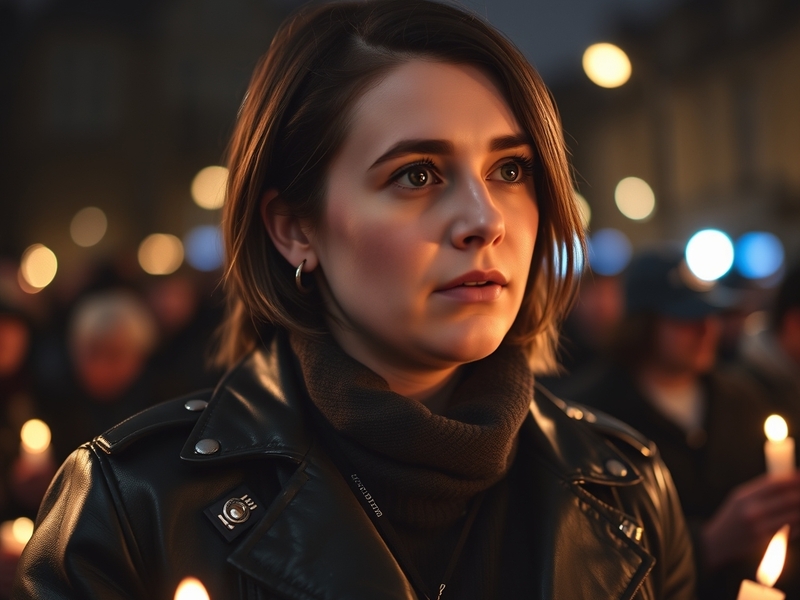
The killing sent shockwaves through Northern Ireland and beyond. Politicians from all sides condemned the violence, and vigils were held across the country. McKee’s funeral was attended by thousands, including then-Taoiseach Leo Varadkar and former US Secretary of State Hillary Clinton. Her death was a stark reminder that the ghosts of the past were far from exorcised.
The tragedy also reignited debates about the role of journalism in conflict zones. McKee was not embedded with a military unit or protected by armed guards. She was there as a civilian, doing what she had always done: bearing witness. Her death raised difficult questions about safety, access, and the ethical responsibilities of journalists working in high-risk environments.
In the aftermath, the New IRA issued a statement expressing regret for her death, calling it a tragic accident. But for many, the killing was a brutal reminder of how quickly violence could erupt, even in a society that prided itself on having moved past its violent history. McKee’s death was not just a personal loss; it was a symbolic one, representing the fragility of peace in a region still grappling with its past.
Legacy: A Journalist Who Inspired Change
Lyra McKee’s legacy extends far beyond her untimely death. She left behind a body of work that continues to influence journalists, historians, and activists. Her writing challenged readers to confront uncomfortable truths and to seek understanding in a divided society. She proved that journalism could be both a mirror and a catalyst for change.
In the years since her death, McKee’s family and colleagues have worked to honor her memory. The Lyra McKee Bursary, established by The Guardian, provides funding for young journalists from underrepresented backgrounds. Her family has also campaigned for greater protections for journalists working in conflict zones, emphasizing the need for safety without compromising the pursuit of truth.
Her story also serves as a cautionary tale about the cost of silence. McKee’s work was driven by a belief that journalism could help heal wounds, but her death underscored the dangers of speaking truth to power in a society still haunted by its past. It’s a tension that continues to define Northern Ireland’s media landscape, where reporters must navigate the fine line between accountability and safety.
McKee’s life and work offer a blueprint for how journalism can be a force for good. She didn’t just report the news; she challenged her readers to think critically about the world around them. In an era of misinformation and polarization, her commitment to truth and empathy feels more relevant than ever. She proved that journalism could be both a profession and a calling—a way to bear witness, to bridge divides, and to inspire change.
To explore more about investigative journalism and its role in conflict zones, visit Dave’s Locker News for in-depth coverage of similar topics. For a broader look at how journalism shapes public discourse, check out Dave’s Locker Analysis.
- Investigative depth: McKee’s reporting went beyond surface-level coverage, delving into the human stories behind political conflicts.
- Advocacy through journalism: She believed journalism could foster reconciliation, not just expose divisions.
- Unflinching honesty: Her work tackled taboo subjects, from LGBTQ+ killings during the Troubles to the lingering trauma of divided communities.
- Youthful perspective: As a young journalist, she brought fresh insights to Northern Ireland’s complex history.
- Lasting impact: Her legacy continues through scholarships, tributes, and a renewed focus on journalist safety.
A Call to Action
Lyra McKee’s life was a testament to the power of storytelling. In a world where conflict often dominates the headlines, her work reminds us of the importance of listening to those who are too often silenced. She challenged her readers to confront uncomfortable truths and to seek understanding in a fractured society.
Her death was a tragedy, but it was not the end of her story. Through her writing, her advocacy, and her unwavering commitment to truth, McKee continues to inspire a new generation of journalists. She proved that journalism could be more than just a profession—it could be a force for healing and change.
As Northern Ireland grapples with its past and looks toward its future, McKee’s words and work serve as a guiding light. They remind us that the stories we tell—and the stories we refuse to tell—shape the world we live in. In honoring her legacy, we honor the power of journalism to challenge, to illuminate, and to transform.