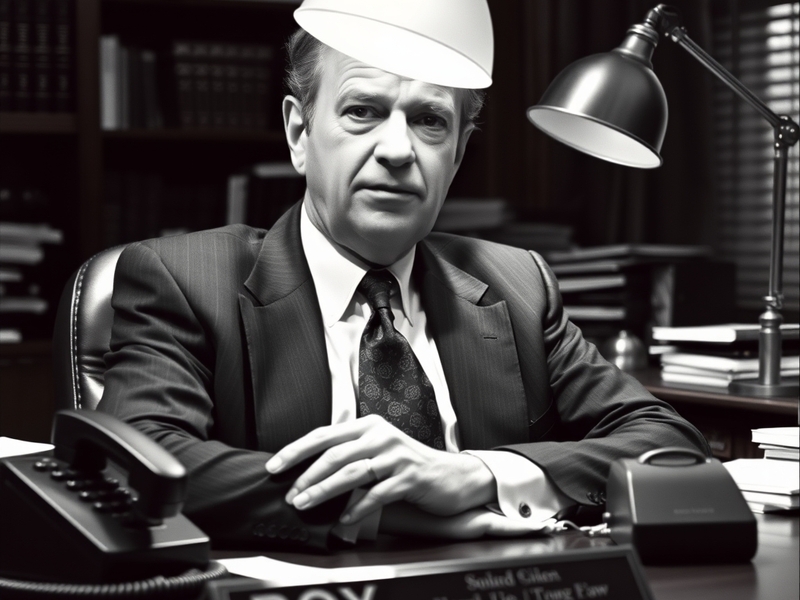
Roy Cohn remains one of the most polarizing and enigmatic figures in 20th-century American history. A towering legal mind who shaped Cold War politics, a ruthless prosecutor who helped destroy reputations, and a shadowy power broker who mentored figures like Donald Trump, Cohn’s influence stretched far beyond the courtroom. His life was a paradox of brilliance and brutality, charm and cruelty, ambition and self-destruction. To understand modern American politics and legal culture, one must grapple with Cohn’s complicated legacy.
Early Life and Rise to Power
Born in 1927 to a politically connected Jewish family in the Bronx, Roy Marcus Cohn grew up in an environment that prized power and connections. His father, a judge and Democratic district leader, and his mother, a prominent social figure, cultivated a family culture that valued influence above all else. Cohn attended Columbia University and later Columbia Law School, where he excelled academically but also displayed an early penchant for aggressive tactics. His legal career began inauspiciously but quickly accelerated when, at just 20 years old, he joined the U.S. Department of Justice as a law clerk.
Cohn’s breakout moment came during the prosecution of Julius and Ethel Rosenberg, accused of spying for the Soviet Union. As an assistant U.S. attorney in 1950, he played a central role in their trial, securing a conviction that led to their execution. The case was fraught with legal controversy, including allegations of prosecutorial misconduct and coerced testimony. Yet Cohn never wavered in his belief that the Rosenbergs were guilty and deserved the harshest penalty. The trial cemented his reputation as a fearless prosecutor willing to take on high-profile cases, regardless of public sentiment.
By the mid-1950s, Cohn had become a household name, known for his sharp legal mind and sharper tongue. His work with Senator Joseph McCarthy during the anti-communist hearings further solidified his reputation as a political enforcer. Cohn’s role in the McCarthy era—where he helped orchestrate investigations into suspected communists in government and entertainment—showed his willingness to exploit fear for political gain. Though McCarthy’s downfall in 1954 tarnished his image, Cohn emerged relatively unscathed, a testament to his ability to navigate shifting political sands.
The Art of Legal Warfare
Cohn’s legal strategy was built on intimidation, delay, and relentless pressure. He believed that winning wasn’t about justice but about control. His tactics included burying opponents in paperwork, exploiting media leaks to damage reputations, and using personal connections to influence judges and juries. One of his most infamous techniques was the “Cohn Bluff,” where he would threaten legal action against opponents, knowing that the mere threat of a protracted legal battle could force a settlement or silence criticism.
His approach was not without consequences. Cohn faced multiple disciplinary actions throughout his career, including disbarment proceedings in New York and disciplinary charges in New Jersey. In 1986, he was disbarred for unethical conduct, including misappropriation of client funds and lying to courts. Yet even in his darkest moments, Cohn maintained a veneer of invincibility, dismissing his critics as weak or jealous. His legal philosophy was simple: the ends justified the means, and morality was a luxury he couldn’t afford.
Cohn’s clients often reflected his own ruthless worldview. He represented mobsters like John Gotti, corrupt politicians, and wealthy businessmen accused of fraud. His legal work blurred the lines between legitimate advocacy and outright corruption. Yet Cohn’s defenders argued that he was merely a product of his time—a lawyer who operated in an era when legal ethics were loosely enforced and personal connections often determined outcomes. Whether admired or reviled, Cohn’s influence on the legal profession was undeniable.
Personal Life and the AIDS Crisis
Cohn’s personal life was as complicated as his professional one. He was openly gay at a time when homosexuality was stigmatized and criminalized. His relationships were often secretive, and he went to great lengths to conceal his sexuality, even as he faced rumors and innuendo. Cohn’s sexuality became a focal point during the AIDS crisis of the 1980s, when he was diagnosed with the disease. Despite his declining health, he refused to acknowledge his illness publicly, even suing a newspaper that suggested he had AIDS.
Cohn’s denial of his illness extended to his legal career. He continued to work despite his deteriorating condition, even representing clients in high-stakes cases. His refusal to accept treatment or acknowledge his diagnosis baffled friends and colleagues. Some speculated that his denial was rooted in fear, while others believed it was a final act of defiance against a society that had long marginalized him. Cohn’s death in 1986 from complications related to AIDS was a quiet affair, attended only by a small circle of friends and associates.
Cohn’s legacy in the LGBTQ+ community is particularly fraught. While he never publicly advocated for LGBTQ+ rights, he quietly supported some gay causes and individuals. However, his refusal to acknowledge the AIDS crisis—when thousands of gay men were dying—left a stain on his reputation. Some historians argue that his silence contributed to the stigma surrounding the disease, while others believe he was simply too afraid to confront his own mortality. Either way, Cohn’s personal struggles offer a stark contrast to the public image he cultivated as an invincible legal strategist.
Legacy and Influence on Modern Politics
Roy Cohn’s influence on modern American politics cannot be overstated. His mentorship of Donald Trump in the 1970s and 1980s shaped Trump’s approach to business, legal strategy, and public relations. Trump often cited Cohn as a major influence, praising his ability to manipulate the media and intimidate opponents. The two shared a worldview that prioritized power, loyalty, and personal gain above all else. Even after Cohn’s death, his shadow loomed large over Trump’s political career, particularly during the 2016 presidential campaign and Trump’s subsequent presidency.
Cohn’s tactics—legal bullying, media manipulation, and personal attacks—have become hallmarks of modern political discourse. Figures on both sides of the aisle have adopted his playbook, using fear and intimidation to silence critics and advance their agendas. His influence can be seen in the rise of “cancel culture,” the weaponization of legal threats, and the erosion of public trust in institutions. Whether in politics, media, or business, Cohn’s legacy is a reminder of how power can be wielded without regard for ethics or consequences.
Yet Cohn’s story is also a cautionary tale about the dangers of unchecked ambition. His life was a series of contradictions: a brilliant legal mind who destroyed lives, a closeted gay man who perpetuated stigma, a mentor who left his protégé with a toxic legacy. His disbarment and early death were the culmination of a life lived on the edge, where ethics were secondary to power. Today, as debates rage over the role of lawyers in politics and the ethics of legal advocacy, Cohn’s story remains a stark reminder of what happens when the law becomes a weapon rather than a shield.
For those interested in exploring similar themes, the Analysis and Politics sections on Dave’s Locker offer deeper dives into the intersection of power, ethics, and influence in modern society.