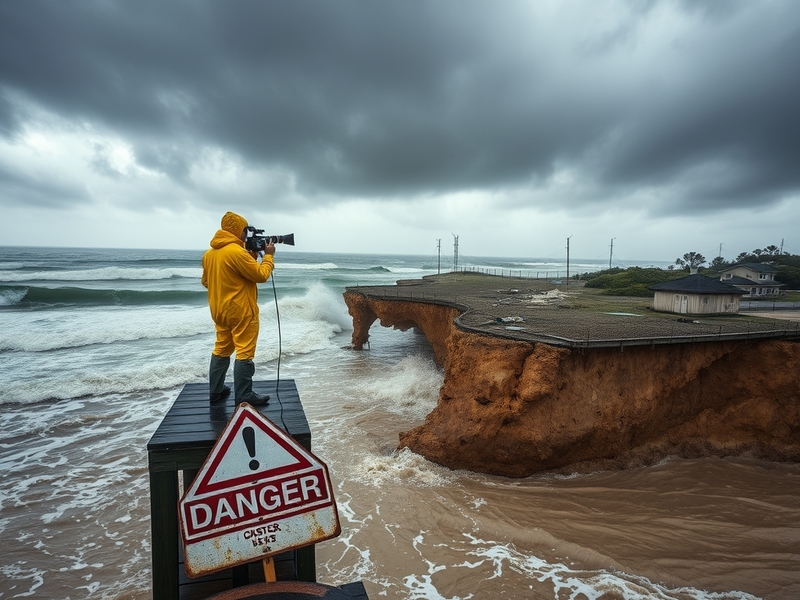
The Global Ripple Effect of the Exceptional El Niño Weather Pattern
The El Niño phenomenon has returned with unusual intensity this year, reshaping weather systems from the Pacific coasts of the Americas to the rice paddies of Southeast Asia. Climatologists confirm this is one of the strongest events recorded since 1950, with sea surface temperatures in critical zones running more than 2°C above normal. Unlike typical seasonal variations, this prolonged warming disrupts atmospheric circulation patterns that govern everything from monsoon rainfall in India to winter storm tracks across North America.
Local communities are already feeling the consequences. In Peru, where El Niño traditionally brings torrential downpours, overflowing rivers have claimed lives and displaced thousands. Meanwhile, Australian farmers brace for another dry spell after years of drought, their wheat yields threatened by reduced soil moisture. The contrast between regions—some drowning in excess water, others withering under drought—highlights how interconnected global weather systems have become under climate pressure.
How This El Niño Differs from Past Events
Not all El Niño patterns are equal. The Oceanic Niño Index (ONI) tracks three-month running averages of sea surface temperature anomalies in a specific equatorial Pacific region. The current event has maintained ONI values above 2.0 for six consecutive months, a threshold last reached during the historic 1997-98 episode. Researchers note two key distinctions: first, the warming is concentrated deeper in the ocean rather than just at the surface, and second, it has persisted longer than most models predicted.
This longevity amplifies global impacts. While a typical El Niño might last 9-12 months, the current system shows signs of lasting into mid-2024. Such persistence allows weather anomalies to intensify and spread. For example, the delayed onset of India’s monsoon this year has been linked to persistent high-pressure systems over the Indian Ocean, a pattern consistent with strong El Niño conditions.
The timing also matters. When El Niño peaks during Northern Hemisphere winter, its effects on North American weather become most pronounced. This winter’s forecast calls for wetter-than-average conditions across the southern United States, with potential flooding in Texas and Louisiana. Ski resorts in the Rockies may face thin snowpack, while the Pacific Northwest could see reduced storm activity—a boon for drought-stricken California but bad news for winter recreation businesses.
The Human Cost Behind the Climate Numbers
Beyond meteorological records, El Niño’s social consequences are becoming impossible to ignore. In Colombia, landslides triggered by relentless rainfall have destroyed entire villages, forcing emergency evacuations. In Ethiopia, delayed rains threaten to worsen food insecurity in regions already vulnerable to drought. The World Food Programme estimates that over 20 million people across Eastern and Southern Africa may face acute food shortages by early 2024 due to failed harvests linked to El Niño-related weather disruptions.
Fisheries are another casualty. Along the Peruvian coast, where anchovy populations normally thrive in the nutrient-rich Humboldt Current, warm waters have driven fish stocks southward. Local fishermen report catches down by 60% compared to last year, threatening livelihoods that depend on the sea. The economic ripple effect extends to global seafood markets, where prices for fishmeal—a key ingredient in animal feed—have already begun to climb.
Urban centers face their own challenges. In Jakarta, officials have warned of potential flooding as unusually heavy rains combine with high tides. The city’s drainage systems, already strained by rapid development, may struggle to handle the increased volume. Meanwhile, in sports venues across South America, organizers are adjusting schedules for soccer matches as unpredictable weather threatens pitch conditions.
Adaptation Strategies: What Works and What Doesn’t
Governments and communities are scrambling to mitigate El Niño’s worst effects. In the Philippines, authorities have pre-positioned relief supplies in flood-prone areas, drawing on lessons from past disasters. Meanwhile, California’s water managers are accelerating groundwater recharge projects to capture stormwater when it comes—assuming the rains arrive as forecast. Yet adaptation efforts are uneven, with wealthier nations better positioned to respond than developing countries bearing the brunt of climate variability.
Some traditional knowledge is proving surprisingly effective. Indigenous farmers in Peru’s Andes have revived ancient water management techniques, using pre-Incan canals to redirect floodwaters to terraced fields. In Vanuatu, local leaders are reviving customary land-use practices that reduce erosion during heavy rains. These grassroots solutions highlight how cultural heritage can complement modern science in building resilience.
Technology is also playing a role. Satellite imaging and AI-driven weather models are improving forecast accuracy, giving communities more time to prepare. In Brazil, sugarcane farmers are using soil moisture sensors to optimize irrigation during periods of erratic rainfall. Yet technology alone cannot solve systemic issues. Without coordinated global action to address climate change, even the most advanced adaptation strategies will struggle against increasingly frequent extreme weather events.
Looking Ahead: What’s Next for Global Weather Patterns
As the current El Niño gradually weakens—expected to transition to neutral conditions by late spring 2024—attention turns to what comes next. Some researchers warn that La Niña conditions could follow, bringing the opposite pattern of cooler Pacific waters and its own set of challenges. Others caution that the frequency and intensity of El Niño events may increase under continued global warming, making such disruptions the new normal rather than rare exceptions.
The implications for policy are clear. International climate agreements must prioritize funding for vulnerable regions, ensuring that adaptation measures reach those most at risk. At the same time, investments in renewable energy and sustainable agriculture could reduce the long-term pressures that amplify El Niño’s effects. The current weather pattern serves as a stark reminder that climate change is not a distant threat but an immediate reality reshaping lives worldwide.
For now, communities across the globe are learning to navigate this exceptional El Niño. Some will adapt successfully; others will face hardship. The lesson is universal: in a climate-altered world, preparedness and global cooperation are no longer optional, but essential.