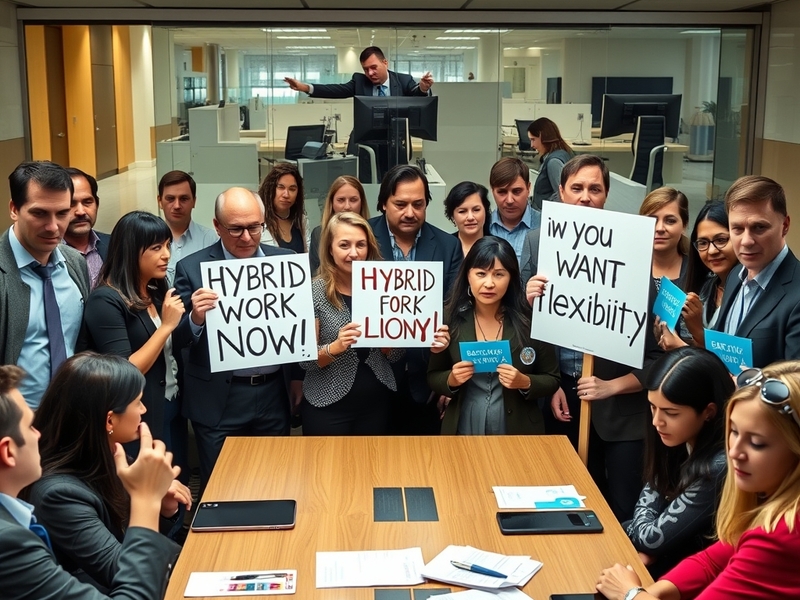
Barclays Faces Employee Discontent Over Office Return Policies
Barclays has recently encountered significant pushback from its employees regarding new return-to-office mandates. As the pandemic wanes, many companies are reevaluating their workplace strategies. However, Barclays’ approach has sparked frustration among staff, leading to a potential rift between management and employees.
Understanding the Backlash
The backlash stems primarily from a newly implemented policy that requires employees to return to the office a minimum of three days a week. Many employees, who have enjoyed the flexibility of remote work, view this as a step backward. This move has not only raised concerns about work-life balance but also about productivity and employee morale.
Key points of contention include:
- Loss of flexibility in work schedules.
- Increased commuting time and costs.
- Concerns about health and safety in the office environment.
- A perceived lack of trust from management regarding remote work effectiveness.
As employees express their dissatisfaction, the situation has prompted discussions around the broader implications of such policies in the banking sector.
The Broader Implications for Corporate Culture
This situation at Barclays is not unique. Many companies are grappling with similar challenges as they navigate the post-pandemic landscape. The push for a return to traditional office work raises critical questions about the future of corporate culture. Is the office still the best environment for fostering collaboration and innovation?
Many employees argue that the shift to remote work has led to increased productivity and job satisfaction. A survey conducted by a leading consultancy firm found that over 60% of workers preferred a hybrid model, combining both remote and in-office work. This preference highlights a significant cultural shift in the workforce.
Furthermore, the backlash at Barclays could set a precedent for other financial institutions. If employees feel undervalued or untrusted, it may lead to higher turnover rates and difficulties in attracting new talent. Companies must consider how their policies align with employee expectations and well-being.
What Lies Ahead for Barclays
As Barclays navigates this challenging landscape, it will need to engage in open dialogue with its workforce. Listening to employee concerns is crucial for restoring trust and fostering a positive workplace culture. Additionally, the bank must assess the impact of its policies on employee productivity and morale.
Potential strategies might include:
- Implementing a flexible work policy that accommodates both in-office and remote work.
- Regularly seeking employee feedback to gauge satisfaction with workplace policies.
- Enhancing the office environment to ensure it meets health and safety standards.
- Providing resources for employees to manage work-life balance effectively.
By taking these steps, Barclays can mitigate the current backlash and foster a more inclusive environment that values employee input.
Conclusion: A Need for Balance
The situation at Barclays underscores the delicate balance between corporate mandates and employee preferences. As companies continue to adapt to a post-pandemic world, understanding employee needs will be crucial. Barclays has an opportunity to lead by example, demonstrating that flexibility and productivity can coexist in the modern workplace.
For more insights into workplace trends and corporate policies, visit our Business and News categories.