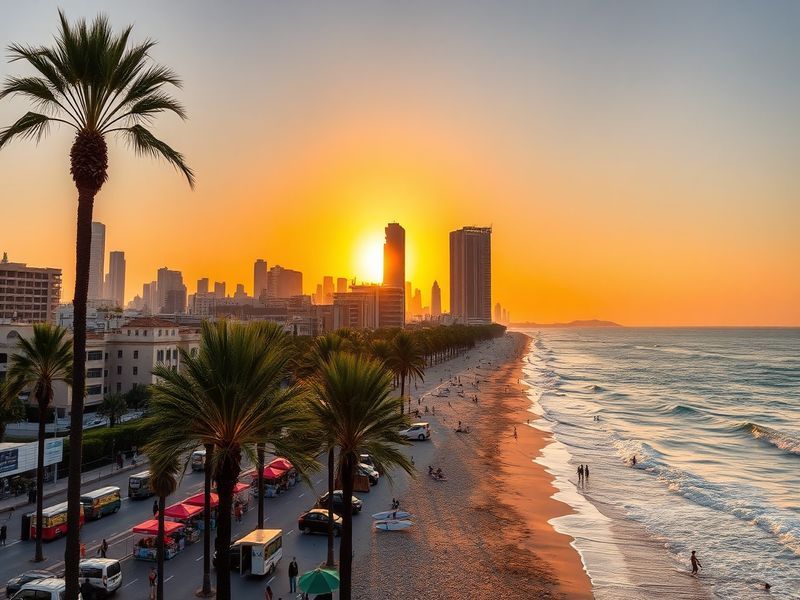
Tel Aviv stands as Israel’s cultural and economic heartbeat, a city where Bauhaus architecture meets sun-drenched beaches and where innovation thrives alongside an ancient, layered history. Often overshadowed by its historical significance, this coastal metropolis has evolved into one of the world’s most dynamic urban centers—blending creativity, technology, and a relentless spirit of reinvention. From its sandy shores to its thriving tech ecosystem, Tel Aviv is more than a city; it’s a living experiment in resilience and progress.
From Humble Beginnings to a Global City
Founded in 1909 as a Jewish neighborhood outside the ancient port city of Jaffa, Tel Aviv began as a modest settlement of 60 families. The name, meaning “Hill of Spring,” reflected both its physical elevation and the optimism of its founders. But its transformation truly began in the 1920s and 1930s, when German Jewish architects fleeing Nazi Europe brought the International Style—later dubbed “Bauhaus”—to the city’s skyline. Today, over 4,000 of these white, boxy structures form the largest concentration of Bauhaus architecture in the world, earning Tel Aviv a UNESCO World Heritage designation in 2003.
This architectural legacy isn’t just aesthetic. The Bauhaus movement emphasized functionality, simplicity, and social equality—principles that still resonate in the city’s urban planning. Wide boulevards, flat roofs, and open terraces were designed to promote air flow and communal living, a nod to Tel Aviv’s subtropical climate and communal spirit. Walking through neighborhoods like White City or Dizengoff, one can trace the city’s evolution from a fledgling settlement to a modernist utopia—one that continues to shape its identity.
The Tech Ecosystem: Israel’s Silicon Wadi
Tel Aviv is the nucleus of Israel’s renowned tech sector, often referred to as the “Silicon Wadi.” The city hosts over 6,000 startups and is home to global tech giants like Google, Microsoft, and Intel, which operate major research and development centers there. The ecosystem thrives on a unique blend of military innovation, academic excellence, and venture capital accessibility. The Israel Defense Forces’ elite intelligence units, such as Unit 8200, have long served as talent pipelines, producing entrepreneurs and engineers who later launch companies in fields ranging from cybersecurity to artificial intelligence.
This concentration of talent and capital has made Tel Aviv a magnet for international investors. In 2023 alone, Israeli startups raised over $10 billion in venture funding, with a significant portion originating from or flowing through Tel Aviv-based firms. The city’s co-working spaces, such as WeWork’s flagship location in Rothschild Boulevard, buzz with the energy of young founders pitching ideas over espresso and coding through the night.
- Key industries driving Tel Aviv’s tech scene:
- Cybersecurity – Israel is a global leader, with companies like Check Point and CyberArk headquartered in the city.
- Fintech – Startups like Melio and Rapyd are redefining digital payments and financial infrastructure.
- AI and Big Data – Firms such as Gong and Monday.com leverage artificial intelligence to transform business operations.
- MedTech – With six major hospitals and top-tier universities, Tel Aviv is a hub for health innovation.
The city’s startup culture is also deeply intertwined with its social fabric. Many entrepreneurs are driven not only by profit but by a desire to solve real-world problems, from water scarcity to food security. This mission-driven approach has earned Tel Aviv a reputation as a place where purpose meets profit—a balance that continues to attract global attention.
A Cultural Tapestry Woven with Tradition and Modernity
Tel Aviv’s cultural scene is as diverse as its population. The city is a magnet for artists, musicians, and writers, drawn by its open-minded atmosphere and thriving arts infrastructure. The Suzanne Dellal Center in Neve Tzedek is a premier venue for contemporary dance, while the Tel Aviv Museum of Art showcases both classical and modern works. The city’s street art scene is equally vibrant, with murals by local and international artists adorning walls across neighborhoods like Florentin and Jaffa.
Music is another cornerstone of Tel Aviv’s identity. The city has produced some of Israel’s most influential musicians, from the psychedelic rock of the 1960s to the electronic beats of today. Venues like Zappa Club and the Levontin 7 club host everything from indie bands to world-renowned DJs. Meanwhile, the annual Red Sea Jazz Festival and performances at the Charles Bronfman Auditorium draw international talent and audiences alike.
Food is perhaps the most immediate way to experience Tel Aviv’s cultural fusion. The city’s culinary scene reflects its immigrant history, with falafel stands rubbing shoulders with high-end restaurants. Jaffa’s Old City, with its Arab markets and hummus joints, offers a taste of the Levant’s culinary traditions. Meanwhile, neighborhoods like Sarona and Rothschild Boulevard boast Michelin-starred eateries and experimental chefs pushing the boundaries of Israeli cuisine. The city’s street food, from sabich to shakshuka, tells a story of cultural coexistence and culinary innovation.
Balancing Innovation and Identity
Despite its modernity, Tel Aviv is deeply rooted in the complexities of its location. The city sits just north of Jaffa, a port city with 4,000 years of history, where ancient stone houses and churches stand in contrast to the glass towers of Tel Aviv. This juxtaposition is visible in daily life—children play soccer on beaches that have hosted civilizations for millennia, while tech workers sprint to meetings past remnants of Crusader fortresses.
Tel Aviv also grapples with social and economic disparities. While the city is a global leader in innovation, pockets of poverty persist, particularly in neighborhoods like Hatikva and parts of South Tel Aviv. Gentrification has transformed former working-class areas into trendy districts, sparking debates about displacement and cultural erasure. The city’s LGBTQ+ community, however, has found a safe haven in Tel Aviv, which hosts one of the world’s largest Pride parades and is known for its progressive policies.
The city’s identity is further complicated by its geopolitical context. As Israel’s commercial capital, Tel Aviv is often seen as a symbol of Israeli prosperity and innovation. Yet it also lies in close proximity to conflict zones, and its residents must navigate the realities of living in a contested region. Despite this, Tel Aviv’s residents—Jewish, Arab, secular, and religious—continue to build a city that is both aspirational and grounded in the present.
It is this tension between idealism and reality that makes Tel Aviv so compelling. The city doesn’t shy away from its contradictions. Instead, it embraces them, using innovation as a tool to address social challenges while preserving its cultural heritage. Whether through its tech startups addressing global problems or its thriving arts scene giving voice to marginalized communities, Tel Aviv remains a city in constant motion—always looking forward, even as it honors the past.
Why Tel Aviv Matters in the 21st Century
In an era of rapid urbanization and technological disruption, Tel Aviv offers a compelling model for other cities. Its ability to balance tradition and innovation, community and commerce, security and openness makes it a case study in resilience. As climate change, cyber threats, and social inequality reshape global priorities, Tel Aviv’s approach—rooted in collaboration, creativity, and adaptability—could serve as a blueprint for sustainable urban growth.
For travelers, entrepreneurs, and dreamers alike, Tel Aviv is a city that refuses to be defined by a single narrative. It is a place where history whispers from every corner, where the future is being written in code, and where the Mediterranean breeze carries the scent of innovation and tradition in equal measure. To visit Tel Aviv is to witness a city that is always becoming—never static, always evolving.