NASA’s Artemis 2 Toilet: The Engineering Behind Lunar Sanitation
The Artemis program represents humanity’s next giant leap in space exploration, with NASA’s Artemis 2 mission marking the first crewed lunar flyby since the Apollo era. While much attention focuses on the spacecraft’s propulsion systems, lunar landers, and astronaut training, one critical component often overlooked is the spacecraft’s waste management system. The toilet aboard Orion, NASA’s crew module for Artemis 2, presents a unique engineering challenge in microgravity and beyond.
Unlike the International Space Station (ISS), which has had decades to refine its waste systems, Orion’s toilet must function reliably during a shorter but equally demanding mission profile. The system must handle both solid and liquid waste while operating in partial gravity during the trans-lunar injection phase and microgravity conditions during the coast to the Moon. This balance between proven technology and innovative design makes the Artemis 2 toilet a fascinating case study in aerospace engineering.
The Engineering Behind Orion’s Space Toilet
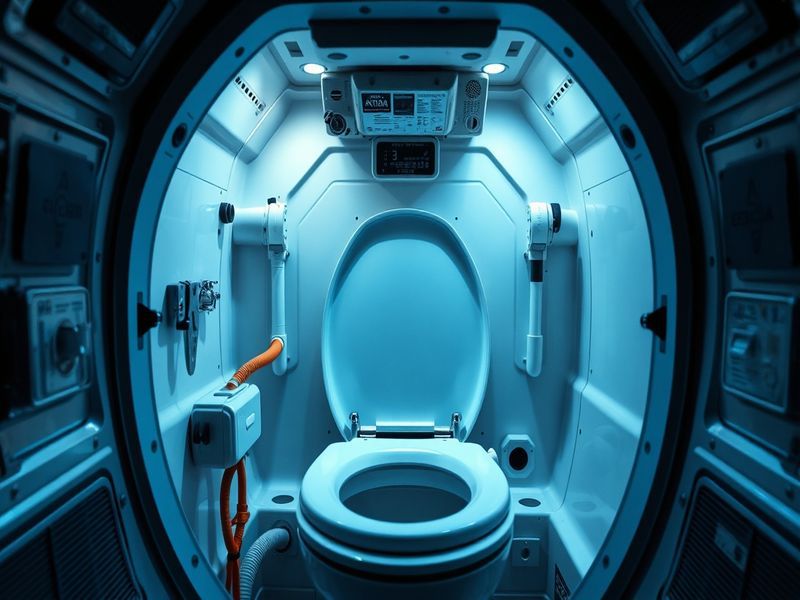
NASA’s Universal Waste Management System (UWMS), the same technology used on the ISS, serves as the foundation for Orion’s toilet. This system uses airflow to pull waste away from the astronaut’s body, preventing the mess that plagued early space missions. The airflow creates a vacuum that directs urine into a storage tank, while solid waste is compacted and stored for disposal upon return to Earth.
However, adapting the UWMS for Orion presented unique challenges. The spacecraft’s smaller volume required a more compact design, leading engineers to develop a foldable seat and urine funnel that can be stowed when not in use. The system also incorporates a new odor filter to address concerns about cabin air quality during the longer Artemis 2 mission duration of approximately 10 days.
One of the most critical innovations is the system’s ability to operate in partial gravity. During the trans-lunar injection burn, astronauts will experience approximately 0.5g of force, which could affect waste collection efficiency. NASA engineers conducted extensive testing in parabolic flights and aboard the ISS to ensure the toilet functions properly in these conditions.
Key Features of Orion’s Waste Management System
- Vacuum-assisted waste collection: Uses airflow to direct waste away from the astronaut, preventing contamination.
- Dual urine/feces processing: Separates liquid and solid waste into different storage containers to optimize efficiency.
- Compact design: Foldable seat and stowable components to maximize limited cabin space in Orion.
- Odor control system: Advanced filtration to maintain cabin air quality during multi-day missions.
- Partial gravity adaptation: Tested to ensure functionality during the spacecraft’s powered flight phases.
Why Waste Management Matters in Deep Space Missions
While it may seem like a mundane concern compared to propulsion or life support systems, effective waste management is crucial for crew health and mission success. The Apollo missions demonstrated how poor sanitation could lead to gastrointestinal issues and compromised crew performance. During the Artemis 2 mission, astronauts will spend up to 10 days in close quarters, making waste management systems even more critical.
Beyond health concerns, waste systems also impact mission logistics. Every additional pound of consumables affects fuel requirements and payload capacity. The Artemis 2 toilet’s design prioritizes efficiency, with waste storage containers designed to hold enough capacity for the entire mission without requiring disposal.
Another consideration is psychological comfort. Astronauts report that reliable waste systems significantly improve morale during long-duration missions. The ability to maintain personal hygiene and privacy in space directly impacts crew performance and mental well-being.
The Apollo Legacy and Lessons for Artemis
The Apollo missions provide valuable lessons for Artemis 2’s waste management systems. Early Apollo flights used simple bags taped to the astronauts’ backsides, leading to numerous issues with waste containment and hygiene. The Skylab missions introduced the first space toilet, but its complexity made it prone to malfunctions that required significant crew time to repair.
These challenges led to the development of the Space Shuttle’s waste collection system, which evolved into the UWMS currently used on the ISS. Each iteration improved reliability, efficiency, and crew comfort. For Artemis 2, NASA leveraged this institutional knowledge while adapting systems for the unique constraints of the Orion spacecraft.
One notable difference between Apollo and Artemis is the mission profile. While Apollo focused on short, intensive lunar surface stays, Artemis 2 will be a longer mission with extended periods in microgravity. This requires waste systems that can operate reliably without maintenance or consumables resupply.
Testing and Validation: Ensuring Reliability in Space
NASA’s testing protocol for the Artemis 2 toilet involved multiple phases, including ground-based simulations and parabolic flights that simulate microgravity. Engineers also conducted vacuum chamber tests to evaluate system performance in the space environment.
A critical aspect of testing focused on crew interface and usability. Astronauts provided feedback on seat design, positioning, and overall comfort during waste collection procedures. This human-centered design approach ensures the system meets operational needs while maintaining crew comfort.
The toilet’s performance was also evaluated under thermal extremes, as Orion’s cabin temperature can fluctuate dramatically during different mission phases. The system’s materials and components were selected to withstand these temperature variations without compromising functionality.
Training Astronauts for Space Sanitation
- Familiarization sessions: Crew members spend hours practicing waste collection procedures in mockups of the Orion spacecraft.
- System troubleshooting: Astronauts train to identify and resolve common issues with the waste management system.
- Hygiene protocols: Comprehensive training on maintaining personal hygiene in microgravity conditions.
- Contingency procedures: Preparation for potential system failures and backup waste collection methods.
NASA’s approach to waste management reflects the agency’s evolution in human spaceflight. What began as a rudimentary system during the Mercury program has transformed into a sophisticated, crew-friendly solution for deep space exploration. The Artemis 2 toilet represents the culmination of decades of research and development, ensuring that astronauts can focus on their mission objectives without compromising health or comfort.
Looking Ahead: Future Waste Systems for Lunar and Mars Missions
The Artemis 2 toilet serves as a technological stepping stone for future missions to the Moon and eventually Mars. NASA’s next-generation waste systems will need to support longer durations and larger crews, with an emphasis on resource recovery and sustainability.
One promising area of research is water recovery from urine, which could significantly reduce the amount of consumables needed for long-duration missions. NASA’s Environmental Control and Life Support System (ECLSS) on the ISS has already demonstrated the ability to recover water from urine, and similar technology could be adapted for Orion and future lunar habitats.
For Mars missions, waste management systems will need to address even greater challenges, including the need for complete resource closure where all waste is recycled. This could include converting human waste into fertilizer for food production or extracting useful compounds for life support systems.
As NASA prepares for the Artemis 2 mission, the humble space toilet serves as a reminder that even the most basic human needs must be addressed in the harsh environment of space. The innovations developed for Orion’s waste management system will not only support the next generation of lunar explorers but also pave the way for humanity’s journey to Mars and beyond.
For those interested in the broader context of space technology development, our Technology section offers additional insights into the systems that make deep space exploration possible. Meanwhile, our Science category explores the research and innovation driving NASA’s Artemis program forward.