Vietnam War: How a 20th Century Conflict Still Shapes Global Politics
The Vietnam War remains one of the most analyzed and debated conflicts of the 20th century. Spanning nearly two decades, from 1955 to 1975, this war reshaped global politics, military strategy, and public perception of warfare. Unlike conventional conflicts, Vietnam became a crucible for ideological battles, media influence, and societal upheaval that extended far beyond Southeast Asia. Understanding this war requires examining its origins, the key players involved, and the lasting consequences it left on the world stage.
The Roots of the Conflict: Colonialism and Cold War Tensions
Vietnam’s struggle began long before American boots hit the ground. The country had been under French colonial rule since the late 19th century, a period marked by exploitation and resistance. By the mid-20th century, nationalist movements led by figures like Ho Chi Minh sought independence, drawing inspiration from communist ideology. The First Indochina War (1946–1954) ended with the French defeat at Dien Bien Phu, leading to the Geneva Accords, which temporarily divided Vietnam at the 17th parallel. North Vietnam, under Ho Chi Minh, became a communist state backed by the Soviet Union and China, while South Vietnam, led by Ngo Dinh Diem, aligned with the United States and Western powers.
This division was never meant to be permanent, but Cold War tensions turned it into a flashpoint. The Domino Theory—a belief that the fall of one nation to communism would trigger a chain reaction—drove U.S. involvement. What started as financial and logistical support for South Vietnam escalated into full-scale military intervention by the mid-1960s. The war’s ideological underpinnings were clear: capitalism versus communism, democracy versus authoritarianism, and global influence versus national sovereignty.
Key Turning Points and Military Strategies
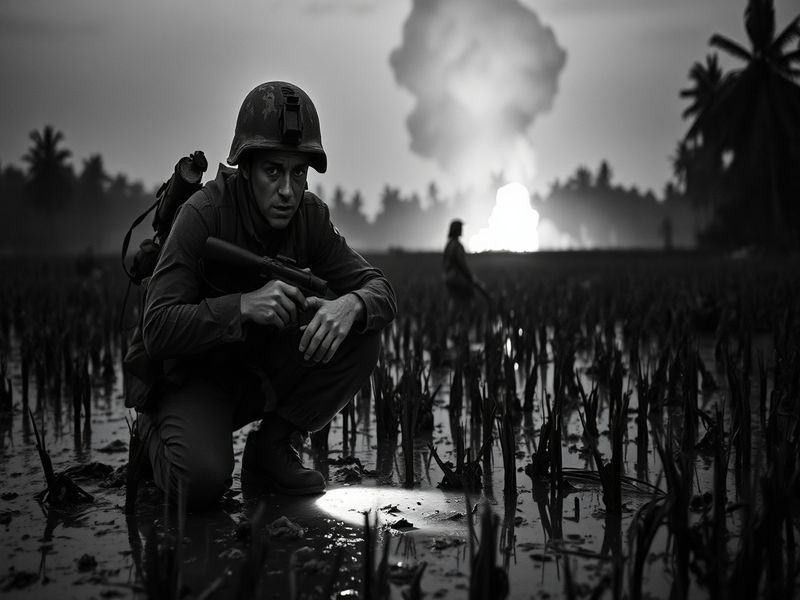
The Vietnam War unfolded in phases, each marked by shifting strategies and pivotal moments. Early in the conflict, the U.S. relied on conventional warfare tactics, but the guerrilla warfare employed by the North Vietnamese Army (NVA) and Viet Cong proved devastatingly effective. The Tet Offensive in 1968 shattered American confidence, as communist forces launched surprise attacks across South Vietnam, including the U.S. embassy in Saigon. Though militarily a failure for the North, the offensive exposed the war’s unwinnable nature to the American public.
Other critical moments included the My Lai Massacre in 1968, where U.S. soldiers killed hundreds of unarmed civilians, and the sustained bombing campaigns like Operation Rolling Thunder. The war also saw the introduction of new technologies, such as napalm and Agent Orange, which left lasting environmental and humanitarian scars. Meanwhile, the Ho Chi Minh Trail—a network of supply routes through Laos and Cambodia—became the lifeline for North Vietnamese forces, demonstrating the war’s regional complexity.
By the early 1970s, public opposition in the U.S. had reached a fever pitch. The Pentagon Papers, leaked in 1971, revealed government deceit about the war’s progress, further eroding trust. President Nixon’s policy of Vietnamization—shifting combat roles to South Vietnamese troops—failed to prevent the fall of Saigon in 1975, when communist forces captured the city and reunified Vietnam under a single government.
The War’s Human and Political Costs
The Vietnam War’s human toll was staggering. Over 3 million people died, including 58,000 American soldiers and millions of Vietnamese civilians. The war displaced millions, created refugee crises, and left entire regions contaminated by unexploded ordnance. For the U.S., the conflict shattered the myth of military invincibility and exposed deep divisions at home, from anti-war protests to racial and generational conflicts.
Vietnam’s post-war recovery was equally arduous. The country faced international isolation, economic stagnation, and internal purges of perceived enemies. It wasn’t until the 1990s that Vietnam began to reintegrate into the global economy, leveraging its strategic location and labor force to become one of Asia’s fastest-growing economies today. The war also left a complex legacy in American culture, fueling skepticism toward government and military interventions that persists today.
For Southeast Asia, the war’s ripple effects extended to neighboring countries. Cambodia and Laos, drawn into the conflict through bombing campaigns and ground operations, suffered decades of instability, including the rise of the Khmer Rouge in Cambodia. The war’s geopolitical consequences included strengthened communist movements across the region and a realignment of alliances during the Cold War.
Broader Implications: Lessons for Future Conflicts
The Vietnam War’s impact transcends its historical context, offering enduring lessons about warfare, media, and governance. One of its most significant contributions was the role of journalism in shaping public opinion. The first “television war,” Vietnam saw graphic images of combat broadcast into living rooms, challenging traditional narratives of heroism and necessity. This shift in media coverage influenced how future conflicts, from the Gulf War to the War in Afghanistan, would be documented and perceived.
Militarily, the war demonstrated the limits of conventional power against determined insurgencies. The U.S. military’s subsequent focus on counterinsurgency tactics, special forces, and technological advancements can be traced back to Vietnam’s hard-learned lessons. Politically, the war underscored the dangers of mission creep—the gradual expansion of a conflict beyond its original objectives—and the importance of clear, achievable goals in foreign policy.
The war also highlighted the human cost of geopolitical maneuvering. Proxy wars, where global powers backed opposing sides without direct confrontation, became a defining feature of 20th-century conflicts. Vietnam served as a cautionary tale about the unintended consequences of such interventions, from destabilized regions to the erosion of public trust in institutions.
In recent decades, Vietnam has transformed into a diplomatic and economic partner for former adversaries. The normalization of U.S.-Vietnam relations in the 1990s opened doors for trade, education, and military cooperation. Today, Vietnam is a key player in regional organizations like ASEAN and a critical link in global supply chains. The war’s legacy, however, remains a reminder of the fragility of peace and the enduring scars of conflict.
Key Takeaways from the Vietnam War
- Ideological Battleground: The war was a proxy conflict between communism and capitalism, with Vietnam as the testing ground for Cold War strategies.
- Media’s Transformative Role: Coverage of the war, especially through television, changed public perception of warfare and government accountability.
- Guerrilla Warfare’s Effectiveness: Asymmetric tactics by the Viet Cong and NVA exposed the vulnerabilities of conventional military forces.
- Humanitarian and Environmental Impact: The use of chemical weapons like Agent Orange and widespread bombing left long-term ecological and health consequences.
- Global Repercussions: The war destabilized neighboring countries, reshaped alliances, and influenced military doctrines worldwide.
To explore more about historical conflicts and their lasting effects, visit our History and Politics sections for in-depth analysis and expert commentary.
Conclusion: A War That Still Echoes
The Vietnam War was more than a military conflict—it was a societal upheaval that redefined global politics, media, and human rights. Its lessons continue to resonate in debates about war, governance, and the role of journalism in shaping history. For those studying the war today, it serves as a reminder of the complexities of international relations and the enduring cost of ideological battles. As Vietnam and the U.S. have moved forward, the war remains a pivotal chapter in modern history, one that demands continued reflection and understanding.