Why Electric Vehicles Are Reshaping the Future of Transportation
“`html
Electric Vehicles: The Road Ahead for Sustainable Transportation
The automotive industry is undergoing one of its most significant transformations since the invention of the internal combustion engine. Electric vehicles (EVs) are no longer a niche experiment but a central pillar of global efforts to reduce carbon emissions, redefine urban mobility, and reshape energy infrastructure. What began as a technological curiosity in the late 19th century has evolved into a $250 billion market racing toward mainstream adoption. The shift is not merely about replacing gas tanks with batteries—it’s about reimagining transportation for a planet facing climate urgency and resource constraints.
Governments, corporations, and consumers are all playing roles in this transition. In 2023, global EV sales exceeded 14 million units, a 35% increase from the previous year. This growth is accelerating due to stricter emissions regulations, falling battery costs, and heightened environmental awareness. Yet, challenges remain. Charging infrastructure lags in many regions. Battery supply chains are concentrated in a few countries. And consumer perceptions about range, cost, and convenience still vary widely. To understand where EVs are headed, we must examine their current state, the forces driving their adoption, and the broader implications for the economy, environment, and daily life.
The State of the Electric Vehicle Market: Growth, Players, and Trends
The EV market is dominated by a handful of companies, but the competitive landscape is rapidly evolving. Tesla remains the most visible brand, with over 1.8 million vehicles sold globally in 2023. However, legacy automakers like Ford, Volkswagen, and Hyundai are investing billions to close the gap. Chinese manufacturers such as BYD and NIO have also surged onto the global stage, offering competitive models at lower price points. This diversification is crucial—it ensures innovation, drives down costs, and prevents monopolistic control over the transition.
Key trends shaping the market include:
- Battery innovation: Solid-state batteries, silicon anodes, and improved recycling processes are extending range and reducing charging times.
- Affordability: The average price of an EV has dropped by 20% since 2020, with models under $30,000 expected by 2025.
- Second-life applications: Used EV batteries are being repurposed for grid storage, extending their utility beyond vehicles.
- Software-defined vehicles: EVs are increasingly defined by digital experiences, from over-the-air updates to autonomous driving features.
One underappreciated factor is the role of policy. Subsidies in the U.S., EU, and China have been instrumental in accelerating adoption. The U.S. Inflation Reduction Act, for example, offers up to $7,500 in tax credits for qualifying EVs, but with domestic content requirements that are reshaping supply chains. These policies are not just economic tools—they reflect a strategic shift toward energy independence and technological leadership.
The Infrastructure Challenge: Charging Networks, Grid Resilience, and Urban Planning
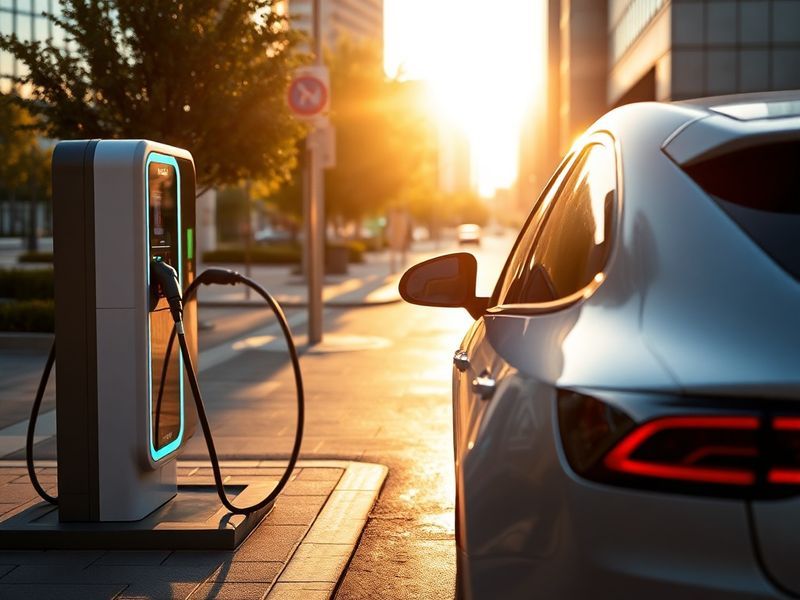
While EVs are becoming more accessible, their success hinges on a robust charging ecosystem. Today, there are over 1.8 million public charging stations worldwide, but they are unevenly distributed. Rural areas and developing nations often lack access, creating what’s known as “charging deserts.” Urban centers face different problems—limited parking spaces, outdated electrical grids, and congestion that complicates installation.
Several solutions are emerging:
- Ultra-fast charging corridors: Companies like Electrify America and Ionity are building networks along highways, enabling long-distance travel with minimal downtime.
- Vehicle-to-grid (V2G) technology: EVs can feed power back into the grid during peak demand, turning cars into mobile energy assets.
- Smart charging: AI-driven systems optimize charging times based on electricity rates, grid capacity, and renewable energy availability.
- Municipal partnerships: Cities are integrating EV infrastructure into public transit hubs, parking lots, and even streetlights.
Yet, the biggest hurdle may be the grid itself. Many electrical grids were not designed to handle millions of simultaneous charging events. Upgrading infrastructure will require coordinated investment from utilities, automakers, and governments. The International Energy Agency estimates that $60 billion in grid investments will be needed annually by 2030 to support global electrification goals. Without this, EV adoption could stall—not due to lack of consumer interest, but because of systemic limitations.
Environmental and Economic Implications: Beyond Tailpipe Emissions
The environmental benefits of EVs are clear: they produce zero tailpipe emissions and can be powered by renewable energy. But the full picture is more nuanced. Battery production is energy-intensive, relying on mining for lithium, cobalt, and nickel. The extraction of these materials has raised concerns about water pollution, child labor, and ecosystem destruction. For instance, lithium mining in Chile’s Atacama Desert consumes 2 million liters of water per ton of lithium extracted—a significant strain in one of the driest regions on Earth.
EVs also shift emissions from the road to the power plant. In coal-dependent regions like Poland or India, the carbon footprint of an EV can be higher than a hybrid vehicle. The solution lies in decarbonizing the grid. As renewable energy sources like solar and wind expand, the lifecycle emissions of EVs will continue to decline. By 2030, the average EV is projected to emit 50% less CO2 than a comparable gas-powered car, even in regions with fossil-fuel-heavy electricity.
Economically, the EV transition is creating new industries and disrupting old ones. Traditional automakers are shedding jobs in engine manufacturing while hiring software engineers and battery specialists. The global battery market alone is expected to reach $400 billion by 2030. Meanwhile, oil demand is projected to peak by 2035, with long-term implications for energy geopolitics. Countries dependent on fossil fuel exports—such as Saudi Arabia and Russia—are investing in EV manufacturing and renewable energy to diversify their economies.
Another economic ripple effect is the rise of the “circular economy.” Recycling EV batteries could become a $12 billion industry by 2030, reducing reliance on virgin materials. Companies like Redwood Materials and Li-Cycle are pioneering closed-loop systems that recover 95% of battery components. This not only cuts costs but also mitigates supply chain risks.
The Future of Mobility: Autonomy, Shared Systems, and Lifestyle Shifts
EVs are just one piece of a larger mobility revolution. The convergence of electrification, connectivity, and automation is redefining what it means to get from point A to point B. Ride-sharing platforms like Uber and Lyft are transitioning to EV fleets, while car-sharing services such as Zipcar are testing subscription models that bundle vehicles with charging access. In cities like Oslo and Amsterdam, EVs are already the dominant choice for ride-hailing drivers due to lower operating costs.
Autonomous driving technology is another game-changer. Companies like Waymo and Cruise are testing robotaxis in select markets, with EVs serving as their primary platforms. These services could reduce the number of cars on the road by up to 60%, according to some estimates, by enabling shared, on-demand mobility. The implications for urban design are profound: fewer parking lots, more green spaces, and redesigned streets prioritizing pedestrians and cyclists.
Yet, this future is not without trade-offs. The shift to shared mobility could reduce individual car ownership but increase total vehicle miles traveled if services are not properly regulated. Privacy concerns arise as vehicles collect vast amounts of data on users’ movements and habits. And while EVs eliminate tailpipe emissions, tire and brake wear still contribute to microplastic pollution—a challenge that the industry is only beginning to address.
For consumers, the transition is both exciting and daunting. The average EV now offers 300 miles of range, more than enough for daily commutes. Charging times have dropped to under 20 minutes for many models. But range anxiety persists in areas with sparse infrastructure, and the upfront cost, though declining, remains a barrier for many. The industry is responding with innovative financing models, such as battery leasing and subscription services, which decouple ownership from usage.
Conclusion: A Road Worth Taking
The electric vehicle revolution is not a fleeting trend—it is a fundamental reimagining of transportation. It challenges entrenched industries, demands new forms of infrastructure, and asks society to reconsider its relationship with energy and mobility. The road ahead is complex, with obstacles ranging from supply chain vulnerabilities to policy uncertainties. Yet, the momentum is undeniable.
For policymakers, the focus must be on equitable access to charging infrastructure and ensuring that the transition does not leave behind low-income communities. For automakers, the challenge is to balance speed with sustainability, innovation with affordability. And for consumers, the opportunity is to participate in a cleaner, more efficient way of moving through the world.
As the 2030s approach, EVs will likely become the default choice for new car buyers in most developed markets. The question is not whether this transition will happen, but how smoothly it will unfold. One thing is certain: the vehicles we drive tomorrow will be as different from today’s cars as smartphones are from landline telephones. The era of electric mobility has arrived—and it’s here to stay.
To explore more on this topic, visit our Automotive section for the latest reviews and industry updates, or check out our Technology page for deeper analysis on tech-driven innovations reshaping transportation.