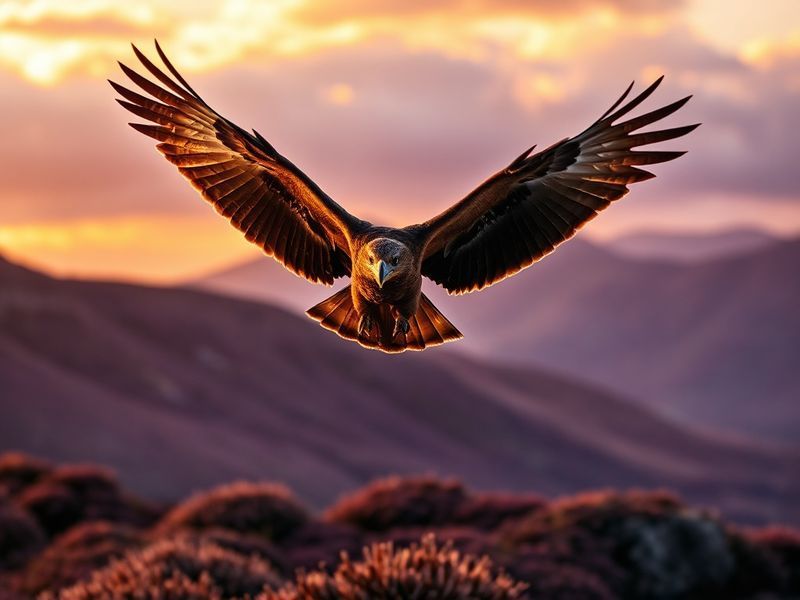
The concept of reintroducing golden eagles to England has moved from speculative conservation dream to tangible possibility. While Scotland and Ireland have long been strongholds for these majestic birds of prey, England has lacked a breeding population for over a century. Recent discussions among conservationists, landowners, and government agencies suggest that the conditions may finally be right for this iconic species to reclaim parts of its historic range.
The golden eagle (Aquila chrysaetos) once soared across much of upland Britain, including the Lake District, the Pennines, and the Yorkshire Dales. By the mid-19th century, however, persecution, habitat loss, and human encroachment had driven the species to extinction in England. Today, only a handful of breeding pairs remain in the Scottish Highlands and Islands, with occasional sightings in northern England and Wales typically involving wandering juveniles from Scotland.
The Case for Reintroduction: Why Bring Back the Golden Eagle?
Proponents of golden eagle reintroduction argue that the birds play a vital ecological role as apex predators. Their presence can help regulate populations of smaller mammals such as foxes, rabbits, and corvids, which in turn can benefit ground-nesting birds and sensitive habitats. Additionally, golden eagles serve as indicators of environmental health; their return would signal the restoration of robust, biodiverse ecosystems.
From a cultural and symbolic perspective, the golden eagle holds deep significance in British heritage. As a species once woven into folklore, art, and national identity, its reappearance could inspire renewed pride in natural heritage. Conservationists also point to the success of similar reintroductions, such as the red kite in England and Wales, which has thrived since its reintroduction in the 1980s and 1990s.
- Ecological benefits: Regulation of prey populations, enhancement of habitat diversity, and promotion of trophic cascades.
- Cultural resonance: Restoration of a lost icon, educational opportunities, and potential boost to eco-tourism.
- Climate adaptation: Eagles can adapt to changing landscapes and may benefit from milder winters in upland regions.
- Legal frameworks: The UK’s commitment under the Bern Convention and Birds Directive supports species reintroduction where feasible.
The Challenges: Feasibility and Opposition
Despite the enthusiasm among conservationists, reintroducing golden eagles to England faces significant hurdles. Chief among these is habitat suitability. England’s uplands are more fragmented and intensively managed than those in Scotland, where golden eagles thrive. Sheep grazing, grouse moor management, and wind farm development have altered much of the landscape, reducing the availability of undisturbed nesting sites and sufficient prey.
Another major concern is human-wildlife conflict. Gamekeepers and landowners, particularly in areas managed for red grouse shooting, often view large raptors as threats to their stock and income. While golden eagles primarily hunt wild prey, they may occasionally take young lambs or game birds, leading to resistance from rural communities. Public consultation and community engagement will be crucial to address these concerns.
There is also the question of funding and long-term support. Reintroduction programs are expensive, requiring ongoing monitoring, habitat management, and conflict resolution. The golden eagle reintroduction project in Ireland, launched in 2001, has faced setbacks due to illegal poisoning and habitat degradation, highlighting the challenges of sustaining such initiatives.
Potential Release Sites and Conservation Strategies
Several regions in northern England are being considered as possible release sites, based on habitat quality, prey availability, and public support. The Lake District, with its extensive upland habitat and growing conservation ethos, is a leading contender. The Yorkshire Dales and North Pennines also offer suitable terrain, particularly in areas where natural regeneration and rewilding projects are underway.
Conservationists are exploring a phased approach to reintroduction. The first phase would involve releasing juvenile eagles—likely sourced from healthy Scottish populations—into carefully selected sites. These birds would be fitted with satellite tags to monitor their movements and survival rates. Over time, the goal would be to establish a self-sustaining breeding population.
To maximize success, conservationists are advocating for a “soft release” method, where eagles are acclimatized in large aviaries before being released into the wild. This approach has been used successfully with other raptor species, such as the white-tailed eagle, which was reintroduced to Scotland in the 1970s and has since expanded its range.
- Identify and secure release sites in northern England with minimal disturbance and adequate prey.
- Source juvenile eagles from sustainable populations in Scotland or captive breeding programs.
- Implement soft-release protocols to improve survival and site fidelity.
- Establish long-term monitoring programs with GPS tracking and community reporting.
- Develop compensation schemes for landowners affected by eagle predation on livestock or game.
Public Perception and the Role of Science
Public opinion on golden eagle reintroduction is generally positive, particularly among urban populations and younger generations who view wildlife restoration as a moral and ecological imperative. However, rural communities, especially those dependent on upland economies, remain divided. Some see the eagle as a symbol of ecological balance; others fear it as a threat to livelihoods.
Scientific research plays a pivotal role in shaping the narrative. Studies on golden eagle ecology, habitat use, and human-wildlife coexistence are underway. For example, research from Scotland shows that golden eagles can coexist with grouse moors when managed appropriately, with minimal impact on red grouse populations. This data is being used to build evidence-based arguments for reintroduction in England.
Conservation organizations such as the Royal Society for the Protection of Birds (RSPB) and Wildlife Trusts are leading advocacy efforts. They emphasize the need for a collaborative approach involving scientists, land managers, policymakers, and local communities. Public engagement through education and citizen science could further shift perceptions and build support.
Looking Ahead: A Vision for England’s Skies
If successful, the reintroduction of golden eagles to England could mark a turning point in the country’s approach to rewilding and biodiversity recovery. It would not only restore a lost species but also demonstrate the potential for ecological restoration in even the most modified landscapes. The project would require patience, investment, and resilience in the face of setbacks—lessons learned from past reintroduction efforts.
For now, the conversation is gaining momentum. The UK government’s 25-Year Environment Plan includes provisions for species reintroductions, and there is growing political interest in large-scale conservation initiatives. With careful planning and broad support, the golden eagle could once again become a permanent resident of England’s uplands—a living testament to the power of conservation to heal the land.
As with all ambitious ecological projects, the path forward will not be easy. But the vision of seeing a golden eagle circle over the fells of the Lake District, or soar above the heather-clad moors of the Pennines, is one worth pursuing. It is a reminder that nature, given the chance, can reclaim its place—and that England still has room for its lost kings of the sky.