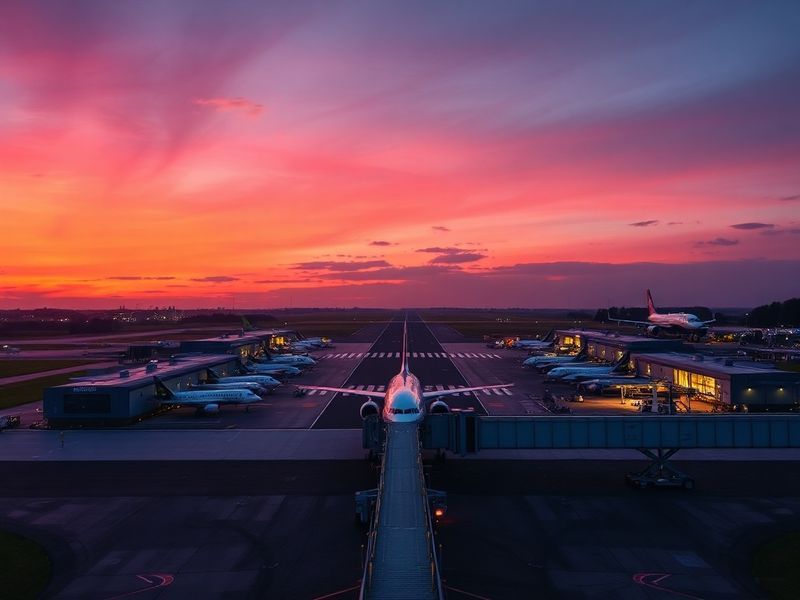
Nestled on the west coast of Ireland, Shannon Airport has quietly evolved from a refueling stop for transatlantic flights into a vital hub for global travel. Established in 1942, it was originally part of the Transatlantic Airport System, designed to support wartime flights between North America and Europe. Today, it stands as a testament to Ireland’s strategic position in international aviation—a bridge between continents that often goes unnoticed despite its rich history and modern relevance.
Shannon’s significance extends beyond its runways. It has played a pivotal role in shaping transatlantic travel, fostering cultural exchanges, and even influencing Ireland’s economic landscape. While larger airports like Heathrow or JFK dominate headlines, Shannon’s unique position offers travelers a blend of efficiency, history, and charm that few other airports can match.
The Historical Significance of Shannon Airport
Shannon Airport’s origins trace back to World War II, when the Irish government leased land to the United States for a refueling base. This decision was not without controversy—neutral Ireland had to balance wartime demands with its own sovereignty. Yet, the airport’s strategic location made it indispensable. After the war, Shannon became one of the first airports in Europe to introduce duty-free shopping in 1947, a move that revolutionized airport retail and set a global precedent.
The airport’s role in aviation history is further cemented by its connection to the Concorde’s early test flights. In the 1970s, Shannon was one of the few airports equipped to handle the supersonic jet, symbolizing its adaptability in an era of rapid technological advancement. By the 1990s, Shannon had transformed into a full-fledged international airport, serving as a gateway for millions of travelers between North America and Europe.
What makes Shannon’s history particularly compelling is its reflection of broader global trends. From wartime necessity to a symbol of post-war economic recovery, the airport mirrors Ireland’s own journey—from isolation to integration with the world. Its preservation of historical artifacts, including a vintage Boeing 747 on display, offers visitors a tangible connection to the past.
Shannon Airport Today: A Modern Transit Hub
In the 21st century, Shannon Airport has reinvented itself as a modern transit hub that balances efficiency with Irish hospitality. Unlike the sprawling, impersonal terminals of megahubs, Shannon offers a streamlined experience where travelers can clear customs in under 30 minutes—a rarity in today’s air travel landscape. This efficiency has made it a favorite layover option for those seeking to break up long flights between the U.S. and Europe.
The airport’s infrastructure has kept pace with demand. Its single terminal, expanded in 2009, features a blend of contemporary design and traditional Irish motifs. Travelers are greeted by a lobby adorned with local art, a nod to Ireland’s thriving creative scene. The duty-free shops, a legacy of Shannon’s groundbreaking 1947 innovation, now offer a curated selection of Irish whiskey, crafts, and gourmet foods—perfect for last-minute souvenirs.
Shannon’s connectivity is another of its strengths. It serves as a hub for airlines like Delta, Aer Lingus, and United, with direct flights to major cities such as New York, Boston, Paris, and London. This network makes it an ideal entry or exit point for those exploring Ireland or Europe. For business travelers, its proximity to Limerick and Galway also provides quick access to key economic and cultural centers.
Why Travelers Are Choosing Shannon Over Bigger Airports
For many, the appeal of Shannon lies in what it lacks: the chaos of larger airports. With no need for shuttle buses between terminals or hours spent in security lines, Shannon offers a refreshing alternative. Here’s why travelers are increasingly opting to transit through Shannon:
- Time Efficiency: Pre-clearance facilities for U.S. customs allow travelers to arrive in America as domestic passengers, bypassing long immigration queues.
- Cultural Immersion: The airport’s Irish heritage is woven into its design, from live traditional music sessions in the departure lounge to locally sourced food options.
- Lower Stress: With fewer crowds, Shannon provides a more relaxed environment, ideal for families or those with tight connections.
- Support for Local Economy: By choosing Shannon, travelers contribute to Ireland’s regional development, particularly in the west, which relies heavily on tourism and aviation.
Shannon also caters to niche travelers. Aviation enthusiasts can explore the airport’s aviation museum, while foodies can sample Irish specialties like soda bread or black pudding at the on-site restaurants. Even the airport’s runways tell a story—one of the longest in Europe, they were originally designed to accommodate the massive planes of the 1940s and now serve modern long-haul aircraft.
Shannon’s Role in Global Aviation and Beyond
From a global perspective, Shannon Airport represents a microcosm of the aviation industry’s evolution. It highlights the tension between globalization and localization—how a single airport can influence international travel while remaining deeply rooted in its community. Shannon’s story is one of adaptability, resilience, and innovation, traits that mirror the broader aviation sector.
Today, the airport is also a player in sustainability efforts. In 2020, Shannon became the first airport in Ireland to achieve carbon-neutral status, a milestone that reflects growing industry-wide commitments to reducing carbon footprints. Initiatives like solar panel installations and electric vehicle charging stations underscore its forward-thinking approach.
Shannon’s influence extends beyond its immediate operations. It has inspired similar transit models worldwide, proving that smaller airports can thrive by focusing on efficiency and passenger experience. In an era where air travel is often criticized for its environmental impact and impersonal nature, Shannon offers a blueprint for how airports can balance growth with sustainability and tradition with modernity.
A Gateway to Ireland’s West Coast
For many travelers, Shannon Airport is more than just a transit point—it’s the first step in exploring Ireland’s west coast. The region, known for its rugged landscapes, historic castles, and vibrant culture, offers a stark contrast to the urban sprawl of Dublin or Cork. From the Cliffs of Moher to the Aran Islands, the west is a destination in its own right, and Shannon serves as the perfect launching pad.
Local tourism boards have capitalized on this by partnering with the airport to create seamless travel experiences. Visitors can book combined flight-and-tour packages that include visits to nearby attractions like the Burren National Park or the medieval city of Galway. This integration of air travel with regional tourism highlights Shannon’s role as an economic driver for the west of Ireland.
The airport’s cultural footprint is equally significant. Shannon has hosted international music festivals, art exhibitions, and even film screenings, embedding itself into the fabric of Ireland’s cultural calendar. Its annual Aviation and Military Museum draws enthusiasts from around the world, further cementing its reputation as a destination worth visiting beyond its functional purpose.
The Future of Shannon Airport
Looking ahead, Shannon Airport is poised for continued growth. Plans for further expansion include additional retail spaces, enhanced passenger amenities, and improved public transport links to nearby cities. The Irish government has also earmarked funds for upgrading runway technology to accommodate next-generation aircraft, ensuring Shannon remains a competitive player in global aviation.
Yet, Shannon’s future is not without challenges. Brexit has introduced new complexities for travelers transiting between Ireland and the UK, while the aviation industry grapples with rising fuel costs and environmental regulations. Shannon’s ability to navigate these challenges will depend on its agility and commitment to innovation.
For now, Shannon Airport stands as a symbol of what airports can achieve when they prioritize efficiency, culture, and community. It may not be the largest or busiest airport in the world, but its impact—historical, economic, and cultural—is undeniable. As global travel continues to evolve, Shannon reminds us that sometimes the most meaningful journeys begin in the most unexpected places.
Whether you’re a traveler seeking a stress-free layover, an aviation enthusiast tracing the roots of modern flight, or a tourist eager to explore Ireland’s west coast, Shannon Airport offers an experience that is as enriching as it is practical. In a world of ever-expanding airports and growing crowds, Shannon remains a hidden gem—a place where history, innovation, and hospitality converge.