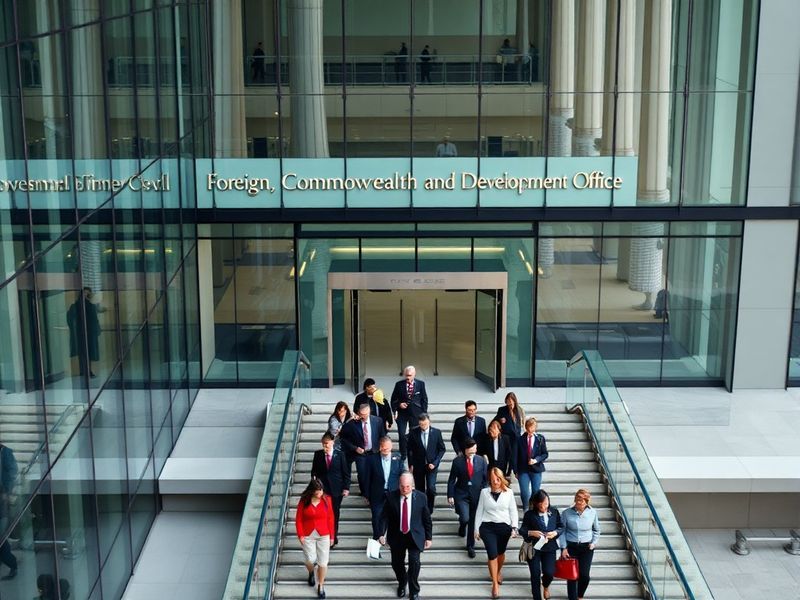
How the UK’s Foreign, Commonwealth and Development Office Shapes Global Policy
“`html
The Foreign, Commonwealth and Development Office: Britain’s Global Footprint
The Foreign, Commonwealth and Development Office (FCDO) stands at the intersection of diplomacy, international aid, and global policy. As the UK’s primary agency for overseas relations, it plays a pivotal role in shaping Britain’s presence on the world stage. From negotiating trade agreements to delivering humanitarian aid, the FCDO’s work ripples across continents, influencing economies, cultures, and political landscapes.
The FCDO’s Structure and Core Responsibilities
Established in 2020 through the merger of the Foreign and Commonwealth Office (FCO) and the Department for International Development (DFID), the FCDO consolidated Britain’s diplomatic and developmental efforts under one umbrella. This restructuring aimed to streamline operations and enhance the coherence of the UK’s international engagement. Today, the FCDO operates through a network of over 270 embassies, high commissions, and consulates in 170 countries.
The office’s responsibilities are broad but interconnected. They include:
- Diplomacy: Representing the UK’s interests abroad, negotiating treaties, and maintaining relationships with foreign governments.
- Development Aid: Administering funding for global poverty reduction, education, healthcare, and disaster relief.
- Consular Services: Assisting British nationals abroad, from emergency evacuations to legal support.
- Security and Defense Diplomacy: Collaborating with allies to address global threats like terrorism and cyber warfare.
The FCDO’s work is guided by the UK’s Integrated Review, a strategic framework that outlines the nation’s priorities in an era of shifting global power dynamics. This review emphasizes resilience, innovation, and partnerships as key pillars of Britain’s foreign policy.
A Global Perspective: The FCDO in Action
The FCDO’s influence extends far beyond the corridors of Whitehall. In Africa, for example, the UK has been a major investor in healthcare, funding programs that combat diseases like malaria and HIV/AIDS. British diplomats in Nairobi and Lagos work not only on trade deals but also on climate resilience projects, reflecting the interconnected nature of modern diplomacy.
In Asia, the FCDO’s role in the Indo-Pacific region has grown significantly. As China’s influence expands, the UK has sought to strengthen ties with allies like Japan, Australia, and India. This strategic pivot is not just about economics; it’s also about countering authoritarianism and promoting democratic values. The FCDO’s engagement in the region includes joint military exercises, technology partnerships, and cultural exchanges.
Europe remains a critical focus, particularly in the wake of Brexit. The FCDO has had to renegotiate relationships with EU member states while forging new agreements with nations like Ukraine and Turkey. The war in Ukraine has underscored the importance of the FCDO’s crisis response capabilities, from coordinating sanctions to delivering humanitarian aid.
Cultural Diplomacy: Soft Power in Action
Beyond hard power, the FCDO leverages cultural diplomacy to enhance Britain’s global standing. Programs like the Chevening Scholarships, which fund international students to study in the UK, create long-term ties between nations. Similarly, the British Council’s work in education and the arts fosters mutual understanding and economic ties.
In the Middle East, the FCDO has balanced traditional diplomacy with innovative approaches to conflict resolution. For instance, the UK’s support for the Abraham Accords—normalization agreements between Israel and Arab states—highlights its role as a facilitator in regional peace efforts. Meanwhile, in Latin America, the FCDO has focused on sustainable development, partnering with local organizations to combat deforestation in the Amazon.
Controversies and Challenges
Despite its far-reaching mandate, the FCDO has faced criticism on multiple fronts. Budget cuts to the aid budget—reduced from 0.7% to 0.5% of gross national income in 2021—have drawn international condemnation. Critics argue that such reductions undermine Britain’s commitment to global development and tarnish its reputation as a humanitarian leader.
The FCDO has also been scrutinized for its handling of high-profile crises. The evacuation of British nationals from Afghanistan in 2021 exposed vulnerabilities in the UK’s emergency response systems. Similarly, the government’s decision to cut aid to Yemen during a severe humanitarian crisis sparked outrage, with aid organizations accusing the FCDO of prioritizing political expediency over human lives.
Another challenge is the FCDO’s role in post-Brexit Britain. Without the EU’s collective bargaining power, the UK must navigate trade deals and diplomatic alliances independently. This has led to tensions with traditional allies, such as France over fishing rights, and raised questions about Britain’s ability to punch above its weight in global affairs.
The Future of the FCDO: Adaptation in a Changing World
The FCDO’s future hinges on its ability to adapt to a world where traditional power structures are being redrawn. The rise of new global players like India and Brazil, the escalating climate crisis, and the proliferation of digital threats all demand innovative responses. The FCDO has begun to prioritize cybersecurity, digital trade, and green diplomacy as key areas of focus.
One of the office’s most pressing tasks is rebuilding trust with developing nations. After years of aid cuts and perceived neglect, many countries view the UK as a less reliable partner. To counter this, the FCDO is exploring new models of cooperation, such as blended finance, where public and private funds are combined to drive development.
The UK’s presidency of the G7 in 2021 and its hosting of COP26 in Glasgow demonstrated its ambition to lead on the global stage. However, the FCDO’s ability to deliver on these promises will depend on sustained political will and public support. As the world grapples with pandemics, wars, and economic instability, the FCDO’s role has never been more critical.
For those interested in the intersection of diplomacy and global development, the FCDO offers a fascinating case study in how nations navigate an increasingly complex world. Whether through high-stakes negotiations or grassroots aid projects, the office remains a cornerstone of Britain’s international identity.
To explore more on global diplomacy, visit our Politics section for in-depth analysis on international relations.