Lyrid Meteor Shower 2025: When, Where, and How to Watch
“`html
The Lyrid Meteor Showers: A Global Celestial Event
The Lyrid meteor showers arrive each April, offering a predictable yet always surprising display of nature’s fireworks. Unlike sporadic meteors, the Lyrids belong to a well-documented annual event, traced back over 2,500 years to ancient Chinese astronomers who first recorded their appearance in 687 BCE. While not as intense as the Perseids or Geminids, the Lyrids hold a special place in human history and modern stargazing culture.
This year, the Lyrids peak around April 21–22, providing an accessible celestial spectacle for observers across both hemispheres. The show typically delivers 10 to 20 meteors per hour under ideal conditions, though occasional outbursts—up to 100 meteors per hour—have been recorded, most recently in 1982 and 1922. These “Lyrid fireballs” burn brighter and leave longer trails, creating moments of awe that transcend language and geography.
The Science Behind the Lyrids
The Lyrid meteor shower originates from Comet C/1861 G1 (Thatcher), a long-period comet that orbits the Sun once every 415 years. Discovered in 1861 by amateur astronomer A.E. Thatcher, the comet leaves behind a trail of dust and debris. Each April, Earth passes through this debris field, causing particles—often no larger than a grain of sand—to enter our atmosphere at speeds of up to 49 km/s (about 110,000 mph).
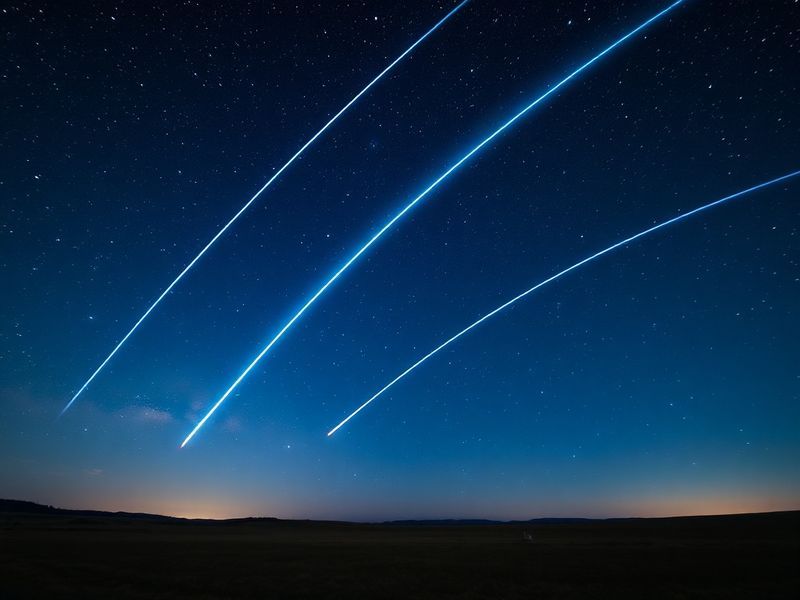
Upon entry, these particles vaporize due to friction, creating the luminous streaks we know as meteors. The radiant point—the apparent origin of the meteors—lies near Vega, the brightest star in the constellation Lyra, hence the name “Lyrids.” While Vega helps observers locate the shower’s direction, meteors can appear anywhere in the sky, often catching stargazers by surprise.
Scientists monitor the Lyrids not only for their beauty but also for their potential to reveal insights into comet behavior. NASA’s Meteor Shower Program tracks Lyrid activity using ground-based cameras and radio detection systems, contributing to long-term studies of interplanetary dust dynamics. These observations are part of broader efforts to understand how comets contribute to Earth’s cosmic environment.
Cultural and Historical Significance
The Lyrids have been observed and interpreted by cultures around the world for millennia. In ancient Greece, the shower coincided with the festival of Cerealia, dedicated to the goddess Ceres, symbolizing renewal and the return of spring. Some traditions linked meteor showers to messages from the gods or omens of change, though interpretations varied widely.
In Chinese records from the Han Dynasty, the Lyrids were described as “stars falling like rain,” a poetic phrase that captures both the phenomenon and its emotional impact. Similarly, in Korean and Japanese folklore, meteors were sometimes seen as celestial birds or spirits traversing the night sky. These narratives reflect humanity’s enduring effort to find meaning in the cosmos.
Even today, the Lyrids inspire cultural expression. Inuit communities in Arctic regions, where spring nights are still dark, use the shower as a marker of seasonal transition. Meanwhile, in modern urban centers like Tokyo and New York, amateur astronomy clubs host public viewings, blending ancient wonder with contemporary science. The Lyrids serve as a reminder that the night sky remains a shared heritage across civilizations.
How to Observe the Lyrids in 2025
Unlike solar eclipses or planetary alignments, meteor showers like the Lyrids require no special equipment—just clear skies and patience. To maximize your experience, follow these practical steps:
- Timing: The best viewing window is after midnight and before dawn on the peak nights (April 21–22, 2025). Avoid nights with a bright moon, as moonlight can wash out fainter meteors.
- Location: Choose a dark site away from city lights. National parks, rural areas, and designated dark-sky preserves offer ideal conditions. Tools like the International Dark-Sky Association map can help locate certified locations.
- Orientation: While meteors radiate from Lyra, they can appear anywhere in the sky. Lie back on a blanket or reclining chair and let your eyes adjust for at least 20 minutes.
- Comfort: Bring warm clothing, insect repellent, and a thermos of hot drink. Even spring nights can be chilly, especially in higher elevations.
- Documentation: Consider participating in citizen science by reporting your observations to the International Meteor Organization, helping build a global dataset.
Photography enthusiasts can capture the Lyrids using a DSLR camera with a wide-angle lens, set to a high ISO and long exposure (10–30 seconds). A tripod and remote shutter release are essential to avoid camera shake. While bright meteors are relatively easy to photograph, catching a fireball requires patience and multiple attempts.
A Global Phenomenon, A Personal Experience
The Lyrids offer something unique: a rare moment when the universe feels both vast and intimate. From the high deserts of Chile, where astronomers study the shower using advanced telescopes, to the rooftops of Mumbai, where families gather to share stories under the stars, the experience transcends borders.
In many parts of the world, light pollution has eroded the night sky’s visibility. The Lyrids present an opportunity to reconnect with darkness—not as absence, but as a canvas for wonder. Organizations like Dave’s Locker Science emphasize the importance of preserving dark skies, both for scientific research and human well-being.
For those unable to view the shower directly, livestreams from observatories such as the NASA Marshall Space Flight Center provide real-time access. These digital alternatives democratize celestial events, ensuring that geography or weather doesn’t exclude anyone from participation.
The Lyrids remind us that we are part of a larger story—one written in the orbits of comets and the flicker of distant stars. Whether you witness a single meteor or a dozen, the experience invites reflection on our place in the universe. In an age of constant connectivity, the Lyrids offer a quiet counterpoint: a chance to disconnect, look up, and remember the sky belongs to everyone.