Giant Octopus Facts: Intelligence, Habitat & Conservation Insights
“`html
The Enigmatic Giant Octopus: Intelligence, Adaptation, and Ocean Mysteries
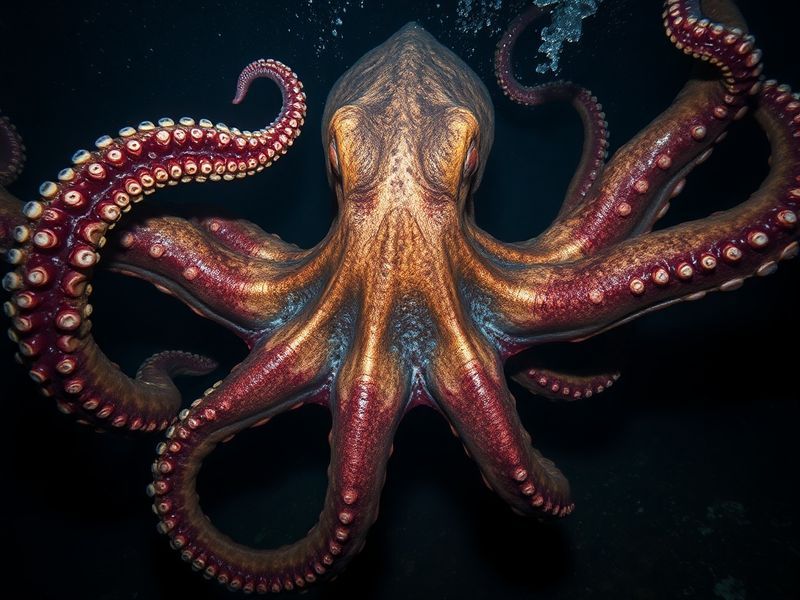
The giant octopus remains one of the ocean’s most captivating creatures. With its bulbous head, eight long arms, and reputation for remarkable intelligence, this cephalopod continues to fascinate marine biologists and divers alike. Found in the cold, nutrient-rich waters of the North Pacific Ocean, the giant octopus (Enteroctopus dofleini) thrives in an environment that tests both its physical and cognitive limits.
Unlike many marine animals that rely on speed or camouflage alone, the giant octopus combines both strategies with an almost eerie problem-solving ability. Its complex nervous system—with two-thirds of its neurons located in its arms—allows it to perform tasks that rival some vertebrates in sophistication. From unscrewing jars to navigating intricate escape routes, this creature demonstrates behaviors that challenge our understanding of invertebrate intelligence.
Physical Characteristics and Habitat
The giant octopus holds the title of the largest octopus species by weight, with adults typically weighing between 33 to 44 pounds (15 to 20 kg). However, exceptional individuals have reached over 400 pounds and arm spans exceeding 14 feet. Its muscular body is covered in a layer of loose skin, allowing it to squeeze through openings as small as a coin—a trait that serves it well when evading predators or exploring tight crevices in rocky reefs.
These cephalopods inhabit the coastal waters of the Pacific Rim, from California to Alaska and across to Japan and Korea. They prefer rocky, kelp-forested environments where they can hunt and hide. Their natural lifespan is relatively short, typically 3 to 5 years, though this can vary based on environmental conditions and predation pressures.
One of the most striking features of the giant octopus is its ability to change color and texture almost instantaneously. Using specialized skin cells called chromatophores, it can blend seamlessly into its surroundings, making it nearly invisible to both prey and predators. This camouflage is not just for defense—it also plays a crucial role in communication during mating rituals and territorial disputes.
Cognitive Abilities and Problem-Solving Skills
The giant octopus’s intelligence has been the subject of extensive research. In controlled experiments, individuals have demonstrated the ability to solve puzzles, navigate mazes, and even recognize individual humans. Their problem-solving skills are not instinctual but learned, suggesting a high capacity for memory and adaptation.
One notable study conducted at the University of Otago involved training octopuses to open a series of containers to retrieve food rewards. The subjects not only mastered the task but also developed unique strategies, such as using their arms to manipulate lids in specific sequences. This level of cognitive flexibility is rare among invertebrates and has led some researchers to compare octopus intelligence to that of certain mammals.
Their learning process often involves trial and error, but once a solution is found, it is retained. This suggests that giant octopuses possess both short-term and long-term memory, allowing them to adapt to changing environments and challenges. Their ability to use tools—such as stacking rocks to block den entrances—further underscores their advanced cognitive abilities.
Social Behavior and Communication
While giant octopuses are generally solitary creatures, they do exhibit complex social behaviors during mating season. Males perform elaborate courtship displays, using color changes and postures to attract females. After mating, the female lays tens of thousands of eggs in a single clutch, which she guards diligently for up to seven months without eating. This extreme parental investment is unusual among cephalopods and highlights the species’ unique reproductive strategies.
Communication among giant octopuses is primarily visual, relying on rapid color shifts and body postures. They can convey aggression, submission, or even playful behavior through these signals. Some researchers believe that these interactions may involve a form of rudimentary language, though this remains a topic of ongoing study.
Ecological Role and Conservation Status
The giant octopus plays a vital role in its ecosystem. As both a predator and prey species, it helps maintain balance in marine food webs. Its diet consists primarily of crustaceans, clams, and small fish, which it captures using its powerful arms and beak-like mouth. By controlling populations of these organisms, the giant octopus prevents overgrazing on kelp forests and other critical habitats.
Despite its ecological importance, the giant octopus faces several threats. Overfishing, habitat destruction, and climate change are among the most pressing concerns. In some regions, commercial fishing practices have led to significant declines in octopus populations, as they are often caught as bycatch. Additionally, warming ocean temperatures and ocean acidification can disrupt their delicate physiological processes, particularly during early development.
The International Union for Conservation of Nature (IUCN) currently lists the giant octopus as a species of “Least Concern,” but this designation does not account for localized declines or regional variations in population health. Conservation efforts are underway in some areas, including the establishment of marine protected zones and sustainable fishing practices.
Human Encounters and Cultural Significance
For divers and marine enthusiasts, encountering a giant octopus in the wild is a highlight of any underwater expedition. These creatures are naturally curious and often approach humans with cautious interest. However, their interactions with divers can be unpredictable, as their intelligence and agility make them difficult to predict.
The giant octopus has also captured the human imagination through literature and folklore. From Jules Verne’s Twenty Thousand Leagues Under the Sea to modern sci-fi films, the octopus has been portrayed as both a formidable adversary and a symbol of the ocean’s mysteries. In some cultures, it is revered as a creature of wisdom and adaptability, embodying the untamed spirit of the sea.
Scientists continue to study the giant octopus not only for its ecological role but also for the insights it provides into the evolution of intelligence. Its unique biology—including three hearts, blue blood, and the ability to regenerate limbs—offers valuable clues for biomedical research, particularly in the fields of neurology and regenerative medicine.
How to Safely Observe Giant Octopuses
If you’re interested in seeing a giant octopus in its natural habitat, there are several ethical and safe ways to do so. Here are some tips for responsible wildlife observation:
- Choose the right location: The best places to spot giant octopuses include the waters around Puget Sound, British Columbia, and the coast of Alaska. These regions have rocky reefs and kelp forests that provide ideal hiding spots.
- Dive with a guide: Local dive operators familiar with octopus behavior can increase your chances of a sighting while ensuring minimal disturbance to the animal.
- Keep your distance: Avoid touching or chasing the octopus, as this can stress the animal and disrupt its natural behaviors.
- Use non-invasive techniques: Underwater photography with a wide-angle lens allows you to capture the octopus’s beauty without intruding on its space.
- Respect local regulations: Some areas have specific guidelines for wildlife encounters, including restrictions on flash photography or flashlights.
For those who prefer to observe from land, many aquariums feature giant octopuses in carefully designed exhibits that mimic their natural environment. These exhibits often include educational programs that highlight the species’ unique adaptations and conservation needs. If you’re looking to learn more about marine life, consider visiting Dave’s Locker Sea Life category for additional resources and insights.
Conclusion: A Creature of Enduring Wonder
The giant octopus stands as a testament to the ocean’s boundless mysteries. Its intelligence, adaptability, and ecological role make it a species worthy of both admiration and protection. As we continue to explore and exploit the ocean’s depths, it is crucial to remember the importance of preserving habitats that support such remarkable creatures.
Research into the giant octopus is still in its early stages, and each new discovery brings us closer to understanding the full extent of its capabilities. From solving complex puzzles to communicating through color, this cephalopod challenges our perceptions of intelligence and behavior in the animal kingdom.
For now, the giant octopus remains a symbol of the ocean’s untamed beauty and complexity. Whether observed in the wild or studied in a lab, it reminds us of the wonders that still lie beneath the waves—and the responsibility we bear to protect them.