Giant Octopus: Secrets of the Deep-Sea Giant Revealed
“`html
Giant Octopus: The Deep-Sea Enigma of the Ocean
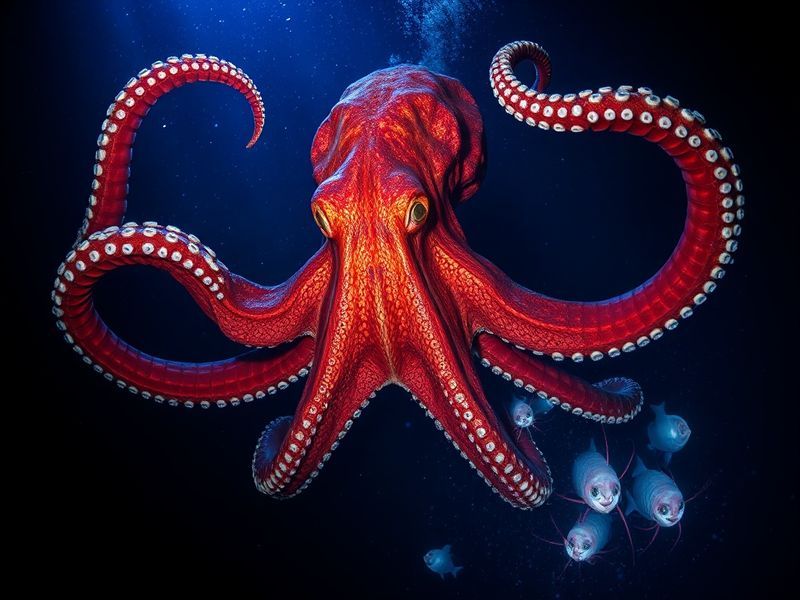
The giant octopus remains one of the ocean’s most mesmerizing yet elusive creatures. With its sprawling tentacles, intelligent gaze, and ability to vanish into the abyss, it embodies the mystery of the deep sea. While many species of octopus exist, the giant variety—particularly the North Pacific giant octopus—commands attention for its size, intelligence, and the legends surrounding it.
These cephalopods are not just biological marvels; they are cultural symbols, scientific puzzles, and subjects of ongoing conservation concerns. Their habitats, behaviors, and interactions with humans continue to fascinate researchers and casual observers alike. What makes the giant octopus so compelling, and why does it hold such a unique place in both nature and human imagination?
The Biology and Behavior of the Giant Octopus
The North Pacific giant octopus (Enteroctopus dofleini) is the largest octopus species by weight, with adults commonly reaching 30 to 50 pounds. Some exceptional individuals have been recorded at over 100 pounds, with arm spans stretching up to 16 feet. Their bodies are soft and muscular, allowing them to squeeze through remarkably tight spaces—an adaptation that serves as both a defense mechanism and a hunting strategy.
Intelligence is perhaps the giant octopus’s most striking trait. These creatures exhibit problem-solving skills, memory retention, and even playful behavior. Studies have shown they can navigate mazes, open jars, and recognize individual humans. Their brains, distributed across their arms, enable a level of decentralized cognition rare in the animal kingdom. This intelligence is not just a curiosity; it raises questions about the nature of consciousness and the cognitive capabilities of invertebrates.
Their hunting techniques are equally impressive. Giant octopuses are opportunistic predators, feeding on crabs, clams, fish, and even other octopuses. They use their powerful beaks to crush shells, inject venom to subdue prey, and employ camouflage to blend into their surroundings. Their ability to change color and texture in milliseconds is a marvel of biological engineering, allowing them to evade predators or ambush unsuspecting meals.
Key Adaptations of the Giant Octopus
- Camouflage: Specialized skin cells called chromatophores allow them to change color and pattern almost instantaneously.
- Regeneration: If an arm is lost, they can regrow it over time, a trait shared with some lizards and starfish.
- Ink Defense: When threatened, they release a cloud of ink to obscure predators’ vision and make a quick escape.
- Short Lifespan: Despite their intelligence, giant octopuses live only 3 to 5 years, with females dying shortly after reproducing.
Cultural and Historical Significance
The giant octopus has long been a fixture in human storytelling, often symbolizing the unknown depths of the ocean. Ancient mariners and fishermen told tales of colossal sea monsters dragging ships into the abyss—a fear likely inspired by sightings of large tentacles or misidentified sea creatures. Even today, the giant octopus appears in literature, film, and folklore as a representation of the sea’s unpredictability and power.
In Japanese culture, the giant octopus is known as tako and features prominently in art, cuisine, and mythology. The famous woodblock print Kanagawa-oki nami ura by Hokusai depicts fishermen battling a giant octopus, while in modern times, octopus has become a staple in sushi and other dishes. Meanwhile, Western pop culture often portrays the giant octopus as a villain, from Jules Verne’s Twenty Thousand Leagues Under the Sea to the 1980s horror film Octopus.
These cultural depictions reveal a duality in human perception: the octopus is both a source of sustenance and a symbol of terror. This duality persists in scientific circles, where researchers alternately admire and fear the creature’s intelligence and adaptability.
Conservation and Environmental Concerns
Despite their resilience, giant octopuses face growing threats from human activity. Climate change, overfishing, and habitat destruction are altering ocean ecosystems at an unprecedented rate. Warmer waters, for instance, can disrupt their breeding cycles, while pollution—particularly plastic waste—can entangle or poison them. The deep-sea fishing industry, which sometimes captures octopuses as bycatch, also poses a risk to their populations.
Conservation efforts are complicated by the giant octopus’s solitary nature and wide-ranging habitats. Unlike charismatic megafauna such as whales or sea turtles, they lack the same level of public advocacy. However, their role in marine ecosystems is undeniable. As apex predators, they help maintain balance in their environments, controlling populations of prey species and contributing to biodiversity.
Some marine protected areas (MPAs) have begun to address these challenges by restricting fishing activities in critical octopus habitats. Research initiatives, such as tagging programs and genetic studies, are also shedding light on their migration patterns and population health. These efforts are crucial, as the loss of giant octopuses could have cascading effects on ocean ecosystems.
The Future of Giant Octopus Research
The study of giant octopuses is still in its early stages, with many mysteries left to unravel. Recent advancements in biotechnology, such as DNA sequencing and underwater robotics, are providing new tools for researchers. For example, scientists are exploring the genetic basis of their intelligence and regenerative abilities, which could have implications for human medicine, including regenerative therapies and neural research.
Meanwhile, the field of bioinspiration is drawing from octopus biology to develop new technologies. Soft robotics, a burgeoning field, takes cues from the octopus’s flexible body and tentacle movements to create robots capable of navigating complex environments. These innovations highlight the potential real-world applications of studying such enigmatic creatures.
Public interest in giant octopuses also shows no signs of waning. Aquariums and marine research centers frequently feature them in exhibits, drawing crowds eager to catch a glimpse of these intelligent invertebrates. Citizen science projects, such as the Ocean Exploration Trust’s Nautilus Live, allow amateur enthusiasts to participate in real-time research, fostering a deeper connection to marine life.
As we continue to explore the ocean’s depths, the giant octopus will undoubtedly remain a focal point of discovery. Whether through scientific breakthroughs, conservation efforts, or cultural narratives, its story is far from over.
Why the Giant Octopus Matters
Beyond their biological and ecological significance, giant octopuses challenge our understanding of intelligence and consciousness. Their existence prompts us to reconsider the boundaries between humans and other species, urging a more inclusive view of animal cognition. In an era of environmental crisis, they also serve as a reminder of the ocean’s fragility and the need for sustainable stewardship.
The giant octopus is more than just a creature of the deep; it is a symbol of the ocean’s vast, untapped potential—and the urgent need to protect it.