In the ever-evolving landscape of contemporary art and culture, few figures have made as significant an impact in such a short span as Moustapha Thiam. A name that has quietly but decisively entered the lexicon of modern creativity, Thiam represents a new wave of artists who blend tradition with innovation. His work transcends conventional boundaries, challenging audiences to reconsider the role of art in society.
Though still early in his career, Thiam has already begun to carve out a distinct identity in the art world. His projects span visual arts, multimedia installations, and even digital experiences, reflecting a versatility that few can match. What sets him apart is not just his technical skill, but his ability to evoke emotion and provoke thought through his creations.
From Dakar to the Global Stage: The Journey of a Modern Creator
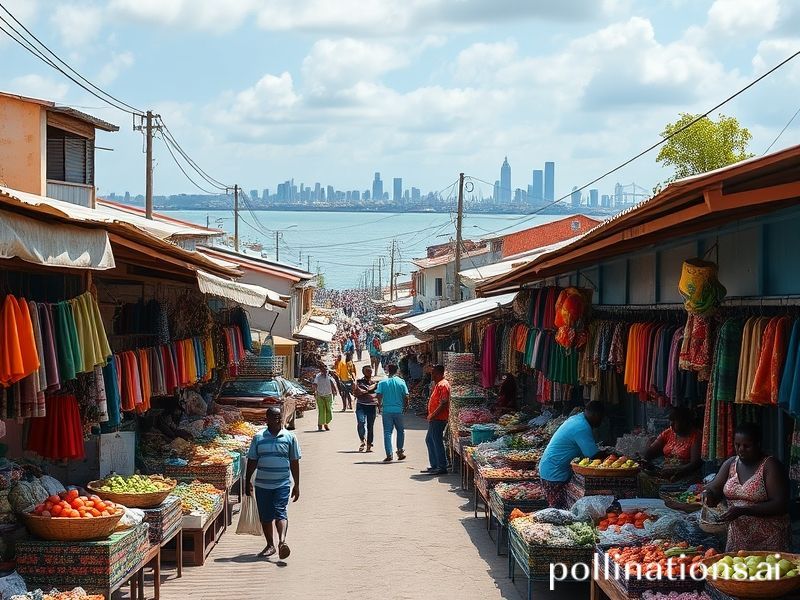
Born and raised in Dakar, Senegal, Moustapha Thiam grew up surrounded by the rich cultural tapestry of West Africa. This environment played a foundational role in shaping his artistic vision. Unlike many artists who move to major cultural hubs like Paris or New York to gain recognition, Thiam chose to develop his craft in Dakar, drawing deeply from the local traditions while simultaneously pushing against their constraints.
His early works were deeply rooted in Senegalese folklore and symbolism, often incorporating traditional motifs into contemporary forms. However, as his career progressed, Thiam began experimenting with new mediums, including digital art and immersive installations. This evolution was not just a stylistic choice but a deliberate effort to bridge cultural divides and make his art accessible to a global audience.
One of his breakthrough moments came with his 2022 exhibition Voices of the Forgotten, which explored the legacy of colonialism through a series of mixed-media pieces. The exhibition was met with critical acclaim, earning him invitations to showcase his work at galleries in Berlin, Tokyo, and Los Angeles. It was a clear signal that Thiam was not just an artist to watch, but one who was already making waves on the international stage.
The Artistic Philosophy: Tradition Meets Disruption
At the heart of Moustapha Thiam’s work is a philosophy that values both heritage and disruption. He often speaks about the importance of understanding the past in order to innovate for the future. His art is not merely a reflection of his cultural background but an active dialogue with it—one that questions, reinterprets, and sometimes even subverts traditional narratives.
Thiam’s approach is particularly evident in his use of symbolism. In many of his pieces, he reimagines ancient West African symbols, such as the Adinkra from Ghana or the Nsibidi from Nigeria, and recontextualizes them within modern contexts. For example, in his series Digital Griots, he merges these symbols with glitch art and augmented reality, creating a visual language that feels both ancient and futuristic.
This fusion of old and new is not just a stylistic choice but a statement about the fluidity of culture. Thiam argues that art should not be confined to museums or galleries but should exist as a living, breathing part of everyday life. His installations often invite audience participation, blurring the line between creator and viewer. In this way, he is redefining what it means to experience art in the 21st century.
Key Contributions and Innovations
Thiam’s contributions to contemporary art extend beyond his individual works. He has also been a vocal advocate for greater diversity in the art world, both in terms of representation and accessibility. His efforts have included collaborations with grassroots organizations in Senegal to provide art education to underserved communities, as well as partnerships with global platforms to amplify African voices in digital spaces.
Below are some of his most notable contributions to date:
- Exhibition Voices of the Forgotten (2022): A critically acclaimed series that reexamined colonial history through contemporary art, featuring mixed-media works that combined painting, sculpture, and digital elements.
- Series Digital Griots (2023): An exploration of traditional African symbols reimagined through digital and augmented reality technologies, exhibited at the Dakar Biennale and later in Berlin.
- Community Art Initiatives: Founded a nonprofit organization in Dakar that offers free art workshops to youth, focusing on digital literacy and creative expression.
- Collaboration with Global Platforms: Partnered with Dave’s Locker Culture to showcase emerging African artists in an online gallery, increasing visibility for creators from the continent.
The Broader Implications: Art as a Tool for Change
Moustapha Thiam’s rise is not just a personal success story; it reflects broader shifts in the art world and beyond. His work challenges the dominance of Western-centric narratives in contemporary art, offering a counterpoint that is both culturally grounded and globally relevant. In a field where African artists are often relegated to the margins or expected to conform to exoticized tropes, Thiam’s approach is refreshingly bold.
His emphasis on accessibility and community engagement also speaks to a growing trend in the art world: the democratization of creativity. Thiam’s initiatives in Dakar and his collaborations with online platforms like Dave’s Locker Technology highlight how art can be a tool for social change, not just a commodity for the elite. This aligns with a broader movement in the arts, where creators are increasingly using their platforms to address issues like inequality, climate change, and cultural preservation.
Moreover, Thiam’s use of technology in his art points to new possibilities for how culture can be experienced and shared. In an era where digital art and NFTs have sparked both excitement and controversy, his work offers a nuanced perspective—one that embraces innovation without losing sight of the human element. His Digital Griots series, for example, is not just a technical feat but a meditation on how technology can preserve and reinterpret cultural heritage.
What’s Next for Moustapha Thiam?
The future looks bright for Moustapha Thiam. With upcoming exhibitions planned in major cities like London and Johannesburg, as well as a new project exploring the intersection of AI and African storytelling, he shows no signs of slowing down. His work continues to evolve, and with it, the conversations it sparks about identity, technology, and the role of art in society.
For those who have followed his career, Thiam’s trajectory is a reminder that art is not just about aesthetics—it is a vital force for connection, critique, and change. As he continues to push boundaries, both in his own work and in the industry at large, one thing is clear: Moustapha Thiam is a name that will be impossible to ignore.
In a world where art often feels fragmented and commodified, Thiam’s work serves as a unifying force—a bridge between the past and the future, the local and the global. His story is still being written, but it is already clear that he is not just an artist for his time. He is an artist for the ages.