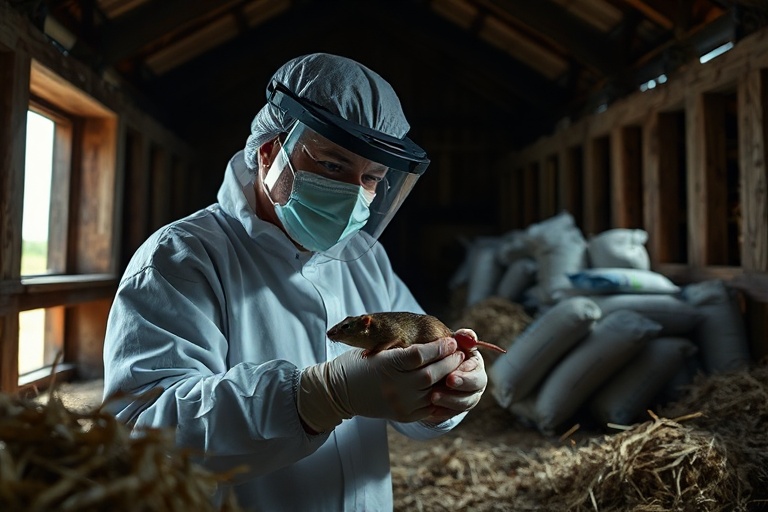
Hantavirus in Illinois: Understanding the Risks and Historical Context
Hantavirus cases in Illinois remain rare but require heightened awareness, particularly in rural and suburban areas where contact with infected rodents is more likely. The state has recorded isolated incidents over the years, often linked to outdoor activities such as camping, farming, or cleaning barns and sheds. While the virus poses a serious health risk, public health officials emphasize that preventive measures drastically reduce exposure risks.
Globally, hantaviruses are not exclusive to the United States. They appear in regions across Europe, Asia, and South America, each with its own strains and associated rodent hosts. In Europe, for instance, the Puumala virus is carried by bank voles and causes a milder form of hemorrhagic fever with renal syndrome (HFRS). Meanwhile, in South America, the Andes virus spreads through long-tailed pygmy rice rats, with documented human-to-human transmission—a rarity in the U.S. These variations highlight the importance of localized surveillance and tailored public health responses.
How Hantavirus Spreads and Who Is at Risk in Illinois
Hantavirus pulmonary syndrome (HPS), the severe disease caused by certain hantaviruses in the Americas, is primarily transmitted when humans inhale aerosolized viral particles from the urine, feces, or saliva of infected rodents. In Illinois, the deer mouse (Peromyscus maniculatus) is the primary carrier of the Sin Nombre virus, the most common cause of HPS in North America. While the virus does not spread person-to-person in the U.S., it can lead to fatal respiratory complications if untreated.
Certain groups face elevated risk due to occupational or recreational exposure:
- Outdoor workers such as farmers, landscapers, and construction crews
- Campers, hikers, and hunters who use cabins or temporary shelters
- Homeowners cleaning garages, basements, or storage areas with rodent activity
- Veterinarians and wildlife rehabilitators handling potentially infected animals
Illinois health departments recommend sealing entry points in homes, using rodent traps, and wearing respiratory protection when cleaning rodent-infested spaces. These precautions echo global best practices, such as those promoted in Scandinavian countries where HFRS is more prevalent.
Recent Cases and Public Health Responses in Illinois
In 2023, Illinois reported two confirmed cases of hantavirus infection, both in central counties. One resulted from exposure while cleaning a long-unused cabin. The cases were promptly reported to the Illinois Department of Public Health (IDPH), which issued advisories emphasizing rodent control and safe cleanup protocols. Health officials urged residents to avoid sweeping or vacuuming rodent droppings, as this can aerosolize the virus. Instead, they advised wetting contaminated areas with disinfectant before removal.
Such localized responses are mirrored worldwide. In Chile, where hantavirus is endemic, authorities have implemented community education campaigns in rural areas, distributing rodent-proof storage bins and teaching safe harvesting techniques. Similarly, in China’s Yunnan province, public health teams conduct seasonal rodent monitoring and coordinate with farmers to reduce habitat overlap. These global strategies underscore the universal need for proactive, community-based interventions.
The IDPH continues to monitor environmental and climatic factors that may influence rodent populations, such as mild winters or abundant seed crops, which can lead to population surges. By integrating environmental data with public health surveillance, Illinois aims to prevent outbreaks before they occur—a model increasingly adopted in temperate regions globally.
Global Patterns and Lessons for Illinois
From the rice fields of Argentina to the taiga forests of Russia, hantaviruses illustrate how human encroachment into natural habitats increases zoonotic disease risks. Climate change further complicates this dynamic, as warmer temperatures and altered precipitation patterns shift rodent ranges and breeding seasons. In the U.S., the Centers for Disease Control and Prevention (CDC) has observed a northward expansion of deer mouse populations, potentially increasing HPS risk in northern Illinois over time.
Lessons from countries with higher hantavirus burdens offer valuable insights. In Finland, where nephropathia epidemica (caused by Puumala virus) is common, public awareness campaigns are integrated into school curricula. Sweden uses GIS mapping to predict rodent hotspots based on forest composition and winter temperatures. These tools could be adapted in Illinois to target prevention efforts in high-risk counties.
Moreover, international collaboration through organizations like the World Health Organization (WHO) facilitates knowledge sharing on diagnostics, treatment, and vector control. While no vaccine exists for Sin Nombre virus, global research into hantavirus immunology may one day yield broader solutions applicable to multiple strains.
Prevention and What Illinois Residents Can Do
Preventing hantavirus infection begins with minimizing contact with rodents and their excreta. The Illinois Department of Public Health recommends a multi-step approach:
- Seal cracks and gaps in homes and outbuildings to prevent rodent entry.
- Store food and garbage in sealed containers and keep outdoor areas clean.
- Use snap traps or glue boards in infested areas, wearing gloves and a face mask during setup.
- Disinfect rodent-contaminated areas by spraying a 10% bleach solution or other disinfectant, letting it sit for 10 minutes before wiping.
- Avoid stirring up dust by sweeping or vacuuming; open windows for ventilation when cleaning.
Illinois residents can also report large rodent infestations to local health departments, which may provide free inspections or pest control assistance. Early detection and response remain the most effective tools in preventing hantavirus transmission.
For those spending time outdoors, choosing well-maintained lodging and keeping sleeping bags off the floor can reduce risk. Travelers to rural areas of the U.S. and abroad should familiarize themselves with local rodent-borne diseases and follow regional health advisories.
Looking Ahead: Balancing Nature and Public Health
Hantavirus in Illinois serves as a reminder of humanity’s interconnectedness with the natural world. As urban sprawl and climate change alter ecosystems, zoonotic diseases like hantavirus may become more common. Yet, through vigilance, education, and adaptive public health strategies, communities can coexist safely with wildlife while minimizing disease risks.
Illinois’ experience reflects a broader global challenge—balancing development, conservation, and health security. By learning from international peers and investing in surveillance and prevention, the state can continue to protect its residents without sacrificing its natural landscapes.
For more on zoonotic diseases and outdoor safety tips, visit our Health section. To explore wildlife conservation efforts in the Midwest, check out our Science category.