Lourdes: Pilgrimage, Healing, and the Mystery of Faith
In the foothills of the French Pyrenees, a small town with a population of just over 13,000 has drawn millions of visitors for over 160 years. Lourdes is a place where faith, history, and human suffering intersect in ways that continue to baffle skeptics and inspire believers alike. What began as a series of apparitions in 1858 has grown into one of the most visited pilgrimage sites in the world, second only to Rome in terms of Catholic visitation. But Lourdes is more than a religious site; it is a living testament to the power of belief, the complexities of modern spirituality, and the enduring human quest for meaning in the face of suffering.
The Origins of Lourdes: A Series of Apparitions
The story of Lourdes begins on February 11, 1858, when 14-year-old Bernadette Soubirous reported seeing a “small young lady” in the grotto of Massabielle. Over the course of several months, Bernadette claimed to have witnessed 18 apparitions, during which the lady identified herself as the “Immaculate Conception.” The visions included a request to drink from a muddy spring, which Bernadette uncovered by digging in the ground. The spring, which flows to this day, became the focal point of the site.
The Catholic Church, after rigorous investigation, declared the apparitions authentic in 1862. Since then, Lourdes has been a magnet for pilgrims seeking physical healing, spiritual renewal, and a connection to the divine. The grotto where Bernadette first saw the visions is now enclosed in a basilica, and the spring’s waters are believed by many to possess miraculous properties. To date, the Catholic Church has recognized 70 miracles attributed to Lourdes, with thousands more reported but unrecognized due to the stringent criteria for verification.
The Pilgrimage Experience: Rituals and Routines
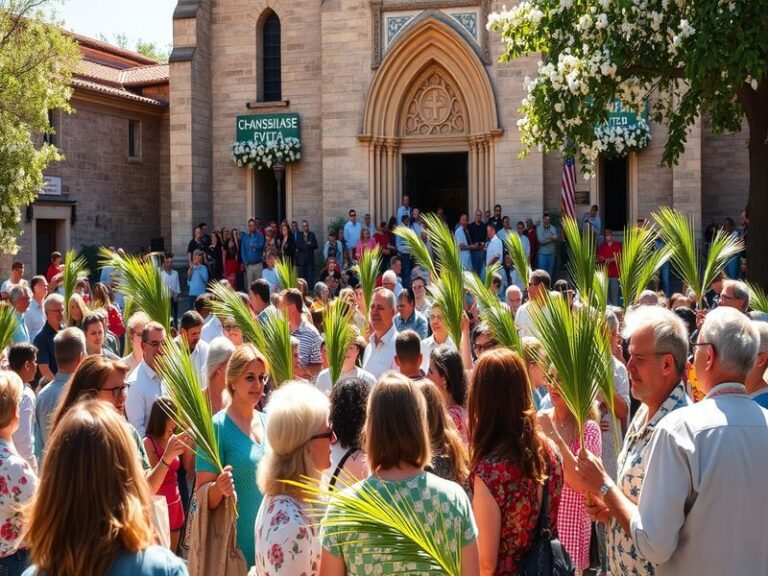
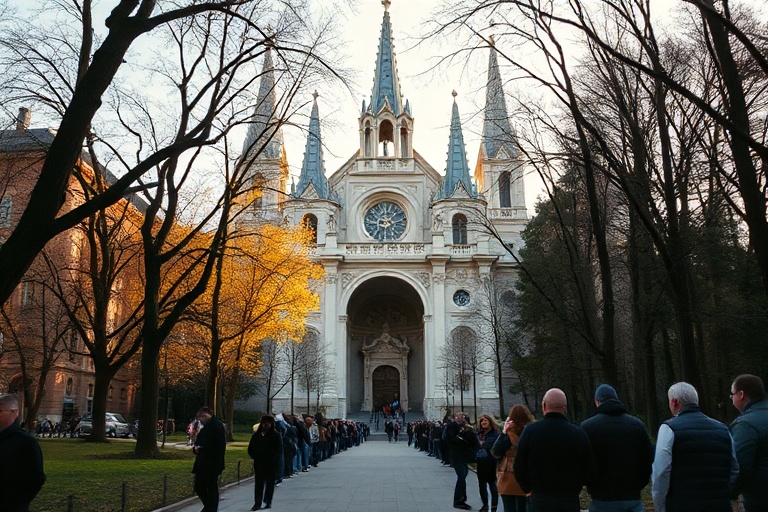
Every year, approximately 5 million visitors travel to Lourdes, with pilgrims arriving from every corner of the globe. The journey is not merely a vacation; it is a deeply personal and often transformative experience. Pilgrims participate in a structured series of rituals designed to foster reflection, prayer, and communal worship. These rituals are both solemn and communal, blending centuries-old traditions with the personal stories of those who make the journey.
The pilgrimage typically begins at the Grotto of Massabielle, where pilgrims approach the spring to drink its water, bathe in its pools, or simply pray. The site is open 24 hours a day, allowing pilgrims to visit at any time, day or night. Processions are a central feature of the Lourdes experience, with the most notable being the Torchlight Marian Procession, held every evening at 9 PM, where thousands of pilgrims carry candles in a moving tribute to the Virgin Mary.
For many, the most poignant moment of the pilgrimage is the Blessing of the Sick, a daily event where those with illnesses or disabilities are anointed with oil and blessed by clergy. This ritual underscores the site’s reputation as a place of healing, both physical and spiritual. Pilgrims also participate in the Way of the Cross, a series of 14 stations commemorating the crucifixion of Jesus, which winds through the sacred grounds of Lourdes.
Key Aspects of a Lourdes Pilgrimage
- Grotto of Massabielle: The site of the original apparitions, where pilgrims pray and collect holy water.
- Basilicas: Three basilicas—Notre-Dame, the Rosary Basilica, and the Upper Basilica—overlook the sanctuary, each representing different aspects of the Catholic faith.
- Processions: Daily and evening processions, including the famous Torchlight Marian Procession, unite pilgrims in prayer and song.
- Blessing of the Sick: A daily ritual where clergy anoint and bless those suffering from illness or disability.
- Water Rituals: Pilgrims drink from the spring, bathe in its pools, or take home bottles of Lourdes water as a symbol of faith and healing.
Beyond Healing: The Broader Implications of Lourdes
Lourdes is often framed as a place of miracles, but its significance extends far beyond the realm of the supernatural. The site serves as a microcosm of broader themes in modern spirituality, including the role of faith in contemporary society, the intersection of religion and medicine, and the power of communal experience in shaping identity. For skeptics, Lourdes is a fascinating case study in the psychology of belief and the placebo effect. For believers, it is a tangible reminder of divine intervention in human affairs.
The town itself has evolved to accommodate the steady stream of pilgrims. Hospitals, hostels, and charitable organizations operate year-round to provide medical care, lodging, and spiritual guidance to visitors. The Medical Bureau of Lourdes meticulously records and investigates claims of miraculous healings, a process that blends science with faith. While the Church requires rigorous proof of miracles—including medical documentation and the absence of natural explanation—the Bureau’s work highlights the tension between empirical evidence and the ineffable nature of faith.
Lourdes also reflects the global nature of modern pilgrimage. Pilgrims arrive from countries as diverse as the Philippines, Poland, and Peru, each bringing their own cultural expressions of faith. This diversity fosters a sense of unity among believers while also highlighting the cultural nuances that shape religious practice. The site’s ability to adapt to changing times—whether through digital pilgrimages during the COVID-19 pandemic or the inclusion of interfaith services—demonstrates its enduring relevance.
The Enduring Mystery of Lourdes
What makes Lourdes so compelling is not just its history or its rituals, but the mystery that surrounds it. The apparitions of Bernadette Soubirous remain unexplained, and the healings attributed to the site defy conventional medical understanding. Yet Lourdes persists as a place where the boundaries between the sacred and the secular blur. It is a site where the past and present coexist, where the individual and the communal intertwine, and where the mysteries of faith are confronted with the certainties of science.
For many, Lourdes is a place of solace—a sanctuary where the weight of suffering is eased by the promise of divine intervention. For others, it is a relic of a bygone era, a remnant of a time when faith held a more central place in society. But regardless of one’s perspective, Lourdes remains a powerful symbol of humanity’s enduring search for meaning, healing, and connection.
As the world becomes increasingly secularized, Lourdes stands as a reminder of the enduring power of faith. It challenges us to consider the role of the supernatural in our lives and the ways in which ritual and tradition continue to shape our collective consciousness. Whether viewed through the lens of religion, psychology, or cultural studies, Lourdes offers a window into the human condition—a condition that, at its core, seeks answers to questions that transcend the material world.
Final Thoughts
Lourdes is more than a pilgrimage site; it is a phenomenon that transcends time and culture. Its story is one of faith, healing, and the mysteries that lie beyond human understanding. For those who visit, it is an experience that lingers long after they return home. For those who study it, it is a subject that invites endless inquiry. And for the world at large, it serves as a testament to the enduring human quest for something greater than ourselves.
As we navigate an era of rapid technological advancement and shifting cultural norms, Lourdes reminds us of the timeless power of belief. It challenges us to confront the unknown, to seek solace in the face of suffering, and to find unity in our shared humanity. In a world that often prioritizes the tangible and the measurable, Lourdes offers a space for the intangible and the inexplicable—a place where faith, in all its forms, continues to thrive.
For more on topics related to faith, spirituality, and cultural phenomena, visit Culture and Travel on Dave’s Locker.