Solar Flare Northern Lights: How the Sun Creates Auroras
The sun’s unpredictable eruptions occasionally send charged particles hurtling toward Earth. When these particles collide with our planet’s magnetic field, they create one of nature’s most breathtaking displays: the northern lights. But the relationship between solar flares and the aurora borealis is more than just a visual spectacle. It’s a reminder of the sun’s immense power and its direct influence on our technological world.
The Science Behind Solar Flares and the Aurora
Solar flares are sudden, intense bursts of energy from the sun’s surface, often accompanied by coronal mass ejections (CMEs). These events release vast quantities of plasma and magnetic fields into space. When directed toward Earth, they compress the magnetosphere and trigger geomagnetic storms.
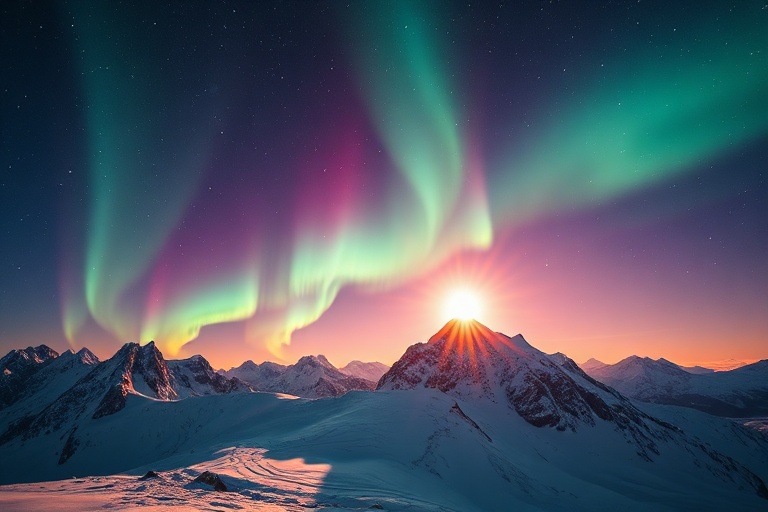
The interaction between these solar particles and Earth’s upper atmosphere excites oxygen and nitrogen molecules, causing them to emit light. This is what we see as the aurora—the shimmering greens, purples, and reds dancing across polar skies. The intensity of the display depends on the flare’s strength and the speed of the incoming particles.
While solar flares are common, only the strongest ones produce auroras visible far beyond the Arctic Circle. During periods of high solar activity, such as the current solar maximum, even mid-latitude regions may witness these celestial shows.
How Often Do Solar Flares Trigger Aurora Displays?
The sun operates on an 11-year cycle of activity, with periods of solar minimum and solar maximum. The current cycle, Solar Cycle 25, is expected to peak around 2025, meaning more frequent and intense flares in the coming years.
Here’s what to expect during different phases of solar activity:
- Solar Minimum: Fewer flares, auroras mostly confined to polar regions.
- Rising Activity: Moderate flares increase, with occasional mid-latitude auroras.
- Solar Maximum: Frequent strong flares, widespread aurora sightings, and heightened geomagnetic activity.
The strongest solar flares, classified as X-class, have the greatest potential to disrupt technology and enhance aurora visibility. For example, an X-class flare in April 2023 produced auroras visible as far south as Arizona and Texas.
The Broader Implications of Solar Storms
Beyond their visual impact, solar flares and geomagnetic storms pose real risks to modern infrastructure. The same particles that create the northern lights can also induce electrical currents in power lines, pipelines, and satellites.
In 1989, a powerful geomagnetic storm caused a nine-hour blackout across Quebec, damaging transformers and leaving millions without power. More recently, in February 2022, SpaceX lost 40 Starlink satellites after a solar storm increased atmospheric drag.
These events highlight the vulnerability of our technology-dependent society. A severe “Carrington-level” event—similar to the 1859 solar superstorm—could disable global communications, disrupt GPS, and cripple power grids for months.
Monitoring and Preparedness
Governments and space agencies actively track solar activity to mitigate risks. Satellites like NASA’s Solar Dynamics Observatory and NOAA’s DSCOVR mission provide real-time data on solar flares and CMEs. These warnings allow power companies and airlines to take precautionary measures during geomagnetic storms.
For aurora chasers, these alerts are equally valuable. Apps and websites like Dave’s Locker Science and Dave’s Locker Technology aggregate solar forecasts, helping enthusiasts plan their observations.
How to Observe the Northern Lights During a Solar Flare
Witnessing the northern lights requires patience, timing, and a bit of luck. Here’s how to maximize your chances:
- Check the forecast: Use tools like the NOAA Planetary K-index to monitor geomagnetic activity. A Kp value of 5 or higher often means auroras are visible at lower latitudes.
- Escape light pollution: Head to dark-sky areas far from cities. Locations like Iceland, Norway, or Canada’s Yukon Territory offer ideal viewing conditions.
- Look north (or south): In the Northern Hemisphere, auroras typically appear in the northern sky. During intense storms, they may spread overhead or even to the south.
- Photograph the moment: Use a tripod and a camera with manual settings. Long exposures (10-20 seconds) and high ISO (1600+) can capture the aurora’s colors.
- Stay updated: Follow real-time aurora alerts from apps like Aurora Alerts or My Aurora Forecast.
The best viewing opportunities often occur between 10 PM and 2 AM, when solar activity aligns with Earth’s nightside. Clear skies and minimal moonlight further enhance visibility.
A Cosmic Reminder of Earth’s Place in the Universe
The northern lights are more than a stunning phenomenon; they’re a tangible connection to the sun’s dynamic behavior. Each shimmering curtain of light tells a story of solar storms, magnetic fields, and the delicate balance of our planet’s atmosphere.
As solar activity increases in the coming years, we’ll likely see more auroras—and more reminders of our reliance on a stable space environment. Whether you’re an astronomer, a photographer, or simply someone who appreciates nature’s wonders, the solar flare northern lights are a reminder that our world is part of a much larger cosmic dance.
For those eager to track these events, resources like Dave’s Locker Science and Dave’s Locker Technology provide tools and insights to stay informed. The next time the sun sends a flare our way, don’t just look up—prepare to witness one of Earth’s most extraordinary light shows.