Starship: How SpaceX’s Rocket is Reshaping Global Space Exploration
Starship: The Next Giant Leap in Space Exploration
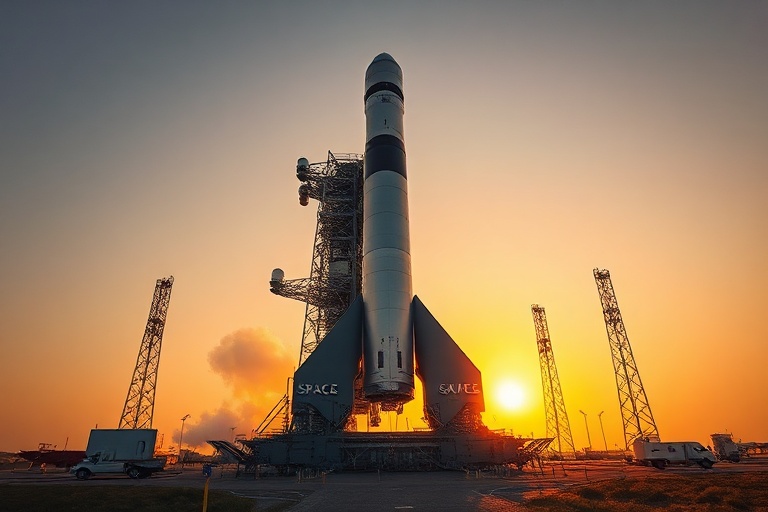
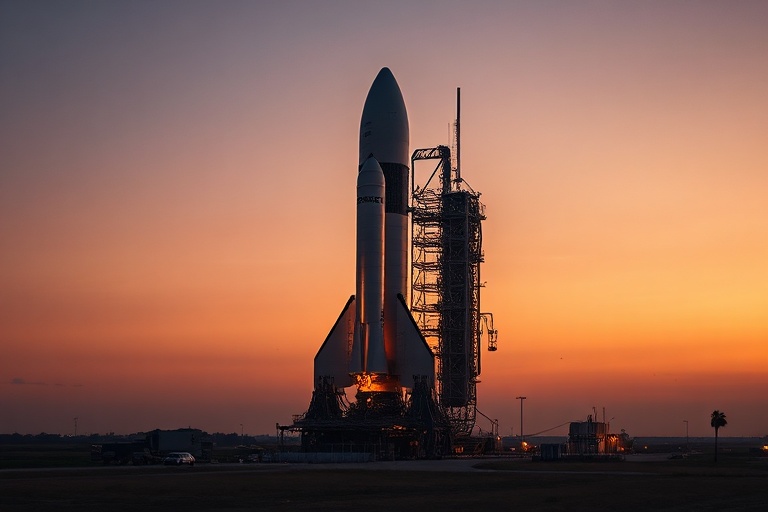
SpaceX’s Starship has emerged as one of the most ambitious projects in aerospace history, blending cutting-edge engineering with a bold vision for humanity’s future beyond Earth. Designed as a fully reusable, super-heavy lift launch vehicle, Starship is poised to redefine space travel by drastically reducing costs and increasing payload capacity. Its development reflects a global shift toward private-sector innovation in space exploration, where competition and collaboration are reshaping what was once the domain of governments alone.
The spacecraft’s origins trace back to Elon Musk’s long-held ambition to make life multiplanetary. Starship’s stainless-steel design, towering height of nearly 400 feet, and capacity to carry up to 100 metric tons to Mars underscore its role as a potential enabler of interplanetary colonization. Beyond Mars, the vehicle’s versatility positions it for missions to the Moon, deep-space research, and even rapid Earth-to-Earth transportation. Its progress has captivated not just engineers and investors but also a worldwide audience fascinated by the promise of space tourism and off-world settlement.
The Engineering Behind the Revolution
At the heart of Starship’s design is full reusability—a principle that could slash the cost of spaceflight from tens of thousands of dollars per kilogram to under a thousand. Unlike traditional expendable rockets, Starship and its Super Heavy booster are intended to land back on Earth (or other celestial bodies) and fly again within hours. This is made possible by a combination of advanced materials, autonomous landing systems, and a methane-fueled Raptor engine optimized for both Earth and Mars environments.
The vehicle’s structure, built from 301 stainless steel, offers strength, heat resistance, and cost efficiency compared to carbon fiber or aluminum-lithium alloys. Its heat shield, composed of hexagonal ceramic tiles, is designed to withstand the extreme temperatures of atmospheric reentry—a critical feature for safe return from deep-space missions. SpaceX’s iterative testing approach has led to rapid prototyping, with multiple “test flights” from the company’s Starbase facility in Boca Chica, Texas, serving as public demonstrations of progress and resilience in the face of setbacks.
Internationally, other nations are watching closely. China’s space program has accelerated its own heavy-lift rocket development, while Europe and India continue to expand their launch capabilities. Yet Starship’s scale and reusability present a unique challenge to the status quo. If successful, it could shift the balance of space power, making the United States and private companies like SpaceX leaders in a new era of exploration.
Cultural and Economic Impact Across Continents
The rise of Starship is not just a technological milestone; it’s a cultural phenomenon reshaping global perceptions of possibility. In Japan, where robotics and futurism are deeply embedded in society, media coverage often highlights Starship’s role in enabling asteroid mining and space-based solar power. In India, a growing tech-savvy youth population sees the project as a symbol of innovation that mirrors the country’s own rapid advancements in satellite technology and lunar exploration.
In Europe, where space agencies have traditionally led collaborative missions, private ventures like Starship are prompting reevaluation of long-term strategies. The European Space Agency (ESA) has begun exploring public-private partnerships to remain competitive. Meanwhile, in Africa, where access to space-based services remains limited, discussions about regional satellite networks and educational programs have gained momentum, inspired by the democratizing potential of reusable rockets.
Economically, Starship’s low-cost model could unlock new industries. Satellite deployment, space tourism, and even orbital manufacturing stand to benefit from cheaper access to space. Companies like Tech startups and legacy aerospace firms are already forming alliances to develop payloads tailored for Starship. In Dubai, for instance, plans for a spaceport and Mars settlement simulations reflect a strategic pivot toward becoming a hub for interplanetary commerce.
This global engagement highlights how space exploration is no longer a Cold War-era spectacle but a shared frontier. Starship’s development has catalyzed conversations about ethics, sustainability, and international cooperation—topics once confined to academic symposia but now entering mainstream discourse through social media, documentaries, and even fashion and art.
Challenges and the Path Forward
Despite its promise, Starship faces significant hurdles. Regulatory approvals, environmental concerns, and the technical risks of high-energy flights remain critical issues. The Federal Aviation Administration (FAA) in the U.S. has mandated extensive environmental reviews, delaying launch schedules and sparking debates about coastal habitat protection and noise pollution. Meanwhile, competitors like Blue Origin and national programs such as China’s Long March 9 are advancing their own heavy-lift systems, increasing pressure on SpaceX to deliver.
Another challenge is public trust. Spaceflight remains inherently risky, and high-profile failures—such as the explosive end to early Starship prototypes—have tested public patience. Yet SpaceX’s transparent approach, with live broadcasts and real-time data sharing, has helped maintain engagement. The company’s philosophy of rapid iteration, though controversial, aligns with a Silicon Valley mindset that prioritizes speed over perfection.
Looking ahead, the timeline for operational Starship missions includes planned lunar landings under NASA’s Artemis program, with the first crewed mission expected no earlier than 2026. Mars missions remain further out, dependent on fuel production on the Red Planet and life-support system validation. Still, the infrastructure being built today—launch sites, production facilities, and global tracking networks—lays the groundwork for a sustainable space economy.
A New Chapter for Humanity
Starship represents more than a rocket. It is a catalyst for a collective reimagining of human potential. From classrooms in Nairobi to boardrooms in Tokyo, its story is being interpreted in diverse ways—as a symbol of human ingenuity, a tool for economic growth, or a cautionary tale about unchecked ambition. What unites these perspectives is a recognition that space is no longer a distant frontier but an immediate opportunity.
As nations and corporations vie for leadership in this new domain, the success of Starship could redefine geopolitical power structures. It may also inspire a generation to look upward with optimism, seeing space not as a final destination but as the next chapter in humanity’s story. The journey has just begun, and the destination is still unwritten.
One thing is certain: the era of Starship has arrived, and its impact will be measured not only in tons of payload or miles traveled but in the dreams it inspires across continents and cultures.