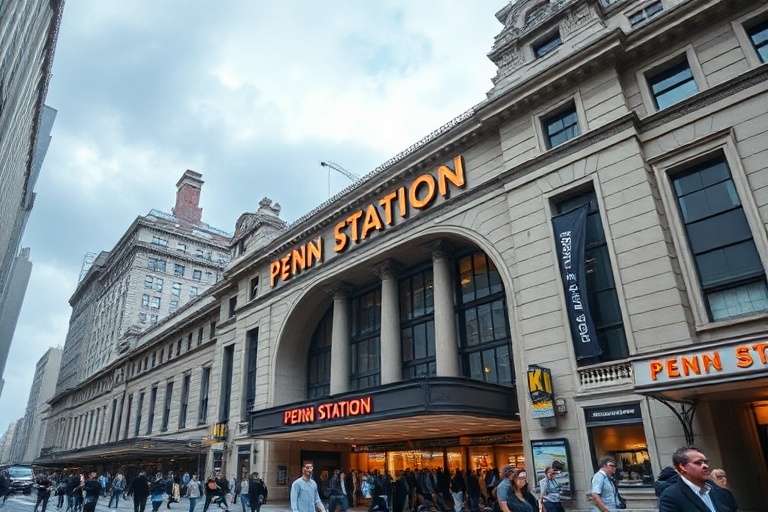
Pennsylvania Station: The Architectural Loss That Shaped NYC
New York City’s Pennsylvania Station, often called Penn Station, stands as a testament to both the city’s enduring spirit and its capacity for reinvention. Completed in 1910, the original Beaux-Arts masterpiece was more than just a transit hub—it was a symbol of ambition, engineering brilliance, and the golden age of rail travel. Designed by the architectural firm McKim, Mead & White, the station was a sprawling complex with soaring ceilings, grand columns, and natural light flooding through its enormous arched windows.
The station’s demolition in the 1960s remains one of the most controversial moments in New York’s history. In the name of progress, the original Penn Station was dismantled to make way for Madison Square Garden and the modern (and far less ornate) station beneath it. The loss sparked the creation of New York’s Landmarks Preservation Commission, a direct response to public outrage. Today, Penn Station serves over 600,000 daily riders, making it the busiest transportation hub in the Western Hemisphere, yet its legacy is still debated.
The Original Penn Station: A Monument to Grandeur
The original Pennsylvania Station was more than a functional space—it was a civic landmark. Its design drew inspiration from ancient Roman baths and the Baths of Caracalla, with a massive iron-and-glass train shed covering eight acres. The main building featured pink granite facades, a grand colonnade, and an interior that rivaled European palaces. At its peak, Penn Station handled 100,000 passengers daily, a staggering figure for its time.
The station’s decline began in the mid-20th century as rail travel waned in favor of automobiles and airplanes. By the 1960s, the Pennsylvania Railroad, burdened by debt, sought to monetize its valuable Manhattan real estate. The decision to demolish the station in 1963 was met with fierce opposition, but financial pressures won out. The wrecking ball that tore down Penn Station’s iconic facade symbolized the broader erosion of urban identity in favor of utilitarianism.
Modern Penn Station: A Gritty Transit Crossroads
Today’s Penn Station is a far cry from its predecessor. Housed primarily underground, it’s a labyrinth of narrow corridors, low ceilings, and constant crowds. The station serves Amtrak’s Northeast Corridor, New Jersey Transit, and Long Island Rail Road, connecting millions of passengers to regional and national destinations. Yet, despite its critical role, Penn Station is often criticized for its cramped conditions, poor wayfinding, and lack of natural light.
Efforts to improve Penn Station have been ongoing for decades. The 2010s saw the introduction of the Moynihan Train Hall, a gleaming annex across Eighth Avenue that offers a more spacious, modern alternative to the original station’s remnants. Named after Senator Daniel Patrick Moynihan, the hall repurposes the Farley Post Office building and provides a brighter, more welcoming environment for Amtrak passengers. Still, the core of Penn Station remains a far cry from the grandeur of its past.
Why Penn Station Matters: Beyond Transportation
Penn Station’s story is about more than just architecture or transit—it’s about urban identity, progress, and the cost of forgetting. The loss of the original station was a wake-up call for historic preservation, proving that cities cannot afford to discard their heritage in the name of short-term gains. Today, Penn Station’s struggles reflect broader challenges in urban planning: balancing functionality with human dignity, efficiency with beauty, and growth with memory.
Moreover, Penn Station is a microcosm of New York’s resilience. Despite its flaws, it remains a vital artery for the city, handling more passengers than JFK, LaGuardia, and Newark airports combined. Its constant state of flux—whether through renovations, political debates, or shifts in transit trends—mirrors the city itself. Penn Station is not just a place to pass through; it’s a living testament to New York’s ability to endure, adapt, and occasionally stumble.
Key Facts About Penn Station NYC
- Daily Ridership: Over 600,000 passengers, making it the busiest transit hub in the Western Hemisphere.
- Architectural History: The original 1910 station was designed by McKim, Mead & White and demolished in the 1960s.
- Operating Agencies: Amtrak, New Jersey Transit, and Long Island Rail Road all use Penn Station.
- Moynihan Train Hall: A modern expansion completed in 2021, offering a brighter, more spacious alternative to the original station.
- Landmarks Preservation Commission: Created in 1965 in response to the demolition of Penn Station, leading to the protection of other historic sites.
The Future of Penn Station: Can It Be Saved?
The question of Penn Station’s future is as much about design as it is about policy. Proposals to rebuild a version of the original station’s grandeur have circulated for years, but the logistics are daunting. The current station sits atop a maze of tunnels and platforms, leaving little room for expansion. Meanwhile, the Moynihan Train Hall offers a partial solution, but it only serves Amtrak passengers—leaving New Jersey Transit and LIRR riders in the original station’s cramped quarters.
Some advocates argue for a complete overhaul, including a new Penn Station built atop the existing complex. Others propose better integrating the Moynihan Train Hall with the rest of the station, creating a unified experience. Political will and funding remain the biggest hurdles. Projects like the Gateway Program, which aims to improve rail infrastructure between New York and New Jersey, could bring much-needed upgrades, but they face delays and budget constraints.
Regardless of the path forward, Penn Station’s story is far from over. It serves as a reminder that cities are not just collections of buildings—they are living entities shaped by history, economics, and the people who move through them. Penn Station’s next chapter may not recapture the past, but it could redefine the future of urban transit.
Why This Story Resonates Today
In an era of rapid urbanization and climate change, Penn Station’s challenges highlight broader issues in transit policy. Cities worldwide are grappling with aging infrastructure, the need for sustainability, and the balance between preservation and progress. Penn Station’s struggles are a case study in what happens when a city prioritizes expediency over elegance—and what it can do to course-correct.
For New Yorkers, Penn Station is more than a transit hub; it’s a daily ritual, a source of frustration, and occasionally, a moment of awe when the sun breaks through the underground gloom. It’s a place where millions of stories intersect, from commuters rushing to work to travelers embarking on cross-country journeys. Penn Station’s past, present, and future are intertwined with the city’s own, making it a symbol of both its flaws and its enduring vitality.
As debates about Penn Station’s future continue, one thing is clear: the station’s story is not just about bricks and mortar. It’s about the soul of a city that refuses to stand still.
For more on New York’s transit history and urban development, explore our Travel and News sections.