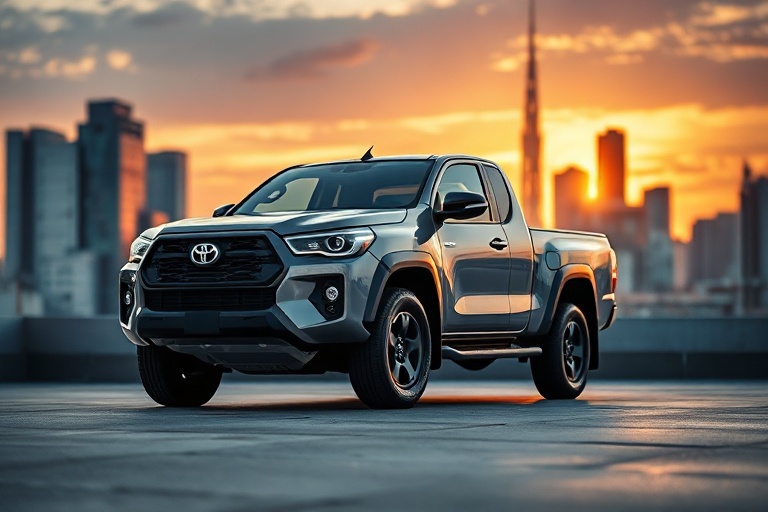
Toyota’s Next-Gen Compact Pickup: A Global Shift in Small-Truck Strategy
Toyota’s compact pickup truck lineup is evolving faster than most industry watchers anticipated. The Japanese automaker, long known for its dominance in full-size trucks with the Tacoma and Tundra, is now focusing heavily on the global compact pickup segment—a category that blends utility, affordability, and urban practicality. Recent developments suggest that Toyota is preparing to redefine its approach to smaller trucks, particularly in markets where space is limited and fuel efficiency is paramount.
This strategic shift isn’t happening in isolation. Global automotive trends are pushing automakers toward electrification, downsizing, and adaptability. Compact pickups, once dismissed as niche vehicles, are now at the forefront of this transformation. Toyota’s moves in this space reflect broader industry shifts, consumer demand for versatile vehicles, and regulatory pressures in key markets such as Southeast Asia, Latin America, and Africa.
Why Compact Pickups Are Gaining Momentum Worldwide
In many parts of the world, compact pickups are not just vehicles—they are lifelines. They serve as business tools for tradespeople, family haulers for rural communities, and even mobile shops in densely populated cities. Unlike their full-size counterparts, which dominate North American highways, compact pickups thrive in regions where maneuverability and cost-effectiveness matter more than towing capacity.
The rise of compact pickups can be attributed to several factors:
- Urbanization and space constraints: In cities like Bangkok, Jakarta, and Nairobi, narrow streets and limited parking make smaller trucks more practical than large SUVs or full-size trucks.
- Fuel efficiency and emissions regulations: Stricter environmental policies in Europe and Asia favor smaller, more efficient vehicles, pushing automakers to adapt.
- Cost of ownership: Lower purchase prices, reduced maintenance costs, and better fuel economy make compact pickups attractive to budget-conscious buyers.
- Versatility in emerging markets: In countries where infrastructure is still developing, compact pickups double as workhorses for agriculture, construction, and local trade.
Toyota, recognizing these trends, is doubling down on its compact pickup offerings. The company’s global strategy now includes localized production, hybrid powertrains, and even battery-electric models to meet diverse regional needs.
Recent Developments: Toyota’s Compact Pickup Lineup Refresh
Toyota’s compact pickup portfolio has historically included models like the Hilux, which remains a global bestseller. However, the company is now expanding its lineup with fresh designs and advanced technologies. Recent reports indicate that Toyota is preparing to launch updated versions of its compact trucks, with a strong emphasis on electrification and connectivity.
Key updates include:
- Hybrid powertrains: Toyota is expected to introduce hybrid variants of its compact pickups, aligning with its broader goal of achieving carbon neutrality by 2050. These models will likely target markets where fuel prices are high and emissions regulations are tightening.
- Redesigned interiors: Modern compact pickups are no longer just utilitarian. Expect features like digital instrument clusters, touchscreen infotainment systems, and advanced driver-assistance systems (ADAS) to become standard.
- Global production hubs: Toyota is investing in localized manufacturing to reduce costs and improve supply chain resilience. Plants in Thailand, Brazil, and South Africa are likely to play pivotal roles in this strategy.
- Electric compact pickups: While full-size electric trucks like the Ford F-150 Lightning and Rivian R1T grab headlines, Toyota is quietly developing compact electric pickups for urban and regional markets. These models could debut as early as 2025.
The Hilux, Toyota’s flagship compact pickup, remains a cornerstone of this strategy. Recent spy shots and leaked documents suggest that the next-generation Hilux will feature a more aerodynamic design, improved payload capacity, and advanced safety technologies. Toyota’s engineers are also rumored to be testing hydrogen-powered variants, though these may take longer to reach production.
Cultural and Economic Impact: How Compact Pickups Shape Communities
Beyond their mechanical specifications, compact pickups hold deep cultural significance in many regions. In Latin America, for example, the Ford Ranger and Chevrolet Colorado are not just trucks—they are symbols of independence and entrepreneurship. Small business owners, farmers, and tradespeople rely on these vehicles to transport goods, tools, and sometimes even their families. The same holds true in Africa, where compact pickups are often modified into taxis or mobile clinics.
Toyota’s role in this ecosystem cannot be overstated. The Hilux, in particular, has earned a reputation for durability in extreme conditions, from the Australian outback to the Sahara Desert. Its adaptability has made it a favorite among aid organizations, military forces, and adventurers alike. This cultural resonance gives Toyota a unique advantage in the compact pickup market.
Economically, the compact pickup segment contributes significantly to local industries. In Thailand, the Hilux is assembled locally, supporting thousands of jobs and boosting the country’s automotive exports. In Brazil, compact pickups are a staple of the agricultural sector, where they are used to transport crops, livestock, and equipment across vast rural landscapes. Toyota’s investment in these markets ensures that its compact pickups remain relevant and accessible.
The Road Ahead: Challenges and Opportunities
Despite its strengths, Toyota faces challenges in the compact pickup segment. Competition is intensifying, with rivals like Ford, Chevrolet, and Isuzu launching new models with advanced features and competitive pricing. Additionally, the push toward electrification requires substantial investment, and Toyota must balance its traditional strengths with future-proof technologies.
However, the opportunities far outweigh the risks. As urbanization accelerates and environmental concerns grow, compact pickups are poised to become even more critical. Toyota’s ability to innovate while maintaining its reputation for reliability will determine its success in this evolving market. The company’s recent partnerships with tech firms and startups could also accelerate its transition into the electric and autonomous driving eras.
For consumers, the future of compact pickups looks promising. Whether it’s a hybrid Hilux for city driving or an electric compact truck for rural hauling, Toyota’s lineup is expanding to meet diverse needs. As these vehicles become more advanced, they will continue to redefine what it means to own a pickup truck in the 21st century.
—
Conclusion: A New Era for Compact Pickups
Toyota’s focus on compact pickups marks a significant shift in the global automotive landscape. By blending traditional utility with cutting-edge technology, the company is positioning itself at the forefront of a growing market. As urbanization, environmental regulations, and economic pressures reshape consumer preferences, compact pickups will play an increasingly vital role in transportation worldwide.
For Toyota, the challenge lies in balancing innovation with affordability, ensuring that these vehicles remain accessible to the widest possible audience. With its deep-rooted presence in key markets and a commitment to sustainability, Toyota is well-equipped to lead this transformation. The next generation of compact pickups won’t just be tools—they will be symbols of progress, adaptability, and resilience in a rapidly changing world.