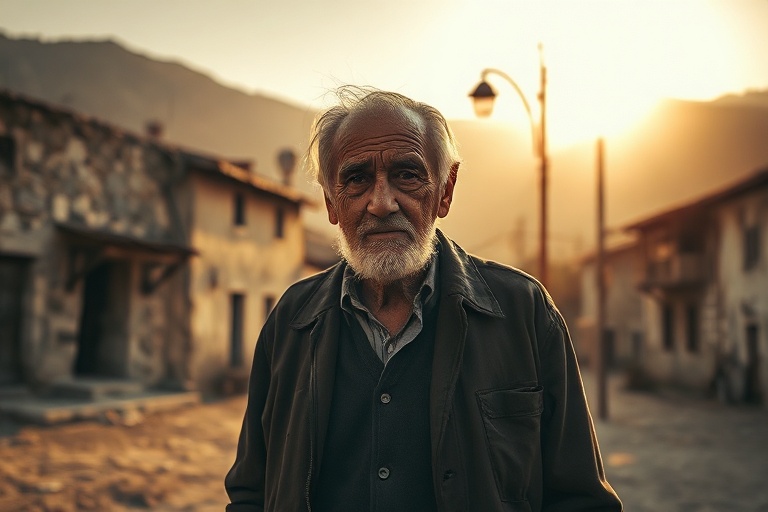
Bernardo Sopaj: The Artist Redefining Albanian Contemporary Art
Who Is Bernardo Sopaj? The Artist Shaping Modern Albanian Culture
Bernardo Sopaj stands at the intersection of tradition and innovation in Albania’s contemporary art scene. Born in Tirana in 1985, Sopaj emerged during a pivotal era when Albanian artists began redefining their roles in a post-communist society. His work spans painting, sculpture, and multimedia installations, each piece reflecting a deep engagement with Albania’s complex history and its evolving identity. Sopaj’s art is not merely decorative; it is a deliberate confrontation with memory, displacement, and the fluid nature of cultural heritage.
Sopaj’s early years were marked by the contradictions of Albania’s transition. The fall of communism in 1991 left the country grappling with economic collapse and social upheaval. For artists like Sopaj, this period became fertile ground for exploration. His formal education at the Academy of Fine Arts in Tirana provided the technical foundation, but it was the lived experience of post-communist Albania that shaped his thematic preoccupations. Sopaj’s work often interrogates the erasure and reconstruction of identity—a theme resonant with many artists of his generation.
From Tirana to Global Recognition
Sopaj’s breakthrough came in the mid-2010s with a series of exhibitions that caught the attention of critics and collectors alike. His 2016 solo show, Fragments of a Shattered Mirror, at the National Gallery of Arts in Tirana, was a turning point. The exhibition featured large-scale canvases depicting fragmented human figures, their faces obscured or dissolved into abstract patterns. Critics praised the work for its emotional rawness and technical precision, drawing comparisons to both Balkan neo-expressionism and Western contemporary movements.
International recognition followed shortly after. In 2018, Sopaj participated in the Venice Biennale, where his installation Echoes of the Unknown addressed themes of migration and collective memory. The piece consisted of a labyrinth of suspended mirrors, each reflecting distorted images of Albanian landscapes and urban spaces. The installation’s immersive quality invited viewers to confront their own perceptions of reality, a hallmark of Sopaj’s approach. His work has since been exhibited in cities such as Berlin, New York, and Istanbul, solidifying his reputation as a voice in global contemporary art.
Themes and Techniques: A Close Look at Sopaj’s Work
Sopaj’s art is deeply rooted in the exploration of memory and its fragility. His paintings often feature layered textures, combining oil and acrylic with found materials like newspaper clippings or rusted metal. This technique not only adds physical depth but also symbolizes the accumulation and erosion of history. In his 2020 series Chronicles of Forgotten Places, Sopaj depicted abandoned industrial sites in Albania, transforming them into haunting, almost cinematic landscapes. The series resonated with audiences who saw their own neglected histories reflected in the art.
Another recurring motif in Sopaj’s work is the human figure—often fragmented, blurred, or partially erased. This stylistic choice speaks to the erasure of individual narratives in favor of broader historical narratives. In an interview with ArtForum, Sopaj explained, “I am interested in the spaces where identity dissolves and reforms. The figure is never whole because identity itself is never static.” This philosophical underpinning elevates his work beyond mere aesthetics, positioning it as a commentary on the human condition in a rapidly changing world.
Sopaj also experiments with multimedia, incorporating video and sound into his installations. His 2022 piece Silent Dialogues, exhibited at the Tirana Art Lab, combined visual art with ambient soundscapes of Albanian folk music distorted into abstract audio. The result was an immersive experience that challenged viewers to engage with art on multiple sensory levels. This interdisciplinary approach reflects Sopaj’s belief that contemporary art must evolve beyond traditional boundaries to remain relevant.
The Impact of Bernardo Sopaj on Albanian Art
Sopaj’s influence extends beyond his individual achievements. He is part of a cohort of Albanian artists who have redefined the country’s cultural landscape. Unlike the socialist realism of the communist era, which served ideological purposes, Sopaj’s generation embraces ambiguity and personal expression. His work has inspired younger artists to explore their own narratives, free from the constraints of political or aesthetic dogma.
Sopaj is also a vocal advocate for the arts in Albania. He has mentored emerging artists through workshops and public talks, emphasizing the importance of artistic freedom and experimentation. In 2021, he co-founded ArtLab Tirana, a collective dedicated to fostering contemporary art in Albania. The initiative has since become a hub for artists, curators, and critics, hosting exhibitions, residencies, and discussions that push the boundaries of Albanian art.
However, Sopaj’s relationship with his homeland is not without tension. Some critics argue that his work, while celebrated internationally, remains inaccessible to many Albanians due to its abstract nature and the elitism often associated with contemporary art. Sopaj has addressed this concern by emphasizing education and community engagement. “Art should not be a privilege,” he stated in a 2023 interview. “It should be a dialogue, a conversation that includes everyone.” His efforts to democratize art have included collaborations with local schools and community centers, where he conducts workshops on creative expression.
What’s Next for Bernardo Sopaj?
As of 2024, Sopaj is preparing for his most ambitious project to date: a retrospective exhibition at the National Gallery of Arts in Tirana. The exhibition, titled Traces and Shadows, will span two decades of his work, offering a comprehensive look at his artistic journey. The retrospective aims to contextualize Sopaj’s contributions within the broader narrative of Albanian contemporary art, highlighting his role as both an innovator and a custodian of cultural memory.
Beyond the retrospective, Sopaj has hinted at new explorations into digital art and virtual reality. He has expressed interest in using these mediums to further his exploration of fragmented identity and collective memory. “Technology offers new ways to interrogate the past,” he noted in a recent interview. “It allows us to create experiences that are immersive, interactive, and deeply personal.” This willingness to embrace new technologies underscores Sopaj’s commitment to pushing the boundaries of his craft.
Sopaj’s work also continues to evolve thematically. In his upcoming series, he plans to focus on the Albanian diaspora, particularly the experiences of those who left during the post-communist wave of migration. This new direction reflects his ongoing interest in the intersections of memory, displacement, and belonging. By centering the stories of individuals often overlooked in mainstream narratives, Sopaj aims to contribute to a more inclusive understanding of Albanian identity.
A Legacy in the Making
Bernardo Sopaj’s career is still unfolding, but his impact is undeniable. He represents a generation of artists who have transformed Albania’s cultural landscape, challenging conventions and expanding the possibilities of contemporary art. His work serves as a bridge between Albania’s past and its future, offering a nuanced perspective on the complexities of identity, memory, and belonging.
For aspiring artists in Albania and beyond, Sopaj’s journey is a testament to the power of art as a tool for social and personal transformation. His commitment to innovation, education, and community engagement sets a standard for what it means to be an artist in the 21st century. As he continues to push boundaries, one thing is clear: Bernardo Sopaj is not just an artist; he is a cultural force shaping the narrative of contemporary Albanian art.
For those interested in exploring more about contemporary art movements in the Balkans, visit our Art Exhibitions and Culture Events categories on Dave’s Locker. These sections feature curated content on emerging and established artists, providing deeper insights into the trends shaping the region’s cultural landscape.