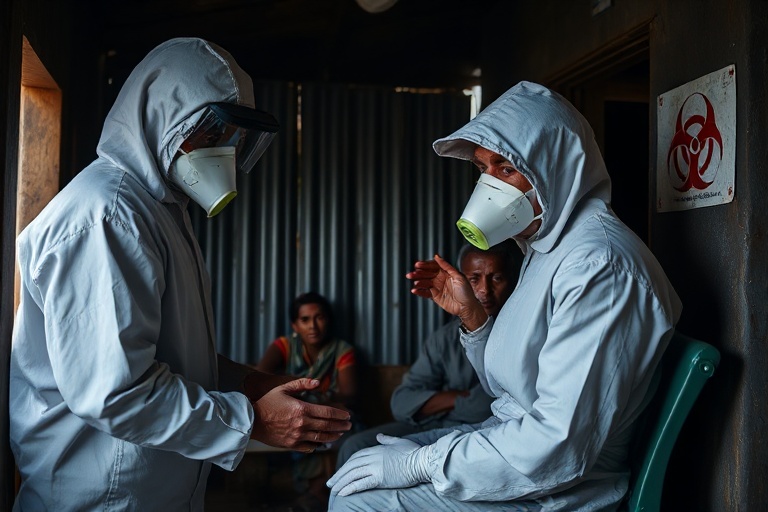
Ebola Outbreak: Origins, Spread, and Global Health Lessons
The Ebola virus has long been one of the most feared pathogens on the planet, capable of causing severe illness and high fatality rates. Recent outbreaks have reignited global concerns about its spread, particularly in regions with fragile healthcare systems. This persistent threat underscores the need for vigilance, preparedness, and coordinated international responses.
The Deadliest Strains: A Historical Overview
First identified in 1976 near the Ebola River in the Democratic Republic of Congo, the virus has since emerged in sporadic but devastating outbreaks across Central and West Africa. The Zaire ebolavirus strain remains the deadliest, with a fatality rate as high as 90% in some cases. Other notable strains include Sudan, Bundibugyo, and Taï Forest ebolaviruses, each with varying degrees of lethality and transmissibility.
Historical outbreaks have often been localized but devastating. For instance, the 2014-2016 West Africa outbreak was the largest and most complex in history, infecting over 28,000 people and claiming more than 11,000 lives. This event exposed critical weaknesses in global health infrastructure, particularly in Guinea, Liberia, and Sierra Leone, where healthcare systems were already under strain.
How Ebola Spreads: Transmission and Containment
Ebola spreads through direct contact with the bodily fluids of infected individuals or contaminated environments. Unlike airborne viruses, it requires close contact for transmission, which limits its spread but makes containment challenging in densely populated or resource-limited settings. Key transmission routes include:
- Direct contact: Touching the blood, vomit, or other secretions of an infected person.
- Indirect contact: Handling contaminated objects, such as needles or bedding.
- Animal-to-human transmission: Contact with infected wildlife, such as bats or primates, which are natural reservoirs for the virus.
Containment efforts hinge on rapid identification, isolation, and contact tracing. Public health campaigns emphasize hygiene practices, safe burial protocols, and community engagement to reduce stigma and encourage early reporting. However, misinformation and distrust in authorities can undermine these efforts, as seen in past outbreaks where communities resisted health workers due to fear or cultural beliefs.
Global Response and Preparedness Gaps
The international response to Ebola outbreaks has evolved significantly since the 2014 crisis. Organizations like the World Health Organization (WHO) and Médecins Sans Frontières (MSF) have strengthened their outbreak response capabilities, while countries like the United States and those in the European Union have invested in research and stockpiles of experimental treatments and vaccines. The development of the rVSV-ZEBOV vaccine, for example, has been a game-changer in controlling outbreaks in high-risk areas.
Yet, critical gaps remain. Many African nations still lack the laboratory capacity to quickly diagnose Ebola, relying instead on external support that may take days to arrive. Additionally, funding for epidemic preparedness is often inconsistent, leaving vulnerable communities exposed. The COVID-19 pandemic further highlighted these disparities, as global attention and resources shifted away from Ebola to combat the new crisis.
Another challenge is the “panic and neglect” cycle, where international interest wanes between outbreaks, only to surge again during crises. This inconsistency hampers long-term preparedness efforts, such as training healthcare workers, improving surveillance systems, and strengthening cross-border collaboration.
Broader Implications: Health, Economy, and Society
The impact of Ebola extends far beyond the immediate health toll. Economically, outbreaks disrupt trade, agriculture, and tourism, particularly in affected regions. The 2014-2016 outbreak, for instance, caused an estimated $2.8 billion loss in gross domestic product (GDP) across the three worst-hit countries. Smallholder farmers, who rely on local markets, often face the brunt of these economic shocks, leading to food insecurity and increased poverty.
Socially, Ebola outbreaks exacerbate existing inequalities, disproportionately affecting women and children. Women, who often serve as primary caregivers, are at higher risk of infection. Children orphaned by Ebola face stigma and may be excluded from schools, further marginalizing them. The psychological toll is also profound, with survivors and healthcare workers experiencing long-term trauma and stigma.
On a global scale, Ebola serves as a stark reminder of the interconnectedness of health security. A localized outbreak in a remote region can quickly escalate into a regional or international crisis if not contained promptly. This reality has spurred calls for a more robust global health architecture, including the creation of the WHO’s Health Emergencies Programme and increased funding for the Coalition for Epidemic Preparedness Innovations (CEPI).
Lessons Learned and the Path Forward
Despite its devastating history, the Ebola virus offers valuable lessons for pandemic preparedness. One of the most critical is the importance of community engagement. Health campaigns that involve local leaders, religious figures, and traditional healers are far more effective than top-down directives. For example, during the 2018-2019 outbreak in the Democratic Republic of Congo, community leaders played a pivotal role in promoting vaccination and safe burial practices, helping to curb the spread.
Investment in research and innovation is equally vital. The rapid development of Ebola vaccines and treatments demonstrates what is possible when the global community prioritizes scientific collaboration. However, these tools must be accessible and affordable to the populations that need them most. Strengthening healthcare systems in endemic regions is another priority, ensuring that countries can detect and respond to outbreaks without relying solely on external aid.
Finally, the Ebola crisis highlights the need for a One Health approach, which recognizes the interconnectedness of human, animal, and environmental health. By addressing the root causes of zoonotic spillover—such as deforestation, bushmeat hunting, and urbanization—we can reduce the risk of future outbreaks. This approach requires collaboration across sectors, from environmental conservation to public health.
As the world continues to grapple with Ebola and other emerging infectious diseases, the lessons learned from past outbreaks must guide our actions. Preparedness is not a luxury but a necessity, and the cost of complacency is measured in human lives. By investing in resilient health systems, fostering global cooperation, and prioritizing equity, we can mitigate the impact of future crises and protect vulnerable communities worldwide.
For more insights into global health challenges and preparedness efforts, explore our Health and Science categories on Dave’s Locker.