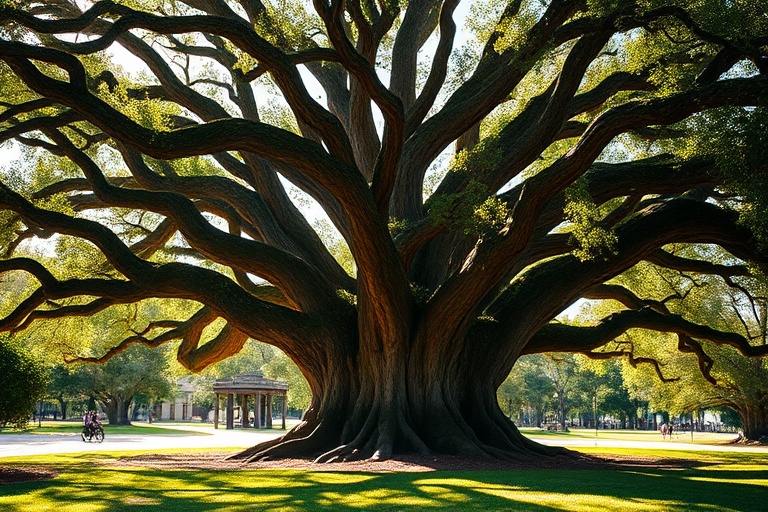
The Treaty Oak in Austin, Texas, stands as a living monument to the state’s natural and cultural heritage. Once part of a sprawling grove of over 14 acres, this ancient live oak has weathered centuries of change—from Native American gatherings to urban expansion. Today, its revival represents more than just tree conservation; it symbolizes a community’s commitment to preserving its roots while embracing growth.
For decades, the Treaty Oak faced threats from pollution, vandalism, and environmental neglect. Recent restoration efforts have not only revitalized the tree but also sparked broader conversations about urban ecology and historical preservation. This article explores the significance of the Treaty Oak, the challenges it has overcome, and what its revival means for future generations.
The Historical Significance of the Treaty Oak
The Treaty Oak’s name originates from an 1835 agreement between Stephen F. Austin and local Comanche tribes, who reportedly negotiated under its branches. This event marked a pivotal moment in Texas history, symbolizing cooperation between settlers and Indigenous peoples during a time of rapid change. Over the years, the tree became a gathering place for Austinites, hosting speeches, celebrations, and even protests.
By the mid-20th century, the Treaty Oak was one of the last survivors of the original grove, which once included over 600 trees. Urban development and pollution had taken a toll, leaving the tree in a fragile state. In 1989, a deliberate act of vandalism nearly destroyed it, when a man poisoned the soil around its roots with an herbicide. The community’s response to this tragedy demonstrated a deep-seated attachment to the tree and a determination to restore it.
A Symbol of Resilience
The Treaty Oak’s survival is a testament to human perseverance. After the poisoning incident, arborists and volunteers launched an intensive restoration effort, removing contaminated soil and treating the tree with specialized nutrients. The process was slow and meticulous, reflecting the delicate balance required to nurse a centuries-old organism back to health.
Local legends claim the Treaty Oak possesses mystical properties, including the ability to grant wishes to those who touch its bark. While these stories add to its mystique, the tree’s true magic lies in its resilience. Today, it stands as a reminder of nature’s capacity to recover when given the chance—and the role humans play in either nurturing or neglecting that recovery.
Restoration Efforts: A Community’s Commitment
The revival of the Treaty Oak was not the work of a single agency or individual but a collective effort involving scientists, historians, and everyday citizens. The process began with soil remediation, where contaminated earth was carefully excavated and replaced with organic matter. Arborists then installed a drip irrigation system to ensure the tree received consistent hydration without over-saturating the roots.
In addition to physical restoration, educational programs were launched to teach the public about the tree’s history and ecological importance. Schools in Austin incorporated the Treaty Oak into their curricula, and local organizations hosted guided tours to foster appreciation for urban green spaces. These efforts helped shift public perception, transforming the tree from a relic of the past into a living symbol of environmental stewardship.
Key Milestones in the Revival
- 1989: Vandalism incident sparks outrage and galvanizes community action.
- 1990-1995: Intensive soil remediation and tree treatment begin under expert supervision.
- 1997: The Treaty Oak is officially declared restored, though ongoing care remains essential.
- 2000s-Present: Continuous monitoring and public engagement programs ensure long-term health.
The success of the Treaty Oak’s revival has set a precedent for urban conservation projects. Cities across Texas and beyond have looked to Austin’s example when restoring historic trees or revitalizing green spaces. The project also highlighted the importance of interdisciplinary collaboration, where science, history, and community involvement intersected to achieve a common goal.
Broader Implications: What the Treaty Oak Teaches Us
The Treaty Oak’s story extends beyond its branches. It serves as a case study in how communities can reclaim their environmental and cultural heritage, even in the face of adversity. The tree’s revival also underscores the need for proactive urban planning that prioritizes green spaces, not just as aesthetic additions but as vital components of a city’s identity.
Environmental advocates point to the Treaty Oak as evidence that restoration is possible, even in highly urbanized areas. The project demonstrated that with sufficient resources and public will, degraded ecosystems can recover. This lesson is particularly relevant today, as climate change and rapid urbanization continue to threaten natural spaces worldwide.
The Role of Public Engagement
A critical factor in the Treaty Oak’s recovery was the involvement of the community. Volunteers participated in planting native species around the tree, while local artists incorporated its imagery into public murals. These initiatives fostered a sense of ownership among residents, ensuring the tree’s legacy would endure.
However, the project also revealed challenges. Funding for long-term maintenance remains an ongoing concern, as does balancing public access with preservation. The Treaty Oak’s location in a busy downtown area means it is both a tourist attraction and a vulnerable site. Managing these competing interests requires careful planning and community input.
Looking Ahead: The Future of the Treaty Oak
As the Treaty Oak enters its next century, its caretakers are focused on sustainability. New threats, such as climate change and invasive pests, pose fresh challenges. Arborists are experimenting with genetic preservation techniques to ensure the tree’s resilience against future blights. Meanwhile, digital archives and virtual tours are being developed to share the tree’s story with a global audience.
The Treaty Oak’s revival is far from over. It is an ongoing process that demands vigilance, innovation, and community participation. For Austin, the tree represents more than just a historical artifact—it embodies the city’s spirit of resilience and its commitment to preserving the natural world amid urban growth.
Visitors to Austin often seek out the Treaty Oak as a pilgrimage site, a place where history and nature intertwine. Its story reminds us that progress and preservation are not mutually exclusive. By investing in our natural heritage, we invest in our collective future.
To learn more about urban conservation and historical preservation, explore our Culture and Science sections for deeper insights into similar projects.