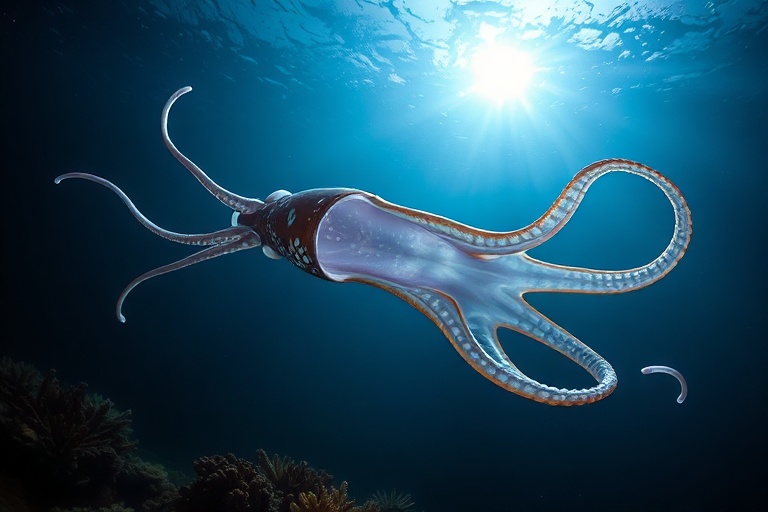
Marine biologists and ocean enthusiasts received an unexpected surprise this month when a giant squid was spotted off the coast of Western Australia. The sighting, confirmed by local researchers, has reignited discussions about deep-sea biodiversity and the mysteries that still lurk beneath the ocean’s surface.
The creature, tentatively identified as a Architeuthis dux (the species commonly known as the giant squid), was filmed at a depth of approximately 600 meters near the Perth Canyon. This is only the second confirmed sighting of a giant squid in Australian waters, with the first occurring in 2007. The footage, captured by a remotely operated vehicle (ROV) during a deep-sea exploration mission, provides new insights into the behavior and habitat of these elusive creatures.
Why This Sighting Matters for Marine Science
Giant squid have fascinated scientists for centuries, yet they remain one of the ocean’s most enigmatic inhabitants. Their deep-sea lifestyle and elusive nature make them difficult to study, which is why sightings like this one are so valuable. The Perth Canyon sighting offers researchers a rare opportunity to observe a giant squid in its natural environment, providing data that could help fill gaps in our understanding of these creatures.
According to marine biologist Dr. Lisa Harvey, “This sighting is significant because it confirms the presence of giant squid in a new region of the Indian Ocean. It also suggests that the Perth Canyon may be a hotspot for deep-sea biodiversity, which could have broader implications for marine conservation.”
The giant squid is not the only deep-sea species that has been observed in the area recently. In the same expedition, researchers also documented a variety of other deep-sea creatures, including bioluminescent jellyfish and previously unknown species of fish. These discoveries highlight the importance of continued exploration of the deep ocean, which remains one of the least understood ecosystems on Earth.
The Challenges of Studying Deep-Sea Creatures
Studying deep-sea creatures like the giant squid is no small feat. The extreme pressures, darkness, and cold temperatures of the deep ocean make exploration difficult and expensive. Most of our knowledge about these creatures comes from dead specimens that wash ashore or are caught in fishing nets, which provides limited information about their behavior and ecology.
Advances in technology, such as high-definition cameras and ROVs, have made it easier to observe deep-sea creatures in their natural habitat. However, these tools are still relatively new, and there is much more to learn. The recent sighting of the giant squid in Western Australia underscores the need for continued investment in deep-sea research and exploration.
Here are some key challenges and opportunities in deep-sea research:
- Technological Limitations: While ROVs and submersibles have improved, they are still limited by battery life, depth capabilities, and the need for constant supervision. Developing more advanced and autonomous underwater vehicles could revolutionize deep-sea exploration.
- Funding Constraints: Deep-sea research is often underfunded compared to other scientific disciplines. Securing consistent funding for expeditions and technology development is a persistent challenge.
- Environmental Concerns: Deep-sea ecosystems are vulnerable to the impacts of climate change, deep-sea mining, and pollution. Protecting these environments while conducting research is a delicate balance.
- Public Engagement: Raising awareness about deep-sea biodiversity and the importance of ocean conservation can help garner support for future research efforts.
Broader Implications for Marine Conservation
The sighting of the giant squid in Western Australia also has broader implications for marine conservation. Deep-sea ecosystems play a crucial role in regulating the Earth’s climate and supporting global biodiversity. Protecting these environments is essential for maintaining the health of our planet.
One of the biggest threats to deep-sea ecosystems is deep-sea mining, which involves extracting minerals from the ocean floor. While this industry has the potential to provide valuable resources, it also poses significant risks to deep-sea habitats and the species that depend on them. The recent sighting of the giant squid highlights the need for careful consideration of the environmental impacts of deep-sea mining.
In addition to deep-sea mining, climate change is also having a profound impact on the world’s oceans. Rising temperatures, ocean acidification, and changes in ocean currents are all affecting deep-sea ecosystems. Understanding how these changes are impacting deep-sea species is crucial for developing effective conservation strategies.
For those interested in learning more about marine conservation and deep-sea exploration, Dave’s Locker Science section offers a wealth of resources and articles on these topics. Additionally, Dave’s Locker Travel section features guides to some of the world’s most fascinating marine destinations, where readers can learn about the importance of protecting our oceans.
What’s Next for Deep-Sea Exploration?
The recent sighting of the giant squid in Western Australia is just one example of the many discoveries that await us in the deep ocean. As technology continues to advance, we can expect to learn even more about these mysterious creatures and the ecosystems they inhabit.
For marine scientists, the next steps will likely involve further exploration of the Perth Canyon and other deep-sea regions. Researchers may also focus on developing new technologies to study deep-sea creatures more effectively, such as autonomous underwater vehicles equipped with advanced sensors and cameras.
Public interest in deep-sea exploration is also growing, thanks in part to documentaries, social media, and other forms of media that bring the wonders of the ocean to a wider audience. This increased awareness could lead to greater support for marine conservation efforts and increased funding for deep-sea research.
Ultimately, the sighting of the giant squid in Western Australia serves as a reminder of how much there is still to learn about our planet’s oceans. By continuing to explore and protect these vital ecosystems, we can ensure that future generations will have the opportunity to marvel at the mysteries of the deep.
For now, researchers will continue to analyze the footage and data from the recent expedition, hoping to uncover more secrets about the giant squid and its deep-sea habitat. In the meantime, the rest of us can only wait with anticipation for the next groundbreaking discovery to emerge from the depths.