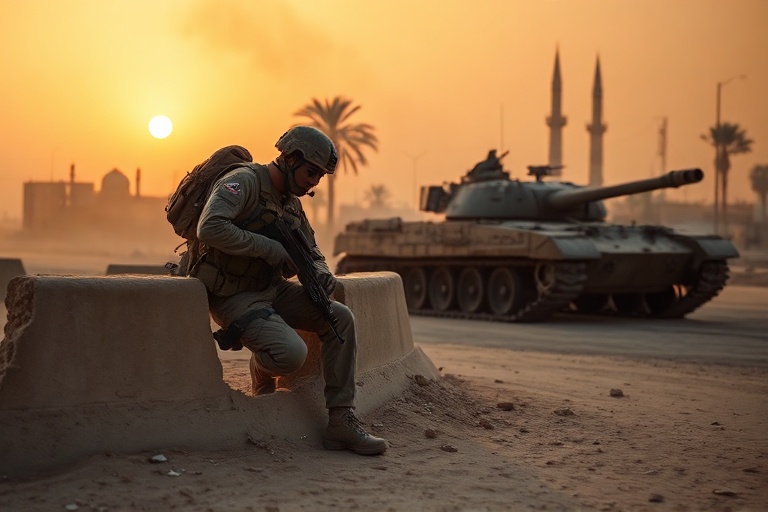
Understanding the Iraq War: Causes, Consequences, and Legacy
“`html
The Origins of the Iraq War
The Iraq War, which began in March 2003, emerged from a complex web of geopolitical tensions, historical grievances, and shifting security priorities in the post-9/11 world. The administration of U.S. President George W. Bush framed the invasion as a necessary preemptive strike against Saddam Hussein’s regime, citing intelligence reports that suggested Iraq possessed weapons of mass destruction (WMDs). These claims, later proven largely unfounded, became the primary justification for military intervention.
The roots of the conflict traced back to the 1991 Gulf War and the subsequent decade of sanctions and no-fly zones imposed on Iraq. Saddam Hussein’s authoritarian rule, marked by human rights abuses and regional aggression, particularly against Iran and Kuwait, kept tensions simmering. By the early 2000s, the U.S. government viewed Iraq as a destabilizing force in the Middle East, one that threatened both regional stability and global security. The September 11, 2001, terrorist attacks further intensified these concerns, as the Bush administration sought to dismantle perceived threats before they could materialize.
Key Events and Turning Points
The invasion itself was swift and decisive. A coalition of forces, primarily led by the United States and the United Kingdom, launched Operation Iraqi Freedom on March 20, 2003. Within weeks, Baghdad fell, and Saddam Hussein’s regime collapsed. Yet the victory on the battlefield did not translate to stability in Iraq. The subsequent occupation revealed deeper challenges, including sectarian divisions, insurgent violence, and the absence of a clear post-war plan.
By 2004, the situation had deteriorated into a full-blown insurgency, with groups like Al-Qaeda in Iraq (AQI) and the Mahdi Army waging asymmetric warfare against coalition forces and civilians. The revelation of abuses at Abu Ghraib prison, where U.S. soldiers were found to have committed horrific acts of torture, further eroded international support for the war. The death of Saddam Hussein in 2006, while symbolic, did little to quell the violence. Instead, the power vacuum fueled a brutal sectarian conflict between Sunni and Shia factions.
One of the most significant turning points came in 2007 with the U.S. military’s surge strategy, which deployed an additional 30,000 troops to Iraq. Combined with a shift toward counterinsurgency tactics and improved relations with local Sunni leaders, the surge temporarily reduced violence. However, the withdrawal of U.S. forces in 2011 left Iraq with a fragile government and persistent instability. The rise of ISIS (Islamic State of Iraq and Syria) in 2014, which seized vast territories in Iraq and Syria, demonstrated how the power vacuums created by the war could be exploited by extremist groups.
Timeline of Major Events
- March 2003: U.S.-led coalition invades Iraq, toppling Saddam Hussein’s regime in weeks.
- 2004: Insurgency intensifies; Abu Ghraib prison abuse scandal surfaces.
- 2006: Saddam Hussein is executed; sectarian violence peaks.
- 2007: U.S. announces “surge” strategy, deploying additional troops.
- 2011: U.S. completes withdrawal of combat troops; Iraq faces political instability.
- 2014: ISIS emerges, seizing control of large parts of Iraq and Syria.
Broader Implications for Global Politics
The Iraq War’s impact extended far beyond its borders, reshaping international relations, military doctrine, and public perception of Western interventionism. One of the most immediate consequences was the erosion of trust in U.S. intelligence and foreign policy. The flawed intelligence that led to the war’s justification damaged America’s credibility on the global stage, particularly in Europe, where nations like France and Germany opposed the invasion. This divide highlighted the growing fractures in transatlantic relations.
The war also accelerated the rise of China as a global power. As the U.S. became bogged down in Iraq, it diverted resources and attention away from other regions, allowing China to expand its influence in Asia and Africa. Meanwhile, the Middle East itself experienced a profound shift. The power vacuum in Iraq emboldened Iran, which saw an opportunity to expand its regional influence by supporting Shia militias and political factions. The sectarian tensions exacerbated by the war continue to shape conflicts in Syria, Yemen, and Lebanon.
Domestically, the war had lasting effects on American society. The financial cost, estimated at over $2 trillion, contributed to debates about military spending and national debt. The human toll was even more devastating, with nearly 4,500 U.S. military deaths and tens of thousands of wounded soldiers. The war also fueled anti-war movements and skepticism toward government narratives, a sentiment that would later influence political discourse in the U.S.
Lessons and Legacy
The Iraq War serves as a cautionary tale about the dangers of military intervention without clear objectives or post-war planning. It demonstrated how quickly a conflict can spiral out of control when local dynamics are misunderstood or ignored. The war’s legacy is a complex one, filled with both hard-won lessons and unresolved questions. For policymakers, it underscored the importance of diplomacy, intelligence verification, and long-term strategic planning.
For the people of Iraq, the war brought immense suffering. Estimates of civilian deaths range from hundreds of thousands to over a million, depending on sources. Millions more were displaced, creating one of the worst humanitarian crises of the 21st century. The country’s infrastructure, already weakened by decades of sanctions and conflict, struggled to recover. Today, Iraq remains a fragile state, with ongoing political instability, corruption, and the lingering threat of extremist violence.
The Iraq War also left a lasting imprint on global security. The rise of ISIS and other extremist groups highlighted the unintended consequences of destabilizing entire regions. It also prompted a reevaluation of counterterrorism strategies, with many questioning the effectiveness of large-scale military interventions in combating insurgencies. The war’s lessons continue to influence debates about interventionism, sovereignty, and the use of force in international relations.
As the world grapples with new conflicts and crises, the Iraq War remains a stark reminder of the high stakes involved in military intervention. It challenges us to consider not only the immediate outcomes of war but also the long-term consequences for both the invaded and the invaders. The war’s legacy is a testament to the complexities of modern conflict, where the lines between victory and defeat, security and instability, are often blurred.
For those seeking to understand the geopolitical landscape of today, the Iraq War is an essential case study. It offers insights into the pitfalls of interventionism, the resilience of extremist ideologies, and the enduring scars left by war. As nations weigh their options in an increasingly interconnected world, the lessons of Iraq remain as relevant as ever.
For further reading on related topics, explore our Politics and Analysis categories on Dave’s Locker.