Interstate 95: America’s Most Vital Highway Explained
“`html
Interstate 95: America’s Most Vital Highway
Few roads in the United States shape the nation’s economy, culture, and daily life as profoundly as Interstate 95. Stretching from Miami, Florida, to the Canadian border in Maine, I-95 is the longest north-south highway in the U.S. Interstate System, covering approximately 1,925 miles. It passes through 15 states and the District of Columbia, connecting major metropolitan areas such as Washington, D.C., New York City, and Boston.
More than just a thoroughfare for commuters and truckers, I-95 serves as a lifeline for commerce, tourism, and emergency response. Its construction in the mid-20th century transformed regional economies and reshaped urban development patterns. Today, it remains a critical artery of American infrastructure, facing both challenges and opportunities as the nation moves toward a more sustainable and technologically advanced future.
The History and Purpose of Interstate 95
Planning for Interstate 95 began in the 1940s under the Federal-Aid Highway Act of 1944. The highway was officially designated as part of the Interstate System in 1956 with the passage of the National Interstate and Defense Highways Act, championed by President Dwight D. Eisenhower. The law emphasized the need for a network of high-speed roads to support national defense, economic growth, and public mobility.
Construction progressed in phases during the 1950s and 1960s, often requiring the demolition of neighborhoods and significant environmental review. In some cities, such as Baltimore and Philadelphia, I-95 was built directly through historically Black and working-class communities, a decision that later became a point of contention in discussions about urban planning and racial equity.
By the 1970s, much of the route was complete, though several segments—particularly through New Jersey and Connecticut—remained contentious due to complex terrain and high costs. The final gap in the system, known as the “missing link” in New Jersey, was not fully closed until 2018 with the completion of the Pennsylvania Turnpike/Interstate 95 Interchange Project.
Key Milestones in I-95’s Development
- 1947: First official routing proposed under the U.S. Highway system.
- 1956: Included in the Interstate Highway System with federal funding.
- 1970s: Major segments completed despite environmental and community resistance.
- 2018: Final segment in New Jersey completed after decades of delays.
- 2020s: Ongoing modernization projects focus on congestion, safety, and climate resilience.
Economic Impact: A Highway That Powers the Nation
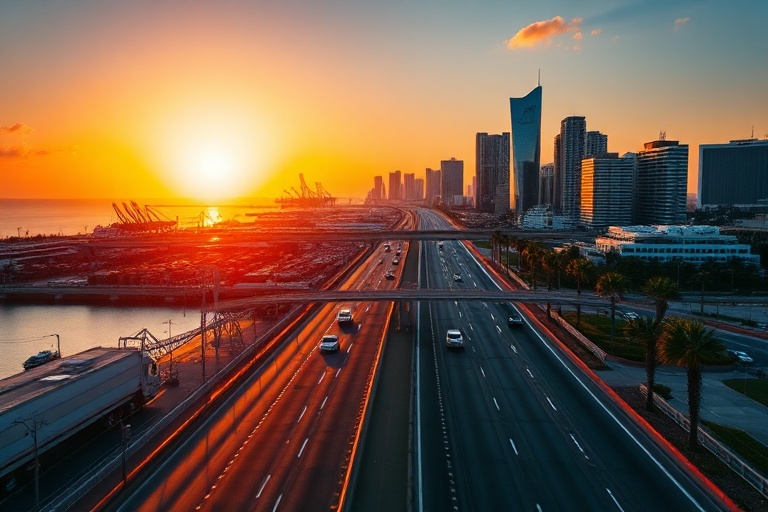
Interstate 95 is not just a road—it is an economic engine. It connects ports, airports, and industrial zones, facilitating the movement of goods from Florida to Maine. The corridor supports over 100 million jobs and contributes hundreds of billions of dollars annually to the U.S. economy. Major cities along I-95, including Miami, Washington, D.C., Philadelphia, New York, and Boston, rely on the highway for supply chains, tourism, and labor markets.
Ports in Miami, Savannah, and Newark are among the busiest on the East Coast, and I-95 serves as the primary route for container trucks moving goods inland. In the Northeast, the highway is essential for just-in-time delivery to retail centers and hospitals. Even during the COVID-19 pandemic, I-95 remained operational, proving its resilience in times of crisis.
However, the highway’s economic dominance comes with costs. Congestion is chronic, especially in urban areas like northern Virginia, Baltimore, and New York City. Traffic jams cost the region billions in lost productivity each year. Additionally, the reliance on diesel trucks contributes to air pollution and greenhouse gas emissions—raising concerns about the highway’s long-term sustainability.
Challenges and the Future of I-95
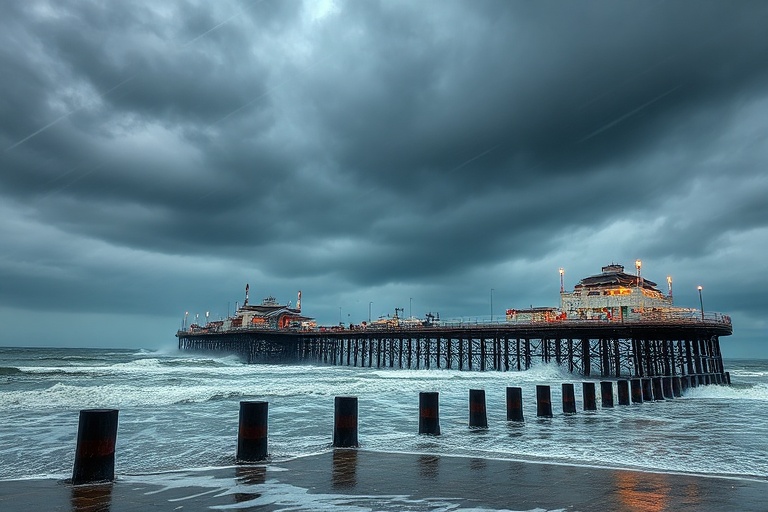
As America’s infrastructure ages, Interstate 95 faces a growing list of challenges. Climate change poses a significant threat: rising sea levels threaten low-lying sections in Florida, Georgia, and the Mid-Atlantic. In 2018, Hurricane Sandy flooded parts of I-95 in New Jersey and New York, shutting down the highway for days. Engineers are now considering elevated or resilient designs for future reconstruction.
Congestion is another pressing issue. The highway carries more than 200,000 vehicles per day in some segments, far exceeding its original capacity. Toll plazas, construction zones, and accidents create bottlenecks that ripple across regional economies. States are exploring solutions such as express toll lanes, smart traffic management, and increased use of public transit alternatives like Amtrak’s Northeast Corridor.
Emerging Trends and Innovations
- Autonomous Vehicles: I-95 is a prime testing ground for self-driving trucks, which could reduce congestion and improve safety.
- Electric Vehicle Charging: States are installing fast-charging stations along I-95 to support the transition to zero-emission vehicles.
- Managed Lanes: Virginia and Maryland have implemented express toll lanes to prioritize high-occupancy vehicles and buses.
- Climate Adaptation: Projects in Florida and the Carolinas are raising roadbeds and improving drainage to combat flooding.
Why I-95 Matters More Than Ever
Interstate 95 is more than a relic of 20th-century infrastructure—it is a living system that must evolve. As climate change intensifies and technology advances, the highway’s role will continue to transform. Policymakers, engineers, and communities must work together to modernize I-95, balancing mobility, equity, and sustainability.
For millions of Americans, Interstate 95 is a daily reality—whether navigating its traffic, relying on its logistics, or simply passing through its scenic stretches from the Carolinas to Maine. Its future will reflect broader choices about how the nation builds, protects, and connects its infrastructure in the 21st century.
The highway’s story is not just one of concrete and steel, but of people, progress, and the enduring American spirit of movement and connection.
As we look ahead, Interstate 95 remains a symbol of both achievement and aspiration—a road that must carry us toward a more resilient and equitable future.