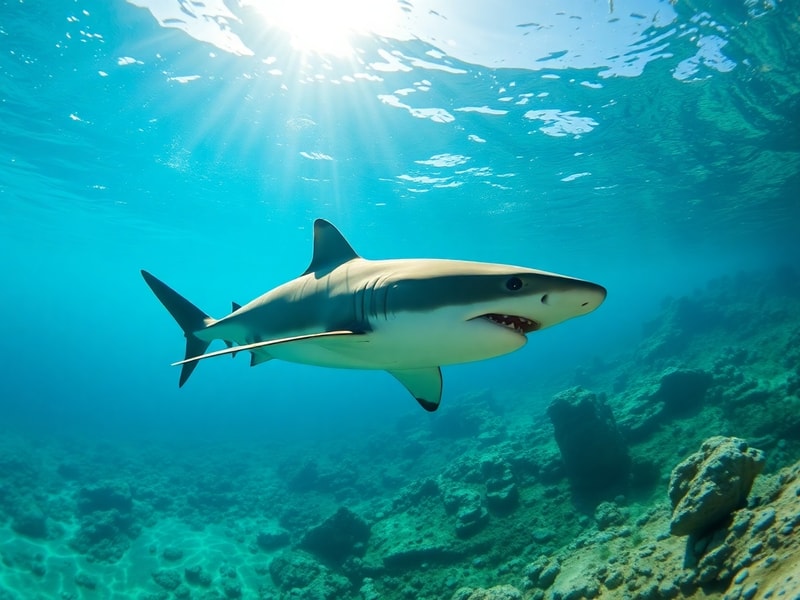
The Mediterranean Sea, often romanticized for its turquoise waters and historic coastlines, is also a frontier for marine exploration. Recent footage of a great white shark (Carcharodon carcharias) near the shores of Sardinia, Italy, has reignited global conversations about marine conservation, predator behavior, and the delicate balance of coastal ecosystems. This encounter, captured by a local fisherman and later verified by marine biologists, offers more than just a viral moment—it provides a rare window into the lives of these apex predators.
The Mediterranean has long been considered a secondary habitat for great whites, with their primary range extending across the Atlantic and Pacific. Yet, sightings like this one challenge established notions about their migratory patterns. Historically, the Mediterranean’s waters were home to thriving shark populations, but centuries of overfishing, habitat degradation, and misinformation have drastically reduced their numbers. Today, the region accounts for less than 1% of the global great white shark population, making such footage particularly significant.
The Science Behind the Sightings
Marine biologists emphasize that great white sharks in the Mediterranean are not an anomaly but a reminder of the ocean’s resilience. According to Dr. Alessandro De Maddalena, a shark researcher based in Italy, these sightings are part of a slow but steady recovery for the species in the region. “The Mediterranean has always been a crossroads for marine life,” he explains. “While great whites are not as abundant here as in other parts of the world, their presence is a sign that conservation efforts are beginning to take hold.”
The footage, shot in shallow waters just 20 meters from the coast, shows a shark estimated to be between 4 and 5 meters in length. Researchers believe the individual is likely a transient rather than a resident, given the seasonal patterns of great white movements. Great whites are known to travel vast distances in search of prey, and the Mediterranean’s diverse marine life—including tuna, seals, and dolphins—makes it a viable hunting ground.
For scientists, this sighting is a valuable data point. The Mediterranean Shark Research Group has been tracking shark movements in the region for over a decade, using a combination of satellite tagging, underwater cameras, and citizen science contributions. Their work has revealed that great whites are more adaptable than previously thought, capable of thriving in both deep offshore waters and nearshore environments.
Why the Mediterranean Matters for Shark Conservation
The Mediterranean’s role in global shark conservation cannot be overstated. As one of the most heavily trafficked and fished bodies of water in the world, it serves as a case study for balancing human activity with marine biodiversity. The region is home to over 40 species of sharks and rays, many of which are classified as endangered or critically endangered by the International Union for Conservation of Nature (IUCN).
Efforts to protect great whites in the Mediterranean have included:
- Fishing Regulations: The European Union has implemented strict bans on shark finning and requires vessels to land sharks with their fins naturally attached. However, enforcement remains inconsistent, particularly in smaller ports and coastal communities.
- Marine Protected Areas (MPAs): Initiatives like the Pelagos Sanctuary for Mediterranean Marine Mammals, which spans waters between Italy, France, and Monaco, provide critical habitats for sharks and their prey.
- Public Awareness Campaigns: Organizations such as the Mediterranean Shark Research Group and Sea Shepherd work to dispel myths about sharks, emphasizing their ecological importance rather than framing them as threats to human safety.
- Scientific Collaboration: International research projects, such as those led by the University of Aberdeen and the Spanish Institute of Oceanography, are shedding light on shark migration patterns, feeding behaviors, and reproductive cycles in the Mediterranean.
Cultural and Historical Perspectives on Mediterranean Sharks
The relationship between humans and sharks in the Mediterranean is deeply rooted in history, mythology, and fear. Ancient Greek and Roman texts often depict sharks as symbols of divine punishment or monstrous creatures lurking in the depths. The Greek myth of Scylla, a sea monster with multiple heads and tentacles, has been interpreted by some scholars as an early description of a shark attack.
By the Middle Ages, sharks were largely ignored in Mediterranean culture, overshadowed by more immediate concerns like piracy and naval warfare. It wasn’t until the 19th and 20th centuries, with the rise of commercial fishing and tourism, that sharks became a focal point of both economic interest and public fear. The 1975 film Jaws amplified global anxieties about sharks, despite the fact that great white attacks in the Mediterranean are exceedingly rare. According to the International Shark Attack File, there have been only 31 recorded unprovoked shark attacks in the Mediterranean since 1847, with just 12 attributed to great whites.
Today, the tide is slowly turning. Coastal communities in Spain, Greece, and Italy are beginning to view sharks not as enemies but as indicators of a healthy marine ecosystem. Eco-tourism initiatives, such as shark diving in the Azores or cage diving in the Red Sea, have demonstrated that these predators can be a lucrative draw for travelers seeking authentic wildlife experiences. The recent footage from Sardinia could further bolster this shift in perception, provided it is met with education rather than sensationalism.
The Broader Implications for Global Shark Populations
While the Mediterranean sighting is a local phenomenon, it reflects broader trends in shark conservation worldwide. Great white sharks are classified as vulnerable by the IUCN, with their populations declining due to bycatch, habitat loss, and targeted hunting for jaws and fins. The Mediterranean serves as a microcosm of these challenges, where human pressures intersect with the survival of an ancient species.
One of the most pressing issues is the lack of comprehensive data on shark populations in the Mediterranean. Unlike the Atlantic or Pacific, where long-term monitoring programs exist, the Mediterranean’s shark data is fragmented. This gap underscores the need for increased funding and collaboration among Mediterranean countries, as well as partnerships with international organizations like the United Nations Environment Programme (UNEP).
Another critical factor is climate change. Rising sea temperatures and ocean acidification are altering the distribution of prey species, which in turn affects shark movements. A 2022 study published in Global Change Biology found that great whites in the Mediterranean are increasingly venturing into new territories, including areas previously considered too warm or polluted for their survival. This adaptability may offer hope for their long-term survival but also highlights the urgency of addressing climate-related threats.
For divers and marine enthusiasts, the Sardinia footage is a reminder of the ocean’s mysteries. The Mediterranean may never rival South Africa or California as a great white hotspot, but its waters hold secrets that are only beginning to unravel. Organizations like Dave’s Locker Science are at the forefront of documenting these encounters, bridging the gap between scientific research and public fascination.
What Comes Next?
The story of the Mediterranean great white shark is far from over. Marine biologists are planning follow-up expeditions to gather more data on the individual’s behavior and potential migration routes. Meanwhile, local authorities in Sardinia are considering enhanced monitoring of the area to ensure both human safety and shark protection.
For the broader public, the footage serves as a call to action. Whether through supporting conservation organizations, advocating for stronger fishing regulations, or simply spreading awareness, individuals can contribute to the preservation of these magnificent creatures. The Mediterranean’s great white sharks may be few in number, but their presence is a testament to nature’s ability to endure even in the face of human encroachment.
As Dr. De Maddalena notes, “Every sighting is a story. It’s up to us to decide whether these stories end with fear or with understanding.” The choice will shape the future of the Mediterranean’s marine ecosystems—and perhaps the fate of great whites worldwide.