Washington Monument: History, Symbolism and Cultural Impact
“`html
The Washington Monument: A Towering Symbol of American Identity
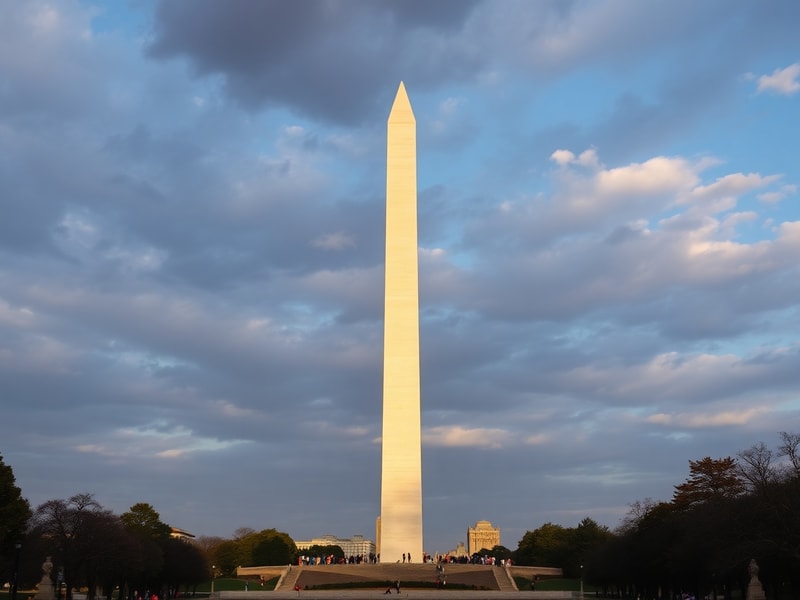
The Washington Monument stands as one of the most recognizable structures in the United States, its gleaming white obelisk piercing the sky above the National Mall in Washington, D.C. Completed in 1884, the monument honors George Washington, the first president of the United States and a central figure in the nation’s founding. Yet its significance extends beyond mere commemoration. The monument is a physical manifestation of American ambition, cultural memory, and the evolving narratives of national identity.
From its origins in the early 19th century to its modern-day role as a tourist destination and civic landmark, the Washington Monument has witnessed pivotal moments in American history. It reflects the nation’s struggles with unity, memory, and representation—especially during the Civil War era, when construction was halted due to political divisions. Today, it serves as a silent witness to the changing values and aspirations of the American public.
The Origins and Vision Behind the Monument
The idea for a monument to George Washington was first proposed shortly after his death in 1799. Washington’s legacy—his leadership during the Revolutionary War, his presidency, and his refusal of a third term—made him an almost mythic figure in the young republic. Early American leaders sought to honor him in a way that mirrored the grandeur of ancient civilizations, particularly Egypt, where obelisks were symbols of eternal memory.
Congress officially approved the monument in 1833, and a design competition was held. Architect Robert Mills won with a plan that included a grand circular colonnade surrounding the obelisk. However, due to funding shortages and political disagreements, construction was repeatedly delayed. The cornerstone was laid in 1848, but work stalled in the 1850s as sectional tensions over slavery and states’ rights intensified.
Construction resumed in 1877 under the direction of the U.S. Army Corps of Engineers, and the monument was finally completed in 1884. By then, the original vision had been simplified. The colonnade was never built, leaving only the soaring obelisk—a 555-foot-tall testament to Washington’s enduring legacy. The monument’s design reflects both the aspirations of its era and the compromises forced by reality.
Architecture and Engineering: A Monument to Innovation
The Washington Monument is not just a symbol; it is also a marvel of 19th-century engineering. Built using over 36,000 blocks of marble, granite, and bluestone gneiss, the structure combines both human ingenuity and geopolitical ambition. The stones were sourced from Maryland and Massachusetts, symbolizing national unity, though the color variations in the monument’s bands tell a more complex story of supply and interruption.
One of the most striking features of the monument is its lack of internal metal framework. Instead, the structure relies on precisely cut and fitted stones, a technique that was both innovative and risky for its time. The obelisk’s tapering form, inspired by ancient Egyptian architecture, was chosen for its symbolic association with eternity and stability—qualities that Washington himself embodied in the American imagination.
The monument’s interior includes an elevator and a set of stairs, though public access to the top was closed in 2011 after an earthquake caused damage. Restoration efforts have since stabilized the structure, ensuring that it continues to stand as a beacon of resilience and continuity.
Cultural and Political Symbolism Over Time
The Washington Monument has always been more than a tribute to a single man. It has served as a stage for public gatherings, protests, and national reflection. During the Civil War, its unfinished state mirrored the fractured nation. Later, in the 20th century, it became a focal point for civil rights marches and anti-war demonstrations, transforming from a static symbol into a living part of America’s civic dialogue.
In times of national crisis—such as the September 11 attacks—the monument has been illuminated in tribute, its silhouette becoming a unifying image on news broadcasts worldwide. Conversely, its very presence has sparked debate. Some critics argue that Washington’s legacy, including his ownership of enslaved people, complicates the monument’s celebratory narrative. These conversations reflect broader shifts in how Americans remember their history.
The monument’s role in popular culture further underscores its symbolic power. It appears in countless films, including Independence Day and Forrest Gump, often serving as a shorthand for American democracy or resilience. Its image is instantly recognizable, transcending geography and language.
Visiting the Monument: A Global Perspective
For millions of visitors each year, the Washington Monument is a must-see stop on the National Mall. It anchors a landscape filled with other memorials and museums, including the Lincoln Memorial and the National Museum of African American History and Culture. The monument’s location is deliberate, placing it at the heart of America’s civic and cultural narrative.
Visitors from around the world come to walk its grounds, marvel at its height, and reflect on its meaning. For many international tourists, the monument represents the ideals of democracy and freedom. For Americans, it offers a moment of pause—a chance to consider the nation’s past, present, and future. The experience is often described as humbling, not just because of the monument’s scale, but because of its layered history.
To enhance the visitor experience, the National Park Service offers ranger-led tours and educational programs. These initiatives help contextualize the monument within broader American history, connecting it to themes of leadership, sacrifice, and civic responsibility.
If you’re planning a trip to Washington, D.C., consider pairing your visit to the monument with a stop at nearby attractions such as the Smithsonian museums or the U.S. Capitol. The National Mall itself is a living museum, and the Washington Monument serves as its centerpiece.
Practical Information for Travelers
- Location: National Mall, Washington, D.C.
- Hours: Open daily, with seasonal variations (check official NPS website for updates)
- Access: Free admission; timed entry passes may be required during peak seasons
- Nearby Attractions: Lincoln Memorial, World War II Memorial, National Museum of American History
A Lasting Legacy in Stone and Memory
The Washington Monument endures as a symbol of both permanence and change. Its construction spanned decades and reflected the nation’s growing pains. Today, it stands not just as a tribute to George Washington, but as a mirror held up to America itself—a monument that invites reflection, debate, and reverence.
In an era of rapid technological and cultural transformation, the monument reminds us of the value of slowing down, looking up, and remembering the stories that shape us. It is a reminder that identity is not static; it is built, rebuilt, and renewed with each generation.
As debates about monuments and memory continue to evolve, the Washington Monument remains a touchstone—a place where past and present converge. It challenges visitors to ask not only who we honor, but why—and what we choose to build together for the future.
Whether viewed from afar or explored up close, the Washington Monument stands as a powerful reminder of what a nation can achieve when it dares to dream big—and what it must never forget as it moves forward.