California’s Unusual Request in Trump Election Probe Raises Legal Questions
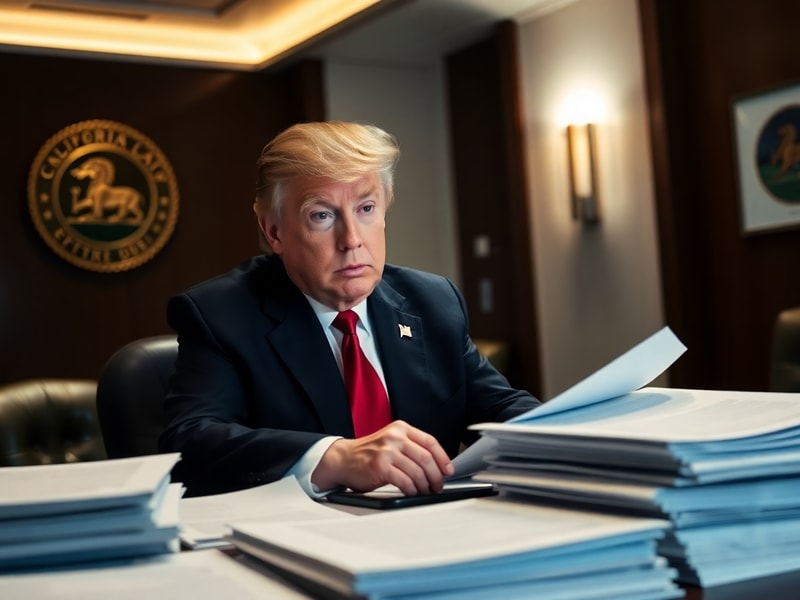
The California Department of Justice has taken an uncommon step in its ongoing investigation into the January 6 Capitol breach, requesting that former President Donald Trump provide documents and testimony related to his activities leading up to the 2020 election. The request, delivered in a formal subpoena issued on March 19, marks a rare instance where a state agency has pursued legal action against a former president over allegations tied to election interference.
Legal experts note that California’s involvement in federal election matters is typically limited, yet the state’s civil investigative demands signal a broader willingness to examine potential violations of state laws. The subpoena seeks records dating back to November 2020, including communications with state officials, campaign advisers, and associates regarding election integrity claims. It also demands Trump’s testimony under oath, a request that could lead to further legal confrontation if he declines.
So far, Trump’s legal team has not publicly responded to the subpoena, but previous court filings suggest they may challenge its validity on grounds of presidential immunity and jurisdictional overreach. The move adds a new layer of complexity to the sprawling legal landscape surrounding the 2020 election, with California positioning itself as a key player in holding individuals accountable for alleged misconduct.
What the Subpoena Demands—and Why It Matters
The California subpoena is unusually broad in scope, asking for documents and communications that span multiple years. Specifically, it targets:
- All records related to efforts to challenge or overturn the 2020 election results in California, including emails, memos, and meeting notes
- Any interactions with state or local officials regarding election certification or audits
- Financial records and campaign expenditures tied to post-election legal challenges
- Testimony from Trump under oath, likely focusing on his role in promoting claims of widespread voter fraud
Legal analysts argue that California’s pursuit of these records may be more symbolic than immediately impactful, given that the state’s electoral votes were not in dispute. However, the request could serve as a template for other states to scrutinize similar activities, particularly in battleground regions where election integrity claims were amplified. The inclusion of financial records suggests a potential focus on whether campaign funds were misused to support legal challenges that lacked factual basis.
Another critical aspect is the timing. The subpoena arrives as Trump faces multiple federal and state investigations, including one from the U.S. Department of Justice into efforts to overturn the election. By acting independently, California may be attempting to establish its own legal precedent, demonstrating that state-level authorities are willing to pursue accountability where federal action remains pending.
Legal Precedents and Potential Challenges
Trump’s legal team has historically argued that former presidents are shielded from civil subpoenas related to official acts while in office. This defense was central to his unsuccessful appeals in cases involving congressional and state investigations into his financial records. Whether California’s subpoena withstands judicial review may hinge on whether courts classify the requested documents as private, campaign-related, or official presidential actions.
Another potential hurdle is the breadth of the request. Courts often require subpoenas to be narrowly tailored to avoid undue burden. If Trump’s attorneys argue that the California demand is overly expansive, they may file a motion to quash, delaying or limiting compliance. The outcome could set a precedent for how aggressively state prosecutors can pursue election-related misconduct claims against high-profile figures.
Meanwhile, civil liberties groups have raised concerns about the chilling effect such investigations might have on political speech and association. They caution that broad subpoenas could discourage public officials from challenging election results in good faith, even when evidence of irregularities is lacking. The tension between accountability and free expression remains a central theme in ongoing legal debates.
California’s Broader Role in Election Integrity Oversight
While California was not a battleground state in 2020, its Democratic leadership has taken a proactive stance on election security. The state has implemented strict voting laws, including universal mail-in ballots and robust verification systems, which were widely praised for ensuring a smooth election process. However, the California Department of Justice’s involvement in the Trump probe suggests a recognition that election integrity extends beyond technical administration—it also includes preventing and addressing disinformation campaigns.
Attorney General Rob Bonta, a progressive Democrat, has positioned himself as a vocal critic of election denialism. In public statements, he has condemned efforts to undermine trust in electoral systems, framing them as threats to democratic institutions. The subpoena to Trump aligns with this broader agenda, signaling that California will not remain passive in the face of challenges to its electoral legitimacy.
This approach contrasts with states like Texas and Florida, where officials have supported restrictive voting laws and echoed claims of widespread fraud. The divergence highlights a national split over how to interpret and respond to post-2020 election narratives, with California adopting a more assertive enforcement strategy.
Legal observers suggest that California’s actions could inspire other states with Democratic attorneys general to pursue similar investigations. If successful, such efforts may create a patchwork of state-level accountability mechanisms, forcing national figures like Trump to navigate a complex web of legal obligations across jurisdictions.
What Happens Next—and Why It Could Shape Future Elections
The next phase of the California probe will likely involve negotiations between Trump’s legal team and state investigators. If the former president resists compliance, the matter could escalate to court, where judges will weigh the balance between state investigative authority and claims of executive privilege. A ruling against Trump could embolden other states to issue similar subpoenas, while a favorable outcome for him might discourage further state-level inquiries into election-related conduct.
Regardless of the outcome, the California subpoena underscores a growing trend: state governments are increasingly asserting their role in policing election integrity, even when federal action is delayed or uncertain. This shift reflects frustration with the slow pace of accountability at the national level and a determination to fill the void through state-level enforcement.
For voters and political observers, the implications are significant. If states can successfully compel testimony and documents from former presidents, it may deter future attempts to challenge election results without evidence. Conversely, if legal challenges succeed in blocking such requests, it could signal that high-profile figures remain largely insulated from state-level scrutiny, regardless of their actions.
Either way, California’s move has introduced a new dimension to the post-2020 legal landscape—one that may redefine the boundaries of state power in election oversight.