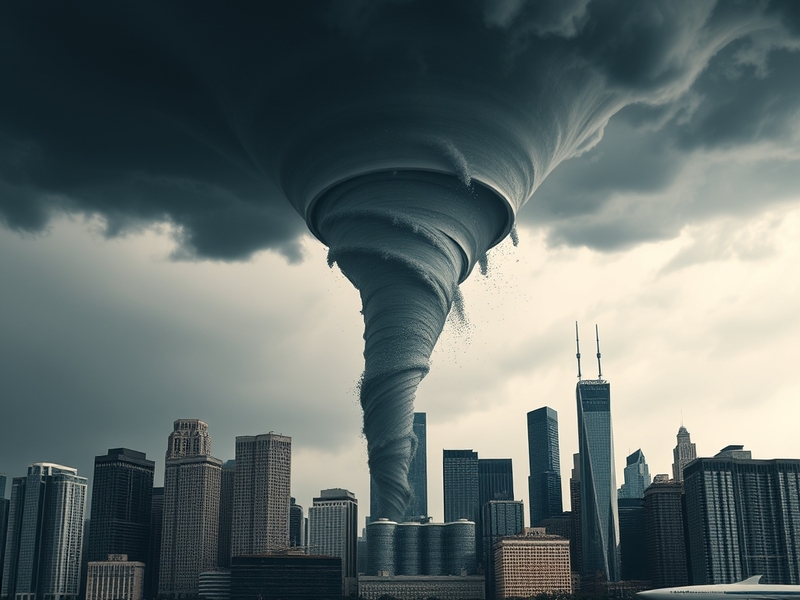
Chicago’s skyline has long stood as a symbol of resilience, innovation, and urban ambition. Yet even this iconic city, known for its architectural marvels and cultural vibrancy, is not immune to the raw power of nature. Tornadoes—those violent, swirling columns of air—have carved a place in Chicago’s history, leaving behind stories of survival, adaptation, and community strength. While the city may be more commonly associated with blizzards and lake-effect snow, tornadoes have made their presence felt, challenging the notion of Chicago as a purely winter-dominated climate.
Tornadoes in Chicago are not as frequent as in the Great Plains’ infamous “Tornado Alley,” but the city has experienced its share of twisters. The region’s geography, situated along Lake Michigan, can both mitigate and intensify storm systems. Warm, moist air from the Gulf of Mexico often collides with cooler, drier air from the north, creating an environment ripe for severe thunderstorms. When these storms organize into supercells—rotating thunderstorms—the risk of tornadoes increases. Chicago’s proximity to such atmospheric battlegrounds means that tornado watches and warnings are not unheard of, particularly during the spring and early summer months.
The city’s first recorded tornado dates back to 1876, when an F2 storm touched down near the present-day Loop. Since then, Chicago has faced several notable tornado events, including the devastating 1967 Oak Lawn tornado, which killed 33 people and injured over 500. That disaster reshaped the region’s approach to emergency preparedness, leading to improved warning systems and public education. More recently, in 2015, an EF-1 tornado touched down in the city’s Brighton Park neighborhood, uprooting trees, damaging homes, and serving as a reminder that tornadoes can strike even in densely populated urban areas.
How Chicago’s Geography Influences Tornado Risk
Chicago’s location presents a unique paradox when it comes to tornado formation. On one hand, the presence of Lake Michigan can disrupt storm systems, weakening or redirecting them before they fully develop. On the other, the lake’s temperature contrasts can enhance atmospheric instability, fueling severe weather. The lake’s cooling effect often suppresses storm development during the day, but at night, when the lake breeze weakens, conditions can become more favorable for tornadoes.
Topography also plays a role. While Chicago is relatively flat, the urban heat island effect—where the city retains heat more than surrounding rural areas—can intensify thunderstorms. Warmer air rises over the city, potentially enhancing storm rotation. Additionally, the urban landscape itself can channel wind flow, creating localized wind patterns that may contribute to tornado formation or intensification.
Despite these factors, Chicago’s tornado risk remains lower than in states like Kansas or Oklahoma. The city averages fewer than two tornadoes per year, with most being weak (EF-0 or EF-1 on the Enhanced Fujita scale). However, the potential for a stronger tornado—one that could cause significant damage—is a reality that emergency planners and residents must consider. The 1990 Plainfield tornado, an F5 event that killed 29 people in the southwest suburbs, serves as a grim reminder of what can happen when conditions align perfectly.
Cultural and Historical Responses to Tornadoes
Chicago’s relationship with tornadoes is not just scientific; it’s deeply cultural. The city’s response to natural disasters reflects its broader identity—pragmatic, resilient, and community-driven. After the 1967 Oak Lawn tornado, the city and surrounding suburbs invested in better warning systems, including sirens and emergency broadcasts. Today, the National Weather Service’s Chicago office issues timely alerts, and local media outlets play a crucial role in disseminating information quickly.
Culturally, tornadoes in Chicago have inspired art, literature, and even local folklore. The 1967 disaster, for instance, became a turning point in the city’s understanding of its vulnerability. Newspapers of the time documented the devastation in stark detail, while community leaders emphasized the importance of preparedness. In the decades since, Chicago has become a leader in urban disaster resilience, with initiatives like the Chicago Office of Emergency Management and Communications (OEMC) coordinating responses to everything from tornadoes to heatwaves.
Chicago’s diverse communities have also shaped how tornadoes are perceived and responded to. Immigrant populations, many of whom come from regions less prone to tornadoes, often rely on local networks for information and support. Language barriers and cultural differences can complicate emergency responses, but organizations within the city have worked to bridge these gaps by providing multilingual resources and community outreach programs.
Preparing for the Unpredictable
Tornado preparedness in Chicago is a year-round effort. The city’s emergency management teams conduct regular drills, and schools and businesses practice tornado response protocols. Residents are encouraged to have a plan in place, including identifying safe rooms or sturdy structures where they can shelter during a tornado warning. The OEMC’s “Ready Chicago” initiative provides online resources, including checklists for emergency kits and evacuation routes.
Technology has also transformed how Chicago responds to tornadoes. Doppler radar systems, such as the one at Chicago’s National Weather Service office, allow forecasters to detect rotation within storms with greater accuracy. Social media platforms enable real-time updates, with local officials and news outlets sharing critical information as soon as it becomes available. Apps like the Red Cross’s Emergency app provide location-based alerts, ensuring that residents receive warnings even if they’re not near a television or radio.
Yet, despite these advancements, challenges remain. Urban density can hinder evacuation efforts, and the sheer unpredictability of tornadoes means that even the most prepared communities can face unexpected challenges. The 2015 Brighton Park tornado, for example, occurred during rush hour, complicating response efforts as roads became congested with commuters. Such incidents highlight the need for flexible, adaptive strategies that account for Chicago’s unique urban environment.
A Global Perspective on Urban Tornadoes
Chicago is not alone in facing tornado risks. Cities around the world, from Tokyo to São Paulo, have grappled with the challenge of tornadoes in urban settings. In Japan, for instance, tornadoes are rare but can be devastating when they occur, as seen in the 2006 F3 tornado that struck Saroma Town, killing nine people. In Brazil, the city of São Paulo experienced an EF3 tornado in 2010, damaging hundreds of buildings and underscoring the vulnerability of densely populated areas.
What sets Chicago apart is its combination of advanced infrastructure, cultural diversity, and proactive emergency management. While cities like Miami and Houston face hurricanes, and Los Angeles contends with wildfires, Chicago’s tornado risk is a reminder that no urban center is entirely immune to nature’s extremes. The city’s experience offers valuable lessons for other metropolitan areas, particularly those in regions where tornadoes are less common but still possible.
Globally, the conversation around urban tornadoes is evolving. Climate change is expected to increase the frequency and intensity of severe weather events, including tornadoes. In the United States, some studies suggest that tornado activity may shift eastward, into areas like the Southeast and Midwest, where cities like Chicago could see more frequent storms. This shift underscores the importance of international collaboration and knowledge-sharing, as cities around the world work to enhance their resilience.
Chicago’s approach—balancing scientific rigor with community engagement—serves as a model for other urban centers. By investing in early warning systems, public education, and adaptive infrastructure, the city is not only preparing for the next tornado but also setting a standard for how cities can coexist with nature’s unpredictability.
Lessons from Chicago’s Tornado History
Chicago’s tornado history is a tapestry of destruction, resilience, and innovation. Each event has left behind a legacy that continues to shape the city’s approach to emergency management. The 1967 Oak Lawn tornado, for example, led to the creation of the DuPage County Office of Emergency Management, which has since become a leader in disaster response. The 1990 Plainfield tornado prompted a reevaluation of building codes in the region, with stricter standards for roofs and windows in high-risk areas.
These lessons are not just historical footnotes; they are active components of Chicago’s ongoing disaster preparedness strategy. The city’s emergency planners regularly review past events to identify gaps in response and improve future outcomes. For instance, after the 2015 Brighton Park tornado, officials noted the importance of real-time communication with first responders, leading to upgrades in the city’s radio systems.
Chicago’s experience also highlights the role of community in disaster recovery. After a tornado, neighbors often come together to clean up debris, share resources, and support one another. Organizations like the American Red Cross and local nonprofits play a critical role in providing shelter, food, and emotional support to affected residents. This sense of community is a defining feature of Chicago’s response to tornadoes, reinforcing the idea that resilience is not just about infrastructure but also about people.
As climate patterns shift and urban environments evolve, Chicago’s tornado history offers a roadmap for other cities facing similar challenges. By learning from the past, investing in the present, and planning for the future, Chicago continues to stand as a testament to the power of preparation and community spirit in the face of nature’s unpredictability.
Tornadoes may be a rare occurrence in Chicago, but their impact is undeniable. From the first recorded twister in 1876 to the modern-day challenges of urban resilience, the city’s relationship with tornadoes is a story of adaptation and strength. As Chicago looks to the future, it does so with the knowledge that even the most unpredictable forces of nature can be met with preparation, innovation, and a steadfast commitment to community.