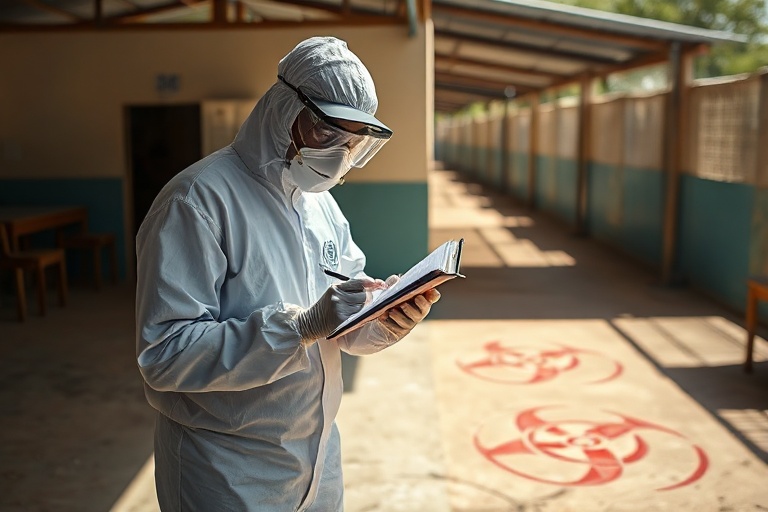
Ebola virus disease (EVD) remains one of the most feared and deadly infectious diseases, with periodic outbreaks continuing to challenge public health systems worldwide. While the 2014–2016 West Africa epidemic was the most devastating in history, smaller but persistent flare-ups in Central Africa have kept the disease in the global spotlight. Recent years have seen both concerning resurgences and promising scientific advancements, creating a complex landscape for health officials, researchers, and communities at risk.
The World Health Organization (WHO) classifies Ebola as a priority disease due to its high fatality rate—often exceeding 50% in some outbreaks—and the ease with which it can spread through direct contact with bodily fluids. Unlike some viruses that can be contained through airborne precautions, Ebola’s transmission requires close physical interaction, making it somewhat more manageable with proper protocols. Still, the psychological and social impact of outbreaks can be profound, disrupting local economies and straining healthcare infrastructure in affected regions.
The Most Recent Ebola Outbreaks and Their Impact
The Democratic Republic of the Congo (DRC) has been the epicenter of multiple Ebola outbreaks in the past decade, with the 2018–2020 Kivu outbreak ranking as the second-largest in history. This prolonged crisis, which resulted in over 3,400 cases and 2,200 deaths, was complicated by armed conflict, political instability, and community mistrust of health workers. The outbreak also saw the first widespread use of an experimental Ebola vaccine, developed by Merck, which proved highly effective in preventing infections.
More recently, in February 2021, the DRC declared a new Ebola outbreak in North Kivu Province, marking the country’s 12th recorded outbreak since the virus was first identified in 1976. This flare-up, though smaller than previous ones, highlighted ongoing challenges in surveillance and rapid response. Health authorities deployed ring vaccination strategies, targeting contacts of confirmed cases, and worked to rebuild trust with local communities wary of foreign intervention.
In Uganda, a 2022 Sudan ebolavirus outbreak—caused by a different strain than the more commonly reported Zaire ebolavirus—demonstrated the unpredictable nature of the disease. While no deaths were reported in this relatively contained event, the outbreak served as a reminder that Ebola’s reach extends beyond its traditional strongholds. The WHO and partners quickly mobilized support, including experimental treatments, though no licensed vaccine was available for the Sudan strain at the time.
Key Factors Contributing to Outbreaks
- Human-animal transmission: Fruit bats are considered the natural reservoir for Ebola, and outbreaks often begin when humans come into contact with infected animals, either through hunting or consumption.
- Healthcare-associated spread: Inadequate infection control in healthcare settings can amplify outbreaks, particularly when proper protective equipment is unavailable or protocols are not followed.
- Community resistance: Misinformation, cultural practices, and distrust of government or international organizations can hinder outbreak response efforts, as seen in the DRC’s Kivu outbreak.
- Weak healthcare systems: Many high-risk regions lack robust disease surveillance, laboratory capacity, and trained personnel to detect and respond to Ebola cases promptly.
Scientific Progress and Medical Countermeasures
One of the most significant developments in the fight against Ebola has been the approval and deployment of vaccines. The Merck-developed Ervebo vaccine, which received FDA approval in 2019, has been pivotal in controlling outbreaks by creating “herd immunity” around infected individuals. Clinical trials showed it to be nearly 100% effective in preventing Ebola after 10 days of vaccination. Additionally, the Johnson & Johnson vaccine, approved in 2020, offers protection against the Zaire strain and has been used in preventive campaigns in high-risk areas.
Beyond vaccines, researchers have made strides in experimental treatments. The monoclonal antibody therapy REGN-EB3, developed by Regeneron, and the Japanese-firm Fujifilm’s mAb114 (now known as Ansuvimab) have shown promise in clinical trials. Both treatments were used during the DRC’s Kivu outbreak and demonstrated the ability to reduce mortality rates when administered early. These therapies work by neutralizing the virus and preventing it from replicating in the body.
Diagnostic tools have also improved, with rapid antigen tests now available to detect Ebola in as little as 15 minutes. These tests are crucial for field use, where laboratory infrastructure may be limited. However, challenges remain, including the need for cold-chain storage for vaccines and the cost of deploying treatments in remote areas.
Ongoing Challenges in Vaccine and Treatment Distribution
- Logistical hurdles: Many outbreak-prone regions lack reliable cold storage, electricity, or transportation networks, complicating vaccine delivery.
- Supply shortages: Demand for Ebola vaccines and treatments can outstrip supply during large outbreaks, leading to rationing and prioritization dilemmas.
- Regulatory delays: While vaccines like Ervebo are now licensed, the process of obtaining approvals for new treatments in outbreak-prone countries can be slow and bureaucratic.
- Equity concerns: Wealthier nations with advanced healthcare systems often secure early access to new medical countermeasures, leaving lower-income countries at a disadvantage.
The Role of Global Health Organizations and Local Communities
The response to Ebola outbreaks is a collaborative effort involving international organizations, national governments, and local communities. The WHO plays a central role in coordinating global responses, deploying experts, and providing technical guidance to affected countries. During the 2018–2020 DRC outbreak, the WHO declared the crisis a Public Health Emergency of International Concern (PHEIC) twice, a designation that mobilized additional resources and political attention.
Non-governmental organizations (NGOs) like Médecins Sans Frontières (Doctors Without Borders) and the Red Cross have been instrumental in on-the-ground response efforts. These groups provide critical services, including patient care, contact tracing, and community engagement. However, their work is often hindered by security threats, as seen in the DRC, where armed groups have targeted health workers.
Local communities are equally vital to outbreak control. Public health campaigns that emphasize education, transparency, and cultural sensitivity have proven more effective than top-down mandates. For example, in Sierra Leone during the 2014–2016 epidemic, community leaders worked with health officials to debunk myths about Ebola and promote safe burial practices. Such grassroots efforts helped reduce transmission rates and saved lives.
Despite these successes, misinformation remains a persistent threat. Social media platforms have sometimes amplified false claims about Ebola’s origins, transmission, or treatments, complicating public health messaging. Health authorities have responded by partnering with local influencers, religious leaders, and traditional healers to disseminate accurate information.
Lessons Learned and the Path Forward
The recurring nature of Ebola outbreaks has provided valuable lessons for global health security. One key takeaway is the importance of preparedness. Countries at risk, particularly those in Central and West Africa, have invested in strengthening their disease surveillance systems and healthcare infrastructure. For instance, Nigeria’s rapid response to a 2018 Ebola case—imported from Liberia—demonstrated how early detection and containment can prevent larger outbreaks.
Another lesson is the need for sustained funding and research. While outbreaks garner headlines, the work of developing vaccines, treatments, and diagnostics requires long-term investment. The Coalition for Epidemic Preparedness Innovations (CEPI), founded in 2017, has been a critical player in accelerating vaccine development for Ebola and other priority pathogens. Governments and philanthropic organizations continue to support these efforts, recognizing that Ebola is not just an African problem but a global health security issue.
Looking ahead, experts warn that climate change and deforestation could increase the risk of zoonotic spillover events, where animal-borne pathogens jump to humans. Ebola’s natural reservoir, fruit bats, thrives in forested regions, and habitat destruction may force these animals into closer contact with human populations. Addressing these environmental factors will require interdisciplinary collaboration between public health officials, ecologists, and policymakers.
For now, the world remains vigilant. While Ebola outbreaks are no longer front-page news as they were during the West Africa epidemic, the threat has not disappeared. Vigilance, innovation, and global solidarity will be essential to preventing the next large-scale crisis and ensuring that communities at risk have the tools they need to protect themselves.
For more on global health security and infectious disease preparedness, explore our Health and Science categories.
Conclusion
Ebola remains a formidable adversary, but the progress made in vaccines, treatments, and outbreak response offers hope. The combination of scientific innovation, international cooperation, and community engagement has transformed the fight against this deadly virus. However, the work is far from over. Sustained investment, equitable access to medical countermeasures, and a commitment to addressing the root causes of outbreaks—such as poverty, conflict, and environmental degradation—will determine whether Ebola can finally be controlled. Until then, the world must remain prepared, vigilant, and united in the face of this persistent threat.