<!DOCTYPE html>
<html lang="en">
<head>
    <meta charset="UTF-8">
    <meta name="viewport" content="width=device-width, initial-scale=1.0">
    <title>Kindergarten Graduation Fights: Celebration Turned Chaos</title>
</head>
<body>
    <article>
        <h2>Kindergarten Graduation Fights: When Celebration Turns Chaotic</h2>

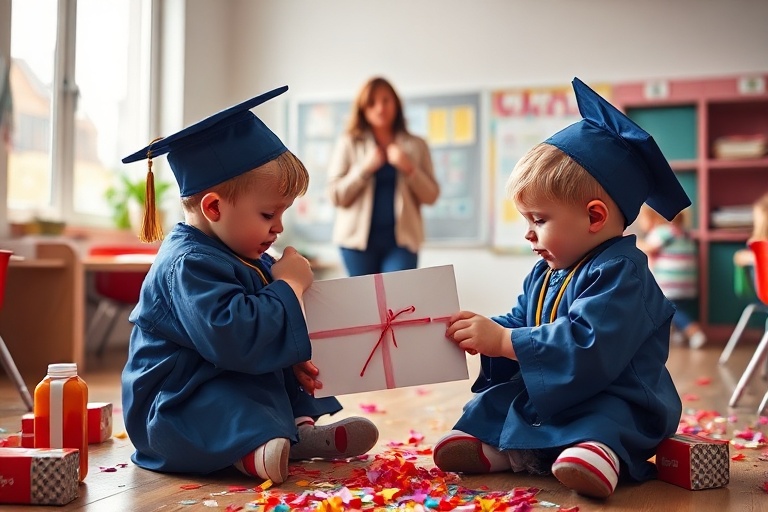
        <p>The final bell of the school year often rings with joy, especially for young students marking their first academic milestone: kindergarten graduation. Yet in recent years, what should be a heartwarming celebration has occasionally erupted into public confrontations—sometimes even physical altercations—among parents, teachers, and community members. These incidents, though rare, reveal deeper tensions around education, parenting styles, and cultural expectations.</p>

        <p>What begins as a proud moment for families can quickly escalate when emotions run high. Differences in opinion about educational standards, discipline, or even the significance of the ceremony itself have led to shouting matches and, in extreme cases, physical fights. These events are not isolated to one region or country. From suburban schools in the United States to urban centers in Asia and Europe, kindergarten graduation disputes have become a curious phenomenon of modern parenting culture.</p>

        <h3>The Global Rise of Kindergarten Graduation Disputes</h3>

        <p>In South Korea, where academic pressure begins almost at birth, the end of kindergarten is not just a celebration—it’s a competitive milestone. Parents often invest heavily in early education, and kindergarten graduation ceremonies can become high-stakes events. In 2022, a viral video showed a mother and father arguing violently outside a Seoul kindergarten over seating arrangements and perceived favoritism. The altercation required police intervention and sparked national debate about parental expectations and childhood stress.</p>

        <p>Similarly, in parts of China, where the gaokao (college entrance exam) looms large even in kindergarten, graduation ceremonies have become symbolic battlegrounds. Some parents hire photographers, rent luxury venues, and even commission custom gowns costing hundreds of dollars. When one family feels their child’s achievement is not adequately recognized, conflicts can flare. In 2023, a kindergarten in Guangzhou canceled its graduation ceremony after parents threatened legal action over the order of awards.</p>

        <p>Even in more relaxed educational systems, such as those in Scandinavia, disputes have emerged. Swedish parents, known for valuing equality and minimal competition, have occasionally clashed over the idea of “graduating” from kindergarten at all—viewing it as unnecessary pressure. In 2021, a daycare in Stockholm canceled its ceremony after parents signed a petition arguing it promoted elitism among four- and five-year-olds.</p>

        <h3>Why Do These Fights Happen?</h3>

        <p>The reasons behind these conflicts are complex and rooted in cultural, social, and psychological factors. One driving force is the growing trend of “intensive parenting”—a style characterized by high investment in a child’s early development, often driven by fear of falling behind. Parents today feel immense pressure to ensure their children excel from the earliest stages, and kindergarten graduation becomes a public validation of that effort.</p>

        <p>Another factor is the rise of social media. Parents now document every milestone, from first steps to graduation ceremonies, and share them online. This creates an environment where recognition—and by extension, status—becomes tied to public displays of achievement. When one child is praised more than another in a ceremony, the perceived slight can escalate into a confrontation.</p>

        <p>Cultural attitudes toward competition and achievement also play a role. In societies where academic success is closely linked to social mobility, even small events like kindergarten graduations carry symbolic weight. Conversely, in cultures that prioritize play and emotional well-being, the very concept of a “graduation” at age five can feel antithetical to developmental goals.</p>

        <p>Common triggers include:</p>
        <ul>
            <li>Perceived unfairness in award distribution or recognition</li>
            <li>Disputes over seating, participation, or speaking roles during the ceremony</li>
            <li>Conflicts between parents and teachers over curriculum or teaching methods</li>
            <li>Social media posts that amplify minor grievances into public controversies</li>
            <li>Cultural differences in expectations about what a kindergarten graduation should entail</li>
        </ul>

        <h3>From Viral Videos to Policy Changes</h3>

        <p>Many of these incidents gain attention not because of their severity, but because they are captured on video and shared widely. A single clip of shouting parents or a shoving match can spread across platforms within hours, often accompanied by outrage, humor, or critique. While some dismiss these fights as trivial, others argue they reflect broader societal issues—rising anxiety, diminished empathy, and the commercialization of childhood.</p>

        <p>In response to growing concerns, some school districts have revised their graduation ceremonies. In 2023, a school district in Texas replaced individual awards with “class recognitions,” eliminating ranking systems entirely. Other schools have moved ceremonies to private settings or limited attendance to immediate family to reduce public tension.</p>

        <p>Educators and child psychologists have weighed in, advocating for a return to simpler celebrations focused on creativity and joy rather than achievement. “Kindergarten is about exploration, not evaluation,” said Dr. Elena Martinez, a child development specialist. “When we turn it into a performance review, we lose sight of what really matters.”</p>

        <h3>The Psychological Toll on Children</h3>

        <p>While adults bear the brunt of these conflicts, the unintended victims are often the children themselves. Witnessing parents argue or fight can create anxiety, fear, and confusion in young minds. Some children report feeling guilty or responsible for the tension, especially if they overhear adults discussing awards or recognition.</p>
        <p>Psychologists warn that early exposure to high-stress environments can shape long-term emotional responses. “Children at this age are developing their sense of self-worth,” said clinical psychologist Dr. James Carter. “When their graduation becomes a source of conflict, it can distort their understanding of achievement and belonging.”</p>

        <p>Schools have begun implementing safeguards. Some now hold private rehearsals, distribute awards privately, or avoid any form of ranking altogether. Others incorporate mindfulness exercises or family counseling sessions to help parents manage expectations.</p>

        <h3>Looking Ahead: Redefining Milestones</h3>

        <p>As education systems evolve, so too must the way we celebrate early childhood. The kindergarten graduation fight is not just a quirky news story—it’s a symptom of a larger cultural shift. Parents today are more involved, more anxious, and more publicly invested in their children’s success than ever before.</p>

        <p>Yet the solution may lie not in eliminating celebrations, but in reimagining them. A kindergarten graduation doesn’t need to be a competition. It can be a moment of wonder, a chance to reflect on growth, and an opportunity to nurture joy—not judgment.</p>

        <p>Some schools are leading by example. In Finland, a country renowned for its child-centered education system, kindergarten graduation ceremonies are low-key, nature-based events focused on play and storytelling. There are no diplomas, no rankings—just a quiet acknowledgment of a child’s journey through their first formal year of learning.</p>

        <p>Perhaps the real lesson is this: the goal of kindergarten isn’t to graduate with honors—it’s to begin a lifelong love of learning. And that begins with adults modeling kindness, patience, and perspective.</p>
    </article>