McKinney TX: A Suburban Success Story of Growth and Culture
“`html
McKinney TX: A Suburban Gem with Global Appeal
Nestled in the northern reaches of Texas, McKinney has evolved from a quiet agricultural town into one of the state’s most dynamic suburban communities. With a population exceeding 190,000, it stands as a testament to how small-town values can flourish within a rapidly growing metropolitan area. The city’s blend of historic charm, economic vitality, and cultural diversity offers a compelling case study in modern American suburban development.
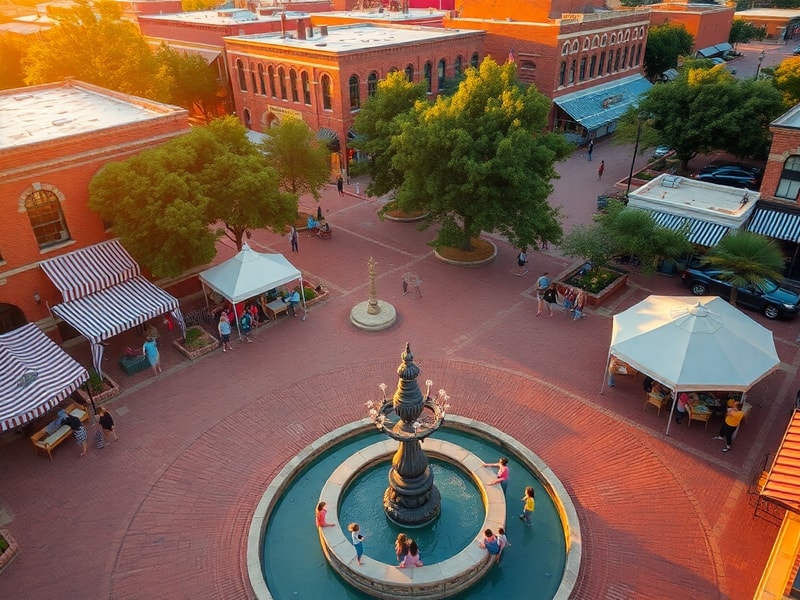
What sets McKinney apart is not just its growth rate—consistently ranked among the fastest-growing cities in the U.S.—but the way it balances progress with preservation. Unlike many suburban expansions that erase local identity, McKinney has maintained its historic downtown, now a National Register Historic District, while fostering a thriving arts and culinary scene. This duality reflects broader trends in American urbanism, where communities seek to honor heritage while embracing innovation.
The Roots of a Resilient Community
Founded in 1848, McKinney was named after Collin McKinney, a signer of the Texas Declaration of Independence. For much of the 19th and early 20th centuries, the city thrived as a center for agriculture, particularly cotton and grain production. The arrival of the railroad in the late 1800s catalyzed its growth, transforming it into a regional trading hub.
By the mid-20th century, McKinney’s economy diversified with the establishment of manufacturing plants and later, corporate headquarters. Today, it boasts a robust job market, supported by industries ranging from healthcare to technology. The city’s resilience through economic shifts mirrors the adaptability seen in other global suburban hubs, such as Reading in the UK or Haarlem in the Netherlands, where historic towns have successfully integrated modern economic demands.
A Cultural Crossroads
McKinney’s cultural landscape is a microcosm of broader demographic shifts in the United States. Once predominantly white and middle-class, the city has seen significant diversification over the past three decades. Hispanic and Latino communities now represent nearly 30% of the population, while Asian and African American residents contribute to a rich tapestry of traditions, cuisines, and festivals.
This multicultural environment is perhaps most evident in the city’s annual events. The McKinney Arts & Wine Festival draws thousands each year, showcasing local artists alongside international cuisines. Similarly, the Taste of McKinney event highlights the city’s culinary diversity, from traditional Tex-Mex to innovative fusion dishes. Such events not only foster community engagement but also reflect the global influences shaping modern American suburbs.
Economic Engine and Real Estate Dynamics
McKinney’s economic growth has been nothing short of remarkable. With a median household income above the national average and a low unemployment rate, the city has become a magnet for professionals and families alike. Its proximity to Dallas—just 30 miles to the south—has made it an attractive alternative to the urban core, offering lower taxes and a higher quality of life.
The real estate market in McKinney is a case study in suburban demand. The city’s housing stock ranges from historic homes in the downtown district to sprawling suburban developments on its outskirts. According to recent data, the median home value in McKinney is approximately $450,000, a figure that has risen steadily over the past decade. This trend mirrors similar patterns in suburban areas worldwide, where demand for single-family homes has surged post-pandemic.
Challenges and Opportunities
Despite its successes, McKinney faces challenges common to fast-growing suburban areas. Infrastructure strain, particularly in transportation and public services, has become a pressing concern. The city’s leadership has responded with ambitious projects, including the expansion of State Highway 121 and investments in public transit. These efforts aim to accommodate growth while preserving the city’s character.
Another challenge lies in balancing development with sustainability. McKinney has made strides in green initiatives, such as the creation of the McKinney Greenbelt, a 12-mile trail system that promotes outdoor recreation and environmental conservation. Such projects reflect a growing awareness of sustainability in suburban planning, a trend observed in cities like Copenhagen and Vancouver, where green spaces are integral to urban livability.
Education and Innovation
McKinney’s school district is one of the highest-rated in Texas, a factor that significantly contributes to the city’s appeal. With a graduation rate above the state average and a strong emphasis on STEM education, the district prepares students for both higher education and the workforce. The presence of higher education institutions, such as the Collin College McKinney Campus, further solidifies the city’s role as an educational hub.
Innovation is also taking root in McKinney’s business landscape. The city’s Economic Development Corporation actively recruits tech startups and remote workers, offering incentives such as tax abatements and grants. This strategy aligns with broader trends in the U.S., where suburbs are becoming incubators for innovation, much like the tech corridors of Bangalore or Shenzhen.
The McKinney Identity
What ultimately defines McKinney is its sense of identity. Unlike many suburbs that blend into anonymity, McKinney retains a distinct character shaped by its history, diversity, and ambition. Whether it’s the annual Red, White & BOOM festival celebrating Independence Day or the thriving local theater scene at the McKinney Performing Arts Center, the city’s cultural expressions are deeply rooted in community.
From a global perspective, McKinney exemplifies the potential of suburbs to evolve into vibrant, self-sustaining communities. It challenges the notion that urban centers are the sole drivers of economic and cultural progress. Instead, it demonstrates how suburbs can become dynamic ecosystems of their own, capable of innovation, diversity, and resilience.
As McKinney continues to grow, it will undoubtedly face new challenges and opportunities. Yet, its ability to adapt while preserving its core values offers valuable lessons for communities worldwide. In an era where urbanization often comes at the cost of identity, McKinney stands as a reminder that progress and preservation can coexist.