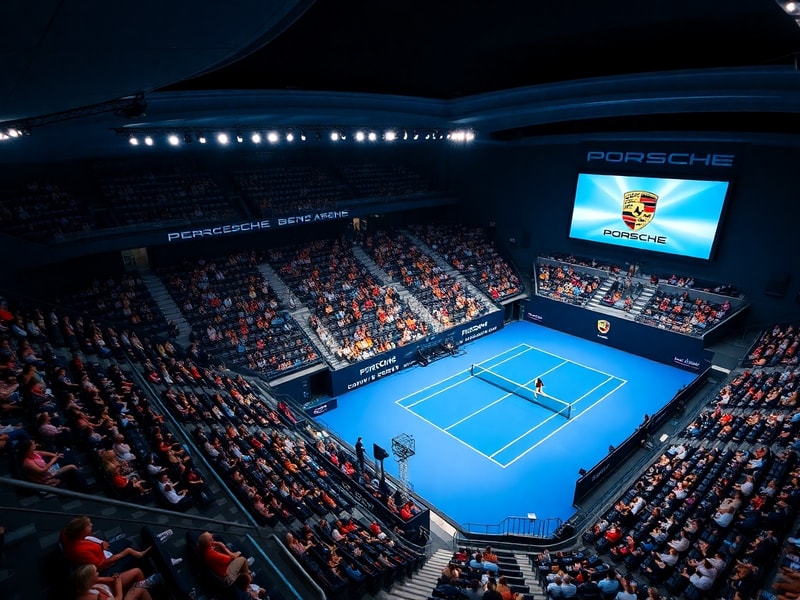
The Stuttgart Open, known for much of its history as the MercedesCup, represents more than just a stop on the ATP Tour. Since its inception in 1916, the tournament has evolved into a key event that bridges professional tennis with the cultural identity of Baden-Württemberg. Held annually on red clay in Stuttgart, Germany, it attracts top international players while celebrating the region’s love for sport, innovation, and tradition.
Unlike the larger Grand Slam events, the Stuttgart Open occupies a unique space. It is not just a competition; it is a cultural touchstone. The tournament reflects the changing dynamics of European tennis, where historic venues meet modern athletic performance. Its clay courts have witnessed legendary matches, generational transitions, and moments that extend beyond sport into the broader narrative of German and European tennis culture.
The Tournament’s Historical Roots and Evolution
The Stuttgart Open traces its origins to the early 20th century, making it one of the oldest tennis events still in existence. Initially conceived as a club competition in the exclusive Stuttgart suburb of Rot, it soon gained prestige and expanded into a full-fledged international tournament. By the 1920s, it had established itself as a fixture on the European tennis calendar, drawing players from across the continent.
Over the decades, the tournament has mirrored Germany’s own journey. During the post-war years, it became a symbol of recovery and renewal. In the 1970s and 1980s, it hosted legends like Björn Borg and John McEnroe, adding glamour and intensity to its reputation. The naming sponsorship by Mercedes-Benz in 1980 cemented its ties to German engineering and luxury, reinforcing the idea that excellence in sport and industry could coexist.
Today, the Stuttgart Open is part of the ATP Tour’s 250 series and serves as a key warm-up event for the French Open. Its clay surface offers players a chance to fine-tune their game ahead of Roland Garros, making it a strategic stop for clay specialists and all-court players alike.
Key Moments in Tournament History
The Stuttgart Open has produced its share of unforgettable moments. Some have shaped careers; others have redefined expectations:
- 1989: Boris Becker’s Dominance – The German superstar, known for his powerful serve and charismatic presence, captured the title, further solidifying his status as a national hero.
- 2005: Rafael Nadal’s Breakthrough – A young Nadal, still finding his footing on clay, claimed the title, foreshadowing his dominance at Roland Garros and on the red dirt.
- 2019: Matteo Berrettini’s Rise – The Italian powerhouse announced himself on the ATP Tour with a commanding run in Stuttgart, launching a career that would soon reach the top 10.
- 2023: Jan-Lennard Struff’s Heroic Run – Playing on home soil, Struff delivered a stirring performance as a wildcard entry, reaching the semifinals and capturing the imagination of local fans.
These moments are not isolated incidents. They reflect the tournament’s ability to serve as a launchpad for new stars while honoring established champions. In many ways, the Stuttgart Open functions as a microcosm of European tennis—where tradition meets ambition, and local pride intersects with global competition.
Cultural Significance: More Than Just a Tennis Tournament
The Stuttgart Open’s influence extends well beyond the baseline. It is deeply woven into the cultural fabric of Stuttgart and the surrounding region. The tournament takes place at the Weissenhof Tennis Club, an elegant facility set against the backdrop of Stuttgart’s vineyards and rolling hills. This setting is not accidental; it reflects the city’s identity as a center of culture, wine, and refinement.
Tennis in Germany carries a unique social weight. Unlike in countries where tennis is purely a niche sport, in Germany it enjoys broad cultural visibility. Public viewing areas draw thousands, and local media cover matches with the intensity usually reserved for football. The Stuttgart Open amplifies this engagement, offering a platform where fans can connect with players in an intimate, accessible setting.
Moreover, the tournament has become a hub for German tennis development. Many of the country’s top juniors and coaches attend as spectators, drawing inspiration from the professional field. Initiatives like the MercedesCup Junior program have helped nurture the next generation, ensuring the sport’s continuity in the region.
The Role of Sponsorship and Innovation
Central to the tournament’s modern identity is its long-standing partnership with Mercedes-Benz. The collaboration reflects a synergy between sport and automotive excellence—both pillars of German engineering. The MercedesCup branding is more than a logo; it represents a commitment to performance, precision, and prestige.
In recent years, the tournament has also embraced technological innovation. From advanced ball-tracking systems to data-driven player insights, the Stuttgart Open has integrated modern analytics without losing its traditional charm. This balance between heritage and progress mirrors broader trends in European sport, where history and innovation coexist.
Additionally, the tournament has expanded its reach through digital platforms, streaming matches globally and engaging international audiences. This shift ensures that the Stuttgart Open remains relevant in an era dominated by global sports media.
Looking Ahead: The Future of the Stuttgart Open
As the Stuttgart Open approaches its second century, it faces both opportunities and challenges. On one hand, its historic legacy and strong local support provide a solid foundation. On the other, it must compete for attention in a crowded sports calendar dominated by larger events and digital entertainment.
To stay relevant, the tournament is focusing on fan experience. Expanded hospitality areas, interactive fan zones, and community engagement programs are being introduced to deepen local involvement. There is also growing interest in sustainability, with organizers exploring eco-friendly initiatives such as reduced plastic use and energy-efficient lighting.
From a sporting perspective, the Stuttgart Open remains a crucial preparation ground for the French Open. With clay specialists like Carlos Alcaraz, Casper Ruud, and Jannik Sinner frequently competing, the tournament continues to influence the clay-court season’s narrative.
Looking globally, the event’s ability to attract diverse audiences—from European audiences familiar with the tournament’s history to younger fans discovering tennis through digital platforms—positions it well for continued growth. Its blend of nostalgia, high-level competition, and cultural resonance makes it a standout on the ATP Tour.
A Global Perspective: Tennis as a Cultural Bridge
The Stuttgart Open is not just a German event; it is part of a broader European tennis tradition that includes events like the Madrid Open, Rome Masters, and Hamburg European Open. These tournaments collectively shape the rhythm of the clay-court season and reinforce Europe’s central role in world tennis.
They also serve as cultural ambassadors. The Stuttgart Open, with its emphasis on hospitality, wine culture, and regional pride, offers international players and fans a taste of Swabian culture—known for its hearty cuisine, precision engineering, and warm hospitality. This cultural exchange enriches the sport and fosters connections that extend beyond the court.
In an era where sports are increasingly globalized, the Stuttgart Open stands out for its rootedness. It is a reminder that tradition and modernity can coexist, and that great sport is not just about winning—it’s about identity, community, and shared experience.
As the world of tennis continues to evolve, the Stuttgart Open remains a vital thread in its fabric. It continues to evolve, not by abandoning its past, but by honoring it while embracing the future.
For tennis enthusiasts and cultural observers alike, the Stuttgart Open is more than a tournament. It is a living tradition—one that celebrates excellence, connects generations, and reminds us that the greatest sporting events are those that become part of who we are.