Buenos Aires: The Paris of South America with a Tango Beat
Few cities blend European grandeur with Latin American vitality as seamlessly as Buenos Aires. Founded in 1536 and reshaped by waves of immigration in the 19th and 20th centuries, Argentina’s capital has evolved into a cultural powerhouse where neoclassical architecture stands alongside vibrant street art, and formal tango salons share the stage with underground electronic music venues. This duality isn’t merely aesthetic—it reflects the city’s complex identity as both a global metropolis and a deeply local experience.
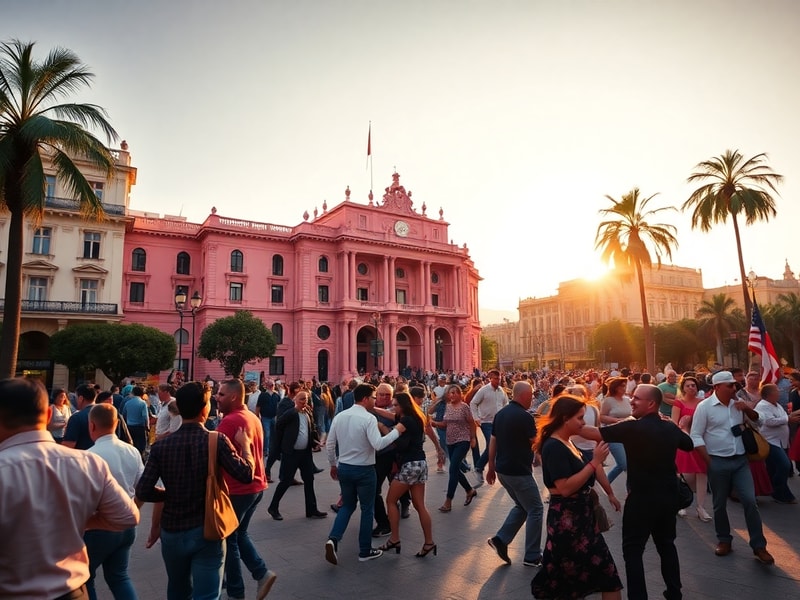
The city’s nickname, “The Paris of South America,” isn’t an accident. European immigrants, particularly from Spain and Italy, brought with them architectural styles, culinary traditions, and social customs that still define daily life. Wide boulevards like Avenida 9 de Julio—home to the iconic Obelisk—stretch out like Parisian avenues, while leafy plazas such as Plaza de Mayo echo the design of European town squares. Yet, Buenos Aires is unmistakably Latin American in its energy, its people, and its rhythms.
The Neighborhoods: A Patchwork of Culture and Character
Buenos Aires is a city of neighborhoods, each with its own distinct personality and cultural contribution. The historic heart lies in San Telmo, where cobblestone streets wind past colonial-era buildings and antique markets spill onto the plaza every Sunday. This is the birthplace of tango, a genre born from the fusion of African rhythms, European instruments, and working-class struggle. Today, San Telmo’s bohemian vibe attracts artists, collectors, and travelers seeking authenticity.
Just north, Recoleta exudes old-money elegance. The Recoleta Cemetery—final resting place of Eva Perón—features elaborate mausoleums that resemble miniature palaces, each telling a story of Argentina’s elite. The neighborhood’s cafés and bookstores offer a quieter, more refined pace, where intellectual debate flows as freely as the cortado coffee.
For contrast, head to La Boca, a working-class district famous for its colorful houses and the mythic La Bombonera stadium, home to the Boca Juniors football club. The vibrancy here is raw and unfiltered—street murals depict local heroes, tango dancers perform on corners, and the scent of grilled meat drifts from family-run parrillas. It’s a reminder that Buenos Aires is not just a postcard; it’s a living, breathing city where tradition and modernity collide daily.
Cultural Icons: Tango, Football, and Literary Legacy
No discussion of Buenos Aires would be complete without acknowledging its cultural exports. Tango, declared an Intangible Cultural Heritage by UNESCO in 2009, is more than a dance—it’s a language of longing, pride, and nostalgia. While the dance originated in the working-class neighborhoods of the late 19th century, it was the upper-class Parisian elite who first embraced it, transforming it into a global phenomenon. Today, milongas—traditional tango halls—can be found in every district, from the polished salons of Palermo to the intimate venues of Almagro.
Football, or soccer as it’s known elsewhere, is a religion in Argentina, and Buenos Aires is its epicenter. The city is home to five major clubs, including River Plate and Boca Juniors, whose rivalry is one of the most intense in world sports. Matches at La Bombonera are electric experiences—fans sing, drums echo through the stands, and the stadium seems to pulse with collective emotion. The sport transcends competition; it’s a symbol of identity, community, and resilience.
Literature, too, has deep roots in Buenos Aires. The city was the birthplace of Jorge Luis Borges, whose labyrinthine short stories redefined magical realism, and Julio Cortázar, whose novel Hopscotch invites readers to experience the city as a nonlinear narrative. The National Library, designed by architect Clorindo Testa, houses over two million volumes and stands as a testament to Argentina’s intellectual legacy. Bookstores like Eterna Cadencia and Libros del Pasaje are cultural landmarks, where locals browse for hours over espresso.
Culinary Scene: From Asado to Empanadas
Argentine cuisine is a reflection of the country’s history and geography. The national dish, asado—a social ritual of grilling various cuts of beef over wood or charcoal—is taken seriously here. In Buenos Aires, parrillas (steakhouses) like Don Julio and La Cabrera serve up perfectly aged ribeyes and chorizos, accompanied by chimichurri sauce and a glass of Malbec. The city’s Italian immigrants left their mark, too, with generations-old pizzerias like El Cuartito and Güerrin serving thin-crust pies topped with fugazzeta, a local twist on the classic.
No visit is complete without sampling empanadas, which vary by region but are universally delicious. In Buenos Aires, expect fillings like carne cortada a cuchillo (hand-cut beef), pollo con curry, or humita (creamy corn). Bakeries and street vendors offer them fresh from the oven, often eaten on the go between stops on the city’s extensive subway system, known as the Subte.
The café culture is another cornerstone of Buenos Aires life. Cafés like Tortoni, founded in 1858, are institutions where politicians, poets, and pensioners gather over medialunas (sweet croissants) and cortados. These spaces are not just places to eat; they’re forums for debate, gossip, and the slow unfolding of daily life.
Challenges and Resilience: Navigating Economic Turmoil
Despite its cultural richness, Buenos Aires has faced significant challenges in recent decades. Economic crises, including the devastating 2001 default and subsequent devaluations, have left deep scars. Inflation rates that hovered around 200% in 2023 forced many residents to adapt quickly, with barter economies and informal markets becoming commonplace. Yet, the city’s resilience is evident in its informal networks—community kitchens, local markets, and crowdfunding campaigns that support struggling families and small businesses.
The government has responded with mixed results. Initiatives like the “Precios Justos” program, which caps prices on essential goods, aim to alleviate the burden on consumers. Meanwhile, grassroots movements in neighborhoods like Villa 31, one of the city’s largest informal settlements, push for better housing and infrastructure. Buenos Aires’ ability to reinvent itself while preserving its cultural identity is a testament to its people’s creativity and determination.
Why Buenos Aires Captivates the World
What makes Buenos Aires so enduringly appealing? It’s a city that wears its contradictions proudly. It’s both sophisticated and rough around the edges, historic and forward-thinking, European and Latin American in equal measure. For travelers, it offers an immersive experience—whether sipping Malbec in a rooftop bar overlooking the Río de la Plata, losing yourself in the tango’s embrace at a milonga, or debating philosophy in a café that’s been standing for over a century.
For artists and creatives, Buenos Aires is a canvas. Its streets pulse with murals by internationally renowned artists like Javier Barilaro, and its galleries—from the contemporary spaces of Puerto Madero to the avant-garde venues of San Telmo—showcase everything from experimental film to cutting-edge performance art. The city’s annual festivals, like the Buenos Aires International Independent Film Festival (BAFICI) and the Ciudad Emergente festival, draw global audiences eager to experience its dynamic arts scene.
Buenos Aires also serves as a gateway to Argentina’s diverse landscapes. From the wine regions of Mendoza to the glaciers of Patagonia, the city’s international airport connects travelers to adventures across the continent. Yet, it’s often the city itself that leaves the deepest impression—its sounds, its smells, the way the light hits the facades of its buildings at dusk.
In an era where many cities are homogenizing under the weight of globalization, Buenos Aires remains defiantly itself. It’s a place where the past is not just remembered but lived, where tradition is not a museum piece but a living practice. Whether you’re drawn by the allure of tango, the thrill of football, the promise of a perfect steak, or simply the chance to wander through neighborhoods that feel like open-air museums, Buenos Aires delivers an experience that lingers long after the final goodbye.